Acute myeloid leukemia (AML) is a highly heterogeneous and aggressive disease. To better understand its complex biology and to develop and test new treatments, we need experimental models that faithfully reflect patient disease.
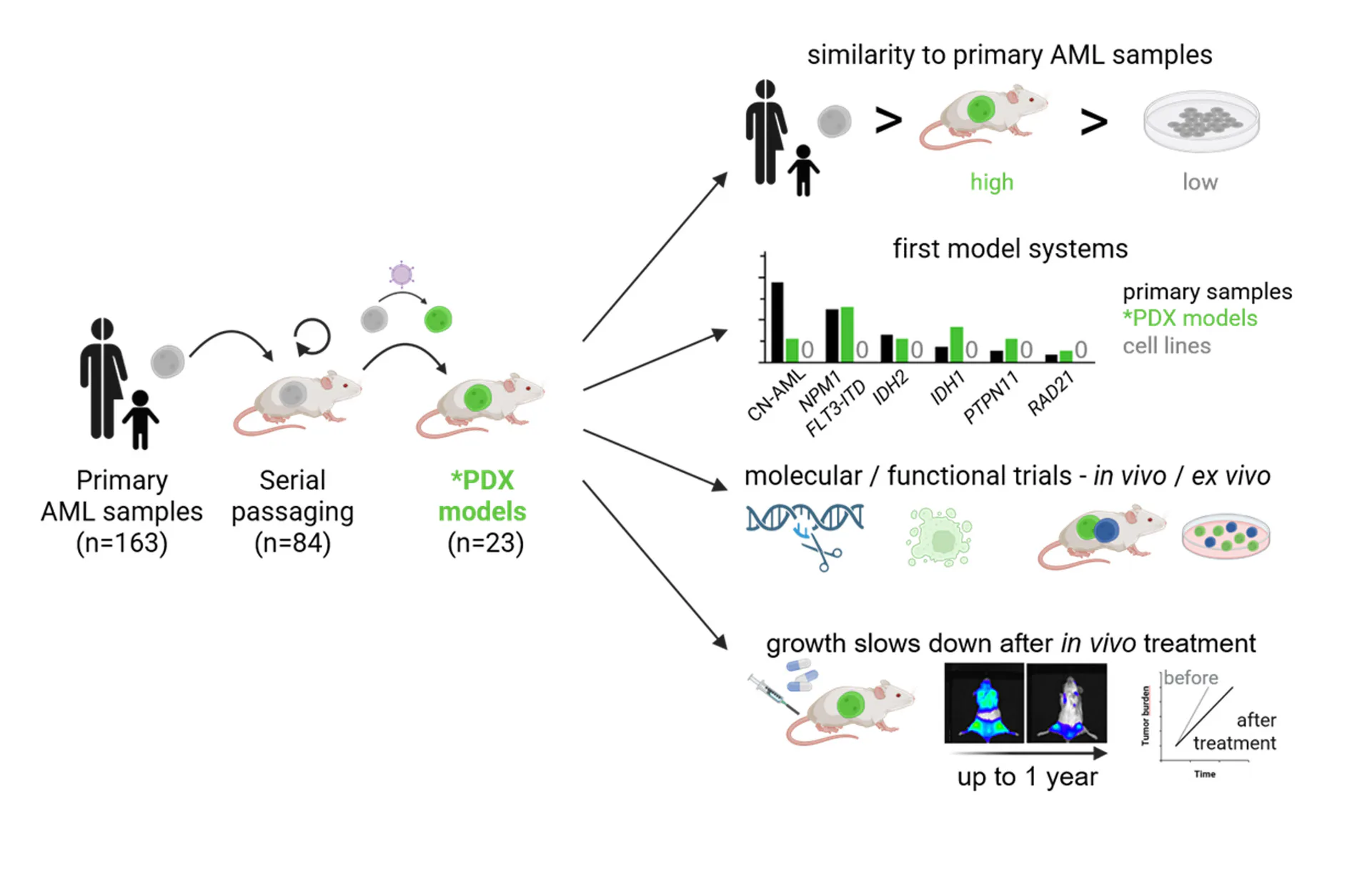
A new study from our lab, published in HemaSphere, presents a comprehensive collection of 23 serially transplantable and robust patient-derived xenograft (*PDX) models of AML generated from more than 100 primary AML samples.
The models capture substantial biological and genetic diversity across AML, including subgroups that are poorly represented or absent among established AML cell lines. Their robust engraftment, capacity for serial transplantation and genetic engineering, and resistance to freeze-thaw cycles make them a versatile and sharable resource for preclinical research.
Luciferase-transgenic *PDX models enable longitudinal, non-invasive monitoring of leukemia burden and treatment response in vivo, providing an ideal platform for phase II-like trials that recapitulate the heterogeneity observed across patient cohorts. Long-term cytarabine exposure additionally identified changes in leukemia proliferation over extended treatment periods and underscore the platform’s distinctive capacity to study treatment dynamics over clinically relevant timeframes.
Together, this PDX platform provides a powerful resource for investigating AML biology and therapeutic response, with broad potential for translational and collaborative research.