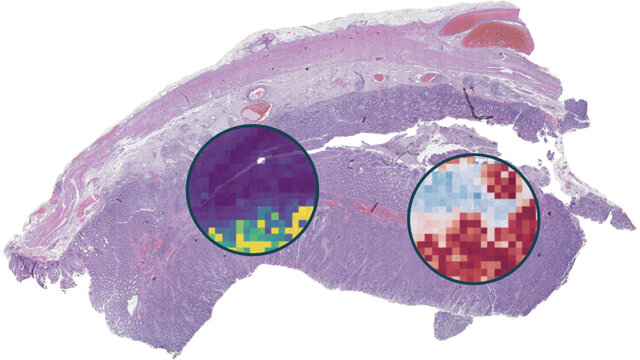
Assigning patients to clinically relevant subgroups is an important cornerstone of personalized medicine. With DeepClassPathway, scientists around Kristian Unger were able to develop an AI model that can precisely distinguish between head and neck tumors caused by the human papillomavirus (HPV) and those not associated with HPV based on gene expression data. This data describes the process around the formation of gene products. DeepClassPathway converts gene expression profiles into 2D images, which serve as input data to the AI model. The additional patient-specific information about the biological mechanisms underlying the classification in terms of "explainable AI" provides the potential for the development and application of personalized treatment approaches. Explainable AI systems provide a description of how results are found, in order to be comprehensible to humans. DeepClassPathway is versatilely transferable to other diseases and their molecular mechanisms.
Funding information:
This project was funded by the German Federal Ministry of Education and Research (BMBF), as part of the ZiSStrans research consortium.
Original publication
Lombardo and Hess et al. (2022). DeepClassPathway: Molecular pathway aware classification using explainable deep learning, European Journal of Cancer, Volume 176, Pages 41-49, ISSN 0959-8049, https://doi.org/10.1016/j.ejca.2022.08.033.