Computational Health Center

Institute of Machine Learning in Biomedical Imaging

The Institute of Machine Learning in Biomedical Imaging (IML) focuses on research to leverage machine learning for the grand challenges in biomedical imaging in areas of unmet clinical need. Its goal is to transform the use of imaging for diagnostics and prognostics fundamentally. Novel and affordable solutions should empower clinics to make more accurate, fast, and reliable decisions for early detection, treatment planning, and improved patient outcomes. Julia Schnabel’s research focus is on applications in cancer, cardiovascular diseases, and maternal/perinatal health.

For more information on our team, up-to-date research news, and open positions, please visit our website.

Visit our website

The Institute of Machine Learning in Biomedical Imaging (IML) focuses on research to leverage machine learning for the grand challenges in biomedical imaging in areas of unmet clinical need. Its goal is to transform the use of imaging for diagnostics and prognostics fundamentally. Novel and affordable solutions should empower clinics to make more accurate, fast, and reliable decisions for early detection, treatment planning, and improved patient outcomes. Julia Schnabel’s research focus is on applications in cancer, cardiovascular diseases, and maternal/perinatal health.

For more information on our team, up-to-date research news, and open positions, please visit our website.
Visit our website

Header Schnabel Lab

Our Research Groups

Header Schnabel Lab

Julia Schnabel

Machine Learning in Biomedical Imaging

The Institute's mission is to develop biomedical imaging applications that can fundamentally change diagnosis and prognosis. The focus is on cancer, cardiovascular disease and maternal/perinatal health.

View Research Group
AdobeStock_287138820.jpeg

Georgios Kaissis

Reliable AI

Our group develops next-generation trustworthy artificial intelligence algorithms for medical applications.

View Research Group

News from Our Institute

See all
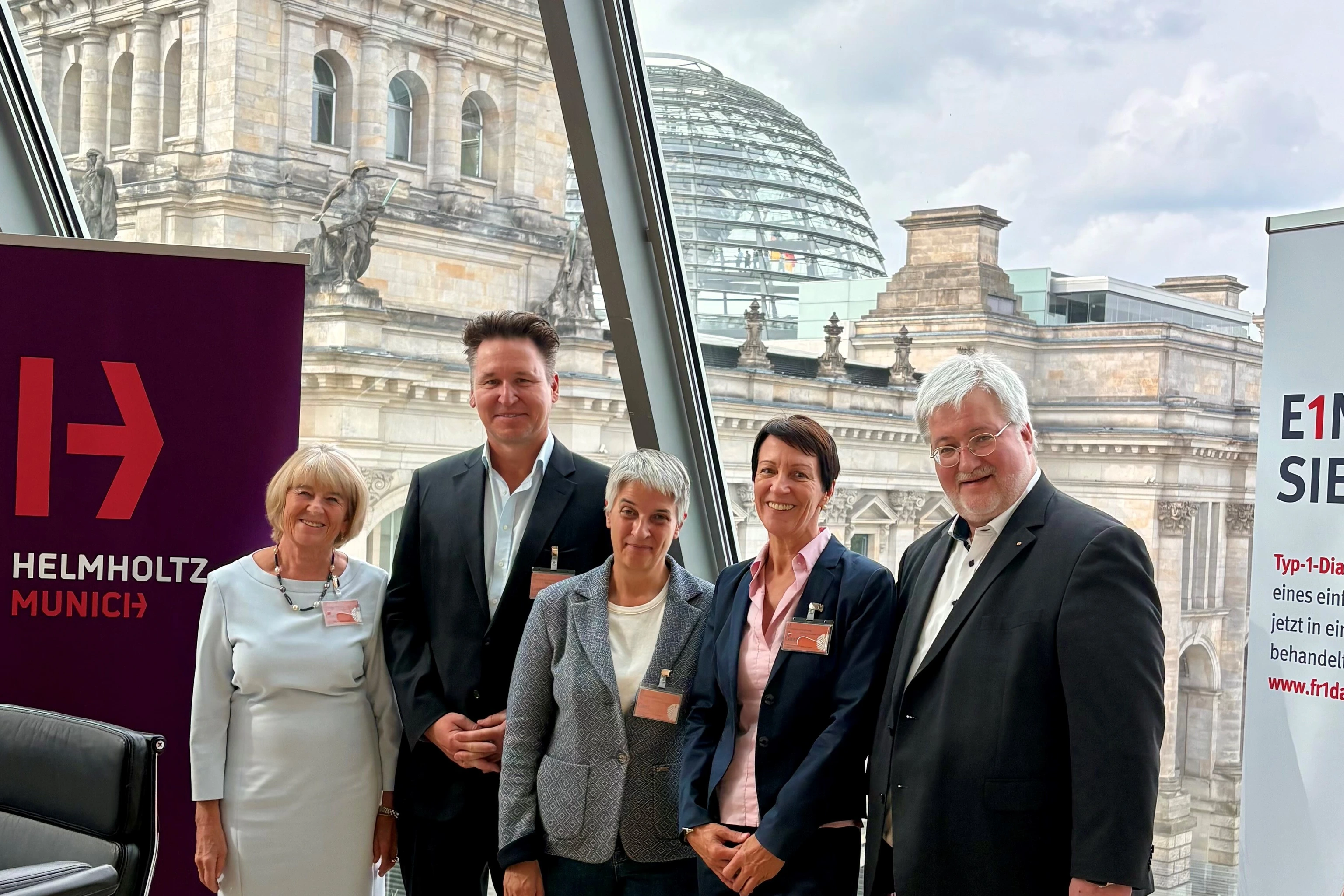
Vierte Helmholtz Munich Expert Hour im Deutschen Bundestag

Events, AI, Diabetes, IDF, Computational Health, IML,

Helmholtz Munich Expert Hour at the German Bundestag: The Future of Preventive Medicine

Science and politics came together once again at the German Bundestag: For the fourth time, Helmholtz Munich hosted the Helmholtz Munich Expert Hour on September 10, 2025. This dialogue format gives political decision-makers the opportunity to learn…

Expert Hour Bayerischer Landtag

Events, AI, Computational Health, AIH, IML,

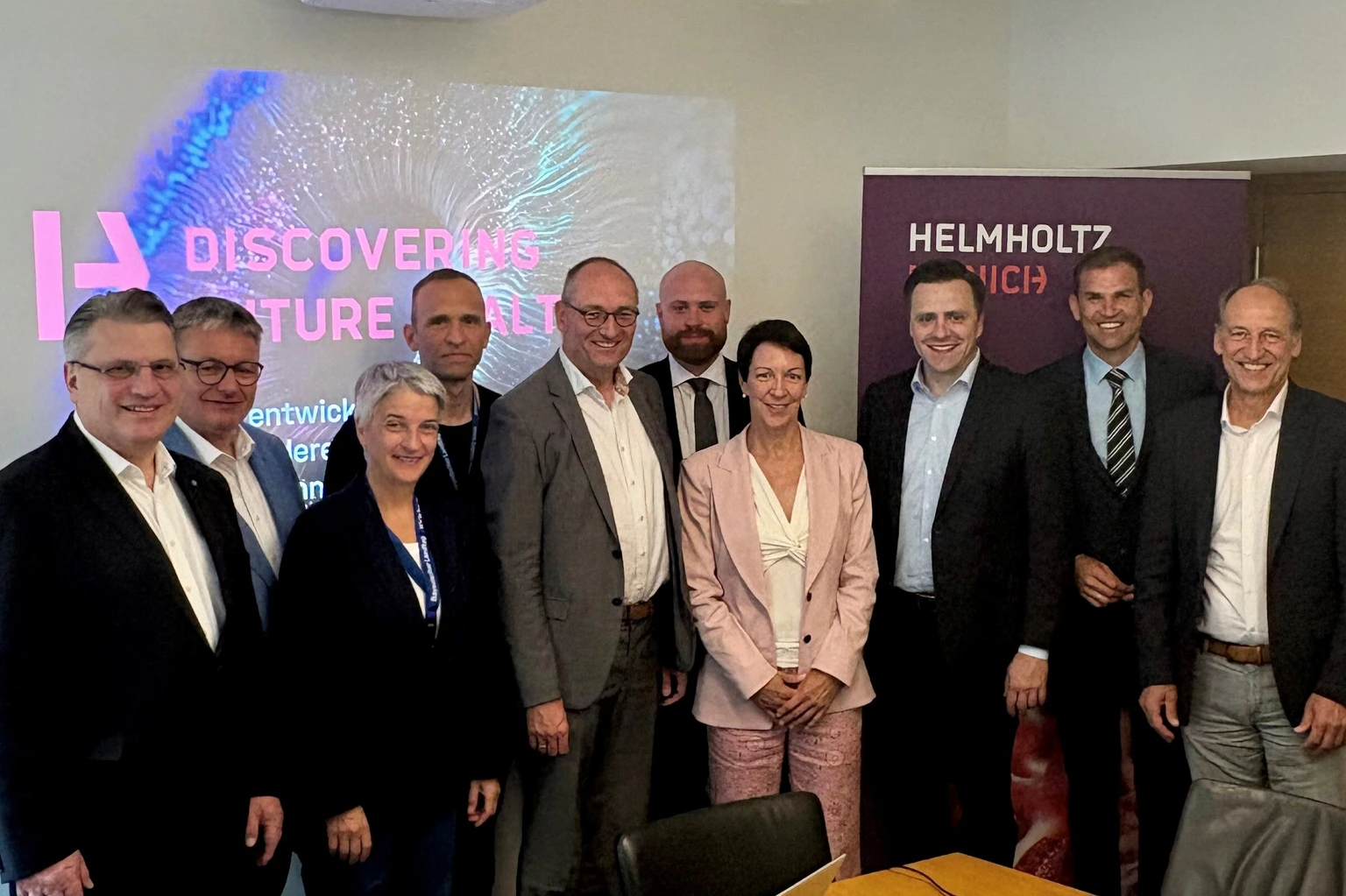
Helmholtz Munich Expert Hour at the State Parliament: Focus on AI Potential in Medicine

For the first time, the Helmholtz Munich Expert Hour – an established dialogue format between science and politics – took place at the Bavarian State Parliament. At the invitation of Member of Parliament Maximilian Böltl and the Young Group of the…

An AI powered system automating remote patient monitoring by analyzing real time health data and vital signs, futuristic AI-driven healthcare platform

AI, Computational Health, HCA, ICB, IML,

How Foundation Models Are Shaping Biomedical Research

AI-powered foundation models like GPT have evolved from everyday tools for simple tasks to powerful systems capable of revolutionizing industries. Researchers at Helmholtz Munich are harnessing the potential of these models to drive advancements in…

Artificial intelligence enables precision medicine through advanced monitoring. Digital representation of cancer cells with glowing details and intricate patterns.AdobeStock_1094300434

AI, Awards & Grants, Computational Health, IML,

Using Artificial Intelligence to Decipher the Mechanisms of Cancer Metastasis

The DECIPHER-M research project uses Artificial Intelligence (AI) to further understand the spread of cancer cells based on routine clinical data. The aim is to improve treatment options using a multimodal foundation model. As a key contributor,…

Ethics of AI in Healthcare: The use of AI in healthcare requires ethical guidelines to address bias, ensure transparency, and maintain patient trust in medical practices. AdobeStock_1055051906

AI, New Research Findings, Computational Health, IML,

International Experts Establish FUTURE-AI Guidelines for Trustworthy Healthcare AI

A landmark consensus paper introducing the FUTURE-AI framework for trustworthy AI in healthcare has been published by a collaboration of leading institutions, in which Helmholtz Munich is also involved. This important work sets a new standard for…

Machine Learning Algorithms

AI, Computational Health, IML,

Making AI in Healthcare Trustworthy - an Interview with Julia Schnabel

The project FUTURE-AI aims to bridge the gap between AI research and clinical adoption in healthcare. It provides guidelines for developing trustworthy AI tools, built on six guiding principles and 30 best practices.

Our Team

See all
Juli Schnabel_Zuschnitt
Prof. Dr. Julia Anne Schnabel

Director, Institute of Machine Learning in Biomedical Imaging

View profile
Porträt Georgios Kaissis
Dr. Georgios Kaissis

Principal Investigaror, Reliable AI

View profile
Porträt Cosmin Bercea
Cosmin Bercea

PostDoc

Porträt Emily Chan
Dr. Emily Chan

PostDoc

Dr. Laura Daza

PostDoc

Porträt Lina Felsner
Dr. Lina Felsner

PostDoc

Porträt Daniel Lang
Dr. Daniel Lang

PostDoc

Sameer Ambekar

PhD Student

Portrait Hannah Eichhorn
Hannah Eichhorn

PhD student

Stefan Fischer

PhD Student

Marta Hasny

PhD Student

Johannes Kiechle

PhD Student

Ha Young Kim

PhD Student

Fryderyk Kögl

PhD Student

Jun Li

PhD Student

Natascha Niessen

PhD Student

Anna Reithmeir

PhD Student

Porträt Anneliese Riess
Anneliese Riess

PhD Student

Portrait Veronika Spieker
Veronika Spieker

PhD student

Sandra Mayer

Office & Project Management

Our Key Publications

2025 BMJ

Lekadir K, Frangi AF, Porras AR, Glocker B, Cintas C, Langlotz CP, Weicken E, Asselbergs FW, Prior F, Collins GS, Kaissis G, Tsakou G, Buvat I, Kalpathy-Cramer J, Mongan J, Schnabel JA, Kushibar K, Riklund K, Marias K, Amugongo LM, Fromont LS, Maier-Hein L, Cerdá Alberich L, Martí-Bonmatí L, Cardoso MJ, Bobowicz M, Shabani M, Tsiknakis M, Zuluaga MA, Fritzsche M-C, Camacho M, Linguraru MG, Wenzel M, De Bruijne M, Tolsgaard MG, Goisauf M, Cano Abadía M, Papanikolaou N, Lazrak N, Pujol O, Osuala R, Napel S, Joshi S, Klein S, Aussó S, Rogers WA, Puig-Bosch, X, Salahuddin Z, Starmans MPA, and the FUTURE-AI Consortium

FUTURE-AI: International consensus guideline for trustworthy and deployable artificial intelligence in healthcare
2025 Nature Communications

Bercea C, Wiestler B, Rueckert D, Schnabel, JA

Evaluating Normative Representation Learning in Generative AI for Robust Anomaly Detection in Brain Imaging
2024 Nature

Bosch M, Kallin N, Donakonda S, Zhang JD, Wintersteller H, Hegenbarth S, Heim K, Ramirez C, Fürst A, Lattouf EI, Feuerherd M, Chattopadhyay S, Kumpesa N, Griesser V, Hoflack JC, Siebourg-Polster J, Mogler C, Swadling L, Pallett LJ, Meiser P, Manske K, de Almeida GP, Kosinska AD, Sandu I, Schneider A, Steinbacher V, Teng Y, Schnabel J, Theis F, Gehring AJ, Boonstra A, Janssen HLA, Vandenbosch M, Cuypers E, Öllinger R, Engleitner T, Rad R, Steiger K, Oxenius A, Lo W-L, Klepsch V, Baier G, Holzmann B, Maini MK, Heeren R, Murray PJ, Thimme R, Herrmann C, Protzer U, Böttcher JP, Zehn D, Wohlleber D, Lauer GM, Hofmann M, Luangsay S, and Knolle PA

A liver immune rheostat regulates CD8 T cell immunity in chronic HBV infection
2024 Nature Reviews Cardiology

Föllmer B, Williams MC, Dey D, Arbab-Zadeh A, Maurovich-Horvat P, Volleberg RHJA, Rueckert D, Schnabel JA, Newby DE, Dweck MR, Guagliumi G, Falk V, Vázquez Mézquita AJ, Biavati F, Išgum I, Dewey M

Roadmap on the use of artificial intelligence for imaging of vulnerable atherosclerotic plaque in coronary arteries
2024 IEEE Transactions on Medical Imaging

Spieker V, Eichhorn H, Hammernik K, Rueckert D, Preibisch C, Karampinos D, Schnabel JA

Deep Learning for Retrospective Motion Correction in MRI: A Comprehensive Review
2023 Cancer Cell

Wagner SJ, Reisenbüchler D, West NP, Niehues JN, Zhu J, Foersch S, Veldhuizen GP, Quirke P, Grabsch HI, van den Brandt PA, Hutchins GGA, Richman SD, Yuan T, Langer R, Jenniskens JCA, Offermans K, Mueller W, Gray R, Gruber SB, Greenson JK, Rennert G, Bonner JD, Schmolze D, Jonnagaddala J, Hawkins NJ, Ward RL, Morton D, Seymour M, Magill L, Nowak M, Hay J, Koelzer VH, Church DN, TransSCOT consortium, Matek C, Geppert C, Peng C, Zhi C, Ouyang X, James JA, Loughrey MB, Salto-Tellez M, Brenner H, Hoffmeister M, Truhn D, Schnabel JA, Boxberg M, Peng T, Kather JN

Transformer-based biomarker prediction from colorectal cancer histology: A large-scale multicentric study

Networks and Affiliations

Contact Office

Sandra Mayer

Office & Project Management

Building / Room: 35.33, 204