viFSP1 Is a Species-Independent FSP1 Inhibitor
Drug resistance or metastasis are among the most clinically challenging problems in cancer therapy. Notably, some cancer cells acquire an intrinsically high vulnerability to ferroptosis. Ferroptosis is a form of regulated cell death, where the cell membranes are destroyed by lipid oxidation. A key player in the ferroptosis process is the ferroptosis suppressor protein-1 (FSP1), which can efficiently prevent cell death. Therefore, targeting ferroptosis and specifically inhibiting the activity of FSP1 is a potential approach to combat cancer. In 2019, a team of researchers around Dr. Marcus Conrad, Director at the Institute of Metabolism and Cell Death at Helmholtz Munich, had already discovered the first FSP1-specific inhibitor, known as iFSP1. “However, this compound only inhibits the human enzyme and cannot be used for the study of cancer cell lines from different origins, including mouse”, Conrad explained. The team, therefore, analyzed thousands of molecules in murine cells aiming to identify a “species-independent” FSP1 inhibitor. These efforts eventually led to the identification of viFSP1 as a novel class of compounds that sensitize many cancer cell lines to ferroptosis.
Binding Pocket for viFSP1 Identified
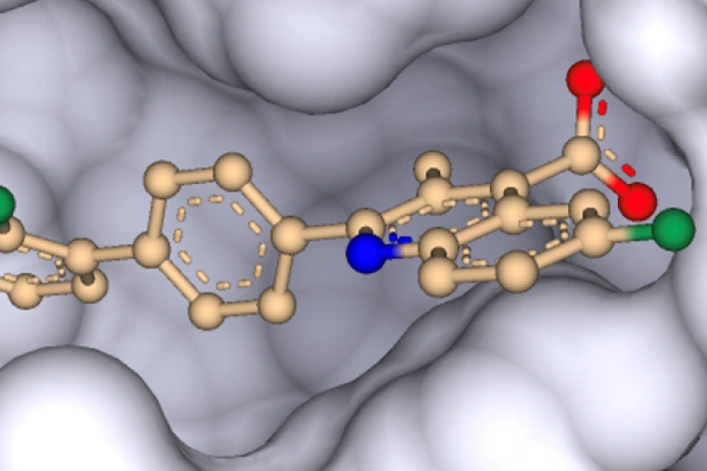
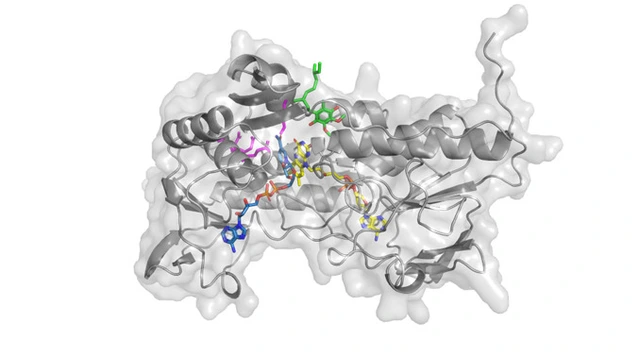
Furthermore, the researchers aimed to explore the underlying mechanism of action (MoA) of viFSP1 to obtain a better understanding of which parts of the FSP1 protein specifically interact with the new inhibitor. To this end, they first performed several random mutagenesis screens, meaning they introduced arbitrary changes in the DNA sequence of FSP1, thereby causing random changes in the amino acid sequence of FSP1. Upon expression and selection of cells expressing these randomly mutated sequences of FSP1, this approach enabled the team to reveal distinct amino acids, where the inhibitor binds to the natural protein. As a result, the scientists revealed several relevant points of interaction in the protein. Toshitaka Nakamura, the lead author of the study, further explains that “these sites are located in the vicinity of the putative NAD(P)H binding pocket in FSP1,” as further supported by computational predictions. The NAD(P)H binding pocket, a common structural feature found in numerous proteins, has a pivotal role in a wide array of other biochemical processes next to ferroptosis. Since FSP1 utilizes NAD(P)H to regenerate quinones, endogenous antioxidants and ferroptosis inhibitors, these findings suggest that viFSP1 inhibits this reaction by targeting the NAD(P)H binding pocket.
Understanding the Protein Structure with a Combination of Computational and Biological Approaches
The study of ferroptosis is becoming more and more relevant in many fields, including cancer, neurodegenerative diseases, and tissue ischemia/reperfusion injury. Very recently, the three-dimensional arrangement of FSP1, i.e. the crystal structure, has been determined by two groups independently, although the functional mechanism of FSP1 has remained obscure. Being unaware of the crystal structure of FSP1, the combination of our newest results regarding the binding pocket and computational structure predictions with the AI program AlphaFold2 emerged to be a powerful approach to provide molecular insights into several functional residues of FSP1. “Our study may therefore serve as a good model for the further understanding of the functions of many enzymes and their inhibitory mechanisms," explains Conrad, providing a promising outlook for the future.
In this new study, the scientists at Helmholtz Munich not only discovered an effective anti-cancer compound, bringing us one step closer to a much-needed ferroptosis-targeted therapy, but they also elucidated how this compound functions and identified the essential structural parts of FSP1, one of the guardians of ferroptosis.
Original publication
Nakamura et al, (2023): Integrated chemical and genetic screens unveil FSP1 mechanisms of ferroptosis regulation, Nature Structural & Molecular Biology. DOI: 10.1038/s41594-023-01136-y