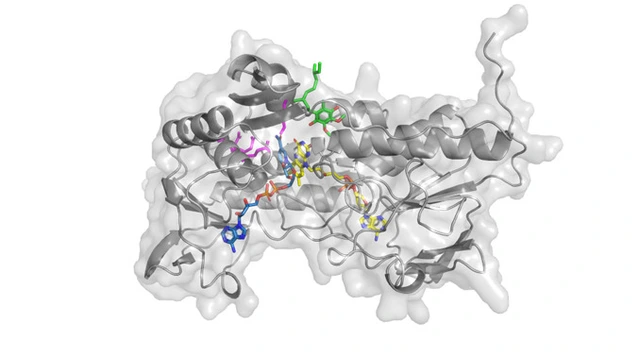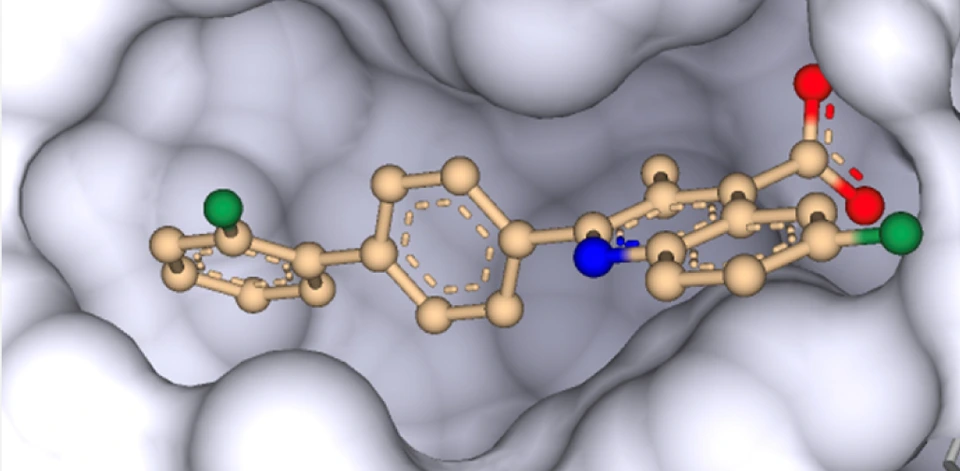
DHODH inhibitor brequinar

Potentiating Cancer Vulnerability to Ferroptosis: Off-Targeting Effects of DHODH Inhibitors

New Research Findings MCD

A research team at Helmholtz Munich revealed a specific mechanism that is able to promote cell death in cancer cells by pharmacological targeting of a ferroptosis surveillance system. Ferroptosis is a form of regulated oxidative cell death and has attracted overwhelming interest as it presents a pharmacological tractability in standard therapy-resistant and metastatic cancers. Therefore, modulating cell sensitivity to ferroptosis by pharmacologically targeting endogenous defense systems has emerged as a promising anticancer strategy. The scientists now found that the ferroptosis-sensitizing effect of the dihydroorotate dehydrogenase (DHODH) inhibitors occurs through the inhibition of ferroptosis suppressor protein-1 (FSP1), another ferroptosis player identified earlier by the team, and not through DHODH itself. These new findings confirm the crucial role of FSP1 in ferroptosis surveillance of cancer cells and should drive the future development and advancement of FSP1 inhibitors as effective cancer therapies. The results are now published in Nature.

Sensitizing cells to undergo regulated cell death in the form of ferroptosis is a promising approach for new anticancer therapy, particularly in light of standard therapy-resistant and metastatic cancers. Therefore, novel cellular mechanisms and compounds that regulate cancer ferroptosis sensitivity are being intensively researched. In 2021, dihydroorotate dehydrogenase (DHODH) was described as a novel suppressor of ferroptosis (Mao et al., Nature 2021). DHODH is an enzyme localized in mitochondria and well-known for its role in producing building blocks for DNA synthesis by oxidizing dihydroorotate and simultaneously reducing mitochondrial coenzyme Q10 (CoQ10). Based on recent data that a potent and selective inhibitor of DHODH (i.e., brequinar) effectively sensitizes cancer cells to ferroptosis, it was concluded that DHODH acts as a ferroptosis suppressor (Mao et al., Nature 2021). Its inhibition was therefore considered a promising target for overcoming ferroptosis resistance in cancer cells. A team of researchers led by Dr. Eikan Mishima and Dr. Marcus Conrad, both from the Institute of Metabolism and Cell Death at Helmholtz Munich, has now elucidated the actual mechanism of how DHODH inhibitors at higher concentrations promote cell death in cancer cells by ferroptosis.


DHODH Inhibitors Inhibit FSP1 in an Off-Target Manner

The scientists from Helmholtz Munich were inspired by the fact that DHODH has a similar function to the oxidoreductase ferroptosis suppressor protein 1 (FSP1), as both proteins reduce CoQ10 thereby preventing lipid peroxidation. Lead author Eikan Mishima reasoned ”that the DHODH inhibitors may also target FSP1”. Therefore, the researchers investigated whether the ferroptosis-sensitizing effect of the DHODH inhibitors is mediated by the inhibition of FSP1. Their investigations confirmed that DHODH inhibitors, such as brequinar, can indeed profoundly inhibit FSP1. Furthermore, they showed that the ferroptosis-sensitizing effect of DHODH inhibitors is mediated by the inhibition of FSP1 and not by DHODH itself. Besides, the team provided conclusive evidence that the short form (also known as cytosolic or somatic form) of glutathione peroxidase 4 (GPX4) effectively protects cells from ferroptosis, in contrast to its mitochondrial isoform. These results, therefore, argue against the putative role of DHODH in ferroptosis surveillance, while GPX4 and FSP1 remain the major systems for suppressing ferroptosis in cells, including cancer cells.


FSP1 Inhibitors Are Potential New Anti-Cancer Agents

Since refractory and metastatic cancers are highly susceptible to ferroptosis, sensitizing cancer cells to ferroptosis through FSP1 inhibition holds great potential for new anticancer drugs. Although clinically available FSP1 inhibitors are still in development, the discovery that several DHODH inhibitors currently being tested in clinical trials act as FSP1 inhibitors will contribute to the future development and advancement of FSP1 inhibitors for novel cancer therapies. Marcus Conrad further comments “that inhibiting FSP1 with in vivo available FSP1-specific compounds could be a new effective anticancer strategy for the treatment of certain cancers".

About the scientists

Dr. Marcus Conrad, Director at the Institute of Metabolism and Cell Death at Helmholtz Munich, Germany

Dr. Eikan Mishima, Senior Scientist at the Institute of Metabolism and Cell Death at Helmholtz Munich, Germany, and at Tohoku University Graduate School of Medicine, Sendai, Japan

Original publication

Mishima et al. (2023): DHODH inhibitors sensitize to ferroptosis by FSP1 inhibition. Nature. DOI: 10.1038/s41586-023-06269-0

Related news

Apoptosis process in a cell

Molecular Targets and Therapeutics, MCD,

Ferroptosis: Controlling Life or Death of Cells

Cell death is indispensable to life, as it ensures the removal of damaged or unnecessary cells. Among the many ways a cell can die, ferroptosis is a unique and regulated form of cell death. This process plays a significant role in the pathogenesis of…

HMGU_Icon_Molecular_Targets

Featured Publication, MCD,

Vorstufe des Cholesterins schützt Zellen vor Ferroptose

Eine Vorstufe des Cholesterins, die bislang als schädlich eingestuft wurde, kann Krebszellen vor dem Zelltod schützen. Diese in Nature veröffentlichte Erkenntnis öffnet der Krebsforschung neue Türen.

Superimposed human FSP1 structure with its cofactors, FAD, NADH, and CoQ5

New Research Findings, Molecular Targets and Therapeutics, MCD,

A Rising Star: Inducing Ferroptosis with Innovative Compounds for Cancer Therapy

A team of researchers led by Dr. Marcus Conrad from Helmholtz Munich discovered a novel anti-cancer drug, called viFSP1, which sensitizes both murine and human cancer cells to cell death through ferroptosis. Ferroptosis is defined by the…

HMGU_Icon_Molecular_Targets

Featured Publication, Molecular Targets and Therapeutics, SAT,

Ein neuer Regulator von Ferroptose: Farnesoid X Rezeptor

Eine wesentliche Voraussetzung für die Behandlung von degenerativen Erkrankungen und bestimmten Krebsarten ist ein besseres Verständnis von Ferroptose. Forschende unter der Leitung von Dr. Kamyar Hadian von Helmholtz Munich haben herausgefunden, dass…

FSP1 condensates in green induced by icFSP1 surrounding a blue nucleus

New Research Findings, MCD,

New Approach in Cancer Therapy With Innovative Mechanism-of-Action for Ferroptosis Induction

A team of researchers led by Dr. Marcus Conrad from Helmholtz Munich discovered a novel anti-cancer drug, called icFSP1, which sensitizes cancer cells to ferroptosis. Ferroptosis is characterized by the iron-dependent oxidative destruction of…

Marcus Conrad Porträt

Awards & Grants, MCD,

Marcus Conrad as a new member of the Hinterzarten Circle of the DFG on Cancer Research

The Review Board for Medicine of the Deutsche Forschungsgemeinschaft (DFG) has appointed Helmholtz Munich scientist Dr. Marcus Conrad as a new member of the DFG’s Hinterzarten Circle on Cancer Research. Marcus Conrad succeeds Prof. Greten from…

Vitamin K prevents cell death

New Research Findings, MCD,

Vitamin K Prevents Cell Death: A New Function for a Long-Known Molecule

A team of researchers located at Helmholtz Munich reports on a novel function of vitamin K, which is generally known for its importance in blood clotting. The researchers discovered that the fully reduced form of vitamin K acts as an antioxidant…