Die diesjährige Leibniz-Preisträgerin Prof. Maria-Elena Torres-Padilla wurde mit dem Bayerischen Maximiliansorden für…
Stammzellen Center
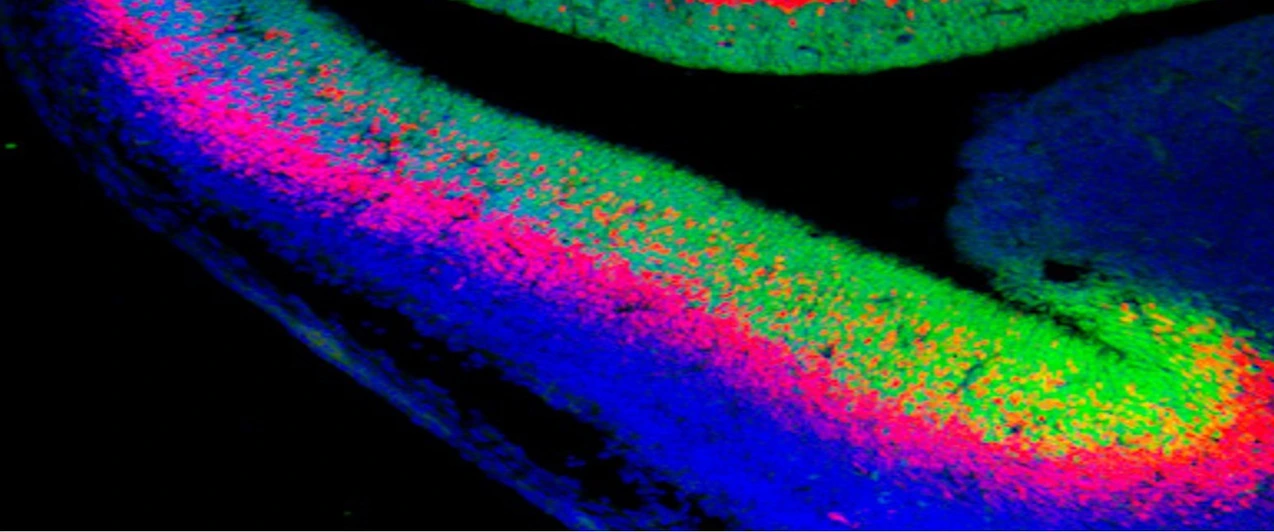
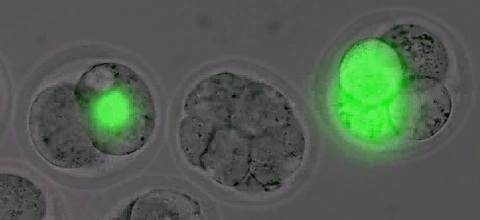
Replacing lost or damaged cells is the cornerstone of regenerative medicine. To achieve this, we need to understand not only how cells acquire their specific identity but also how cell plasticity is regulated. Helmholtz Munich’s Stem Cell Center is unique worldwide in combining leading expertise in cell plasticity, epigenetics, and direct reprogramming.
Stammzellen sind einzigartig in ihrer Fähigkeit, sich zu vermehren und Zellen zu ersetzen - oft lebenslang. Viele erwachsene Organe, wie das Gehirn oder die Bauchspeicheldrüse, haben jedoch keine oder nur wenige Stammzellen. Die Mission unseres Departments stützt sich in solchen Organen auf unseren bahnbrechenden Ansatz zur Umprogrammierung lokaler Zellen in Richtung der verlorenen Zelltyp-Identität sowie auf unsere bahnbrechenden Entdeckungen zu epigenetischen Mechanismen der Umprogrammierung. Für alle Schlüsselproteine, die eine solche Umwandlung des Zellschicksals ermöglichen, wurden die Rollen während der Entwicklung zur Bildung von relevanten Zelltypen identifiziert. Unser Department vereint daher Fachwissen in einer weltweit einzigartigen Kombination über Stammzellen, Entwicklungsmechanismen der Schicksalsspezifikation und Plastizität, einschließlich einer starken epigenetischen Expertise mit Verletzungsmodellen und direkter Reprogrammierung.
Unsere Stammzellexperten
Direktorin des Stammzellen Center, Direktorin des Instituts für Epigenetik und Stammzellen, Director of the Stem Cell Center (rotating)
Profil anzeigenEmeritus of Excellence, Chair of Developmental Genetics, Technical University Munich; until 31.12.2024 Director of the Institute of Developmental Genetics, Helmholtz Munich
Profil anzeigenHead of the Research Unit Apoptosis in hematopoietic Stem Cells

Profil anzeigenHead of Research Unit Central Nervous System Research
Unsere Institute
Neuste Publikationen
Götz M, Torres-Padilla ME
Stem cells as role models for reprogramming and repair.Pal M, Schauer T, Burton A, Nakatani T, Pecori F, Hernández-Giménez A, Nadelson I, Marti-Renom MA, Torres-Padilla ME
The establishment of nuclear organization in mouse embryos is orchestrated by multiple epigenetic pathways.Bocchi R, Thorwirth M, Simon-Ebert T, Koupourtidou C, Clavreul S, Kolf K, Della Vecchia P, Bottes S, Jessberger S, Zhou J, Wani G, Pilz GA, Ninkovic J, Buffo A, Sirko S, Götz M, Fischer-Sternjak J.
Astrocyte heterogeneity reveals region-specific astrogenesis in the white matter.Werner M, Trauner M, Schauer T, Ummethum H, Márquez-Gómez E, Lalonde M, Lee CSK, Tsirkas I, Sajid A, Murriello AC, Längst G, Hamperl S.
Transcription-replication conflicts drive R-loop-dependent nucleosome eviction and require DOT1L activity for transcription recovery.Oomen ME, Rodriguez-Terrones D, Kurome M, Zakhartchenko V, Mottes L, Simmet K, Noll C, Nakatani T, Mourra-Diaz CM, Aksoy I, Savatier P, Göke J, Wolf E, Kaessmann H, Torres-Padilla ME.
An atlas of transcription initiation reveals regulatory principles of gene and transposable element expression in early mammalian development.Allwyn Pereira, Jeisimhan Diwakar, Giacomo Masserdotti, Sude Beşkardeş, Tatiana Simon, Younju So, Lucía Martín-Loarte, Franziska Bergemann, Lakshmy Vasan, Tamas Schauer, Anna Danese, Riccardo Bocchi, Maria Colomé-Tatché, Carol Schuurmans, Anna Philpott, Tobias Straub, Boyan Bonev, Magdalena Götz.
Direct neuronal reprogramming of mouse astrocytes is associated with multiscale epigenome remodeling and requires Yy1Gruber C, Krautner L, Bergant V, Grass V, Ma Z, Rheinemann L, Krus A, Reinhardt F, Mazneykova L, Rocha-Hasler M, Truong DJ, Westmeyer GG, Pichlmair A, Ebert G, Giesert F, Wurst W.
Engineered, nucleocytoplasmic shuttling Cas13d enables highly efficient cytosolic RNA targetingGiovanna Sonsalla, Ana Belen Malpartida, Therese Riedemann, Mirjana Gusic, Ejona Rusha, Giorgia Bulli, Sonia Najas, Aleks Janjic, Bob A. Hersbach, Pawel Smialowski, Micha Drukker, Wolfgang Enard, Jochen H.M. Prehn, Holger Prokisch, Magdalena Götz, Giacomo Masserdotti
Direct neuronal reprogramming of NDUFS4 patient cells identifies the unfolded protein response as a novel, general reprogramming hurdleKoupourtidou C.*, Schwarz V.*, Aliee H., Frerich S., Fischer-Sternjak J., Bocchi R., Simon-Ebert T., Bai X., Sirko S., Kirchhoff S., Dichgans M., Götz M., Theis F. and Ninkovic J.
Shared inflammatory glial cell signature after stab wound injury, revealed by spatial, temporal and cell-type-specific profiling of the murine cerebral cortex.Tsunetoshi Nakatani, Tamas Schauer, Luis Altamirano-Pacheco, Kyle N Klein, Andreas Ettinger, Mrinmoy Pal, David M Gilbert, Maria-Elena Torres-Padilla
Emergence of replication timing during early mammalian development