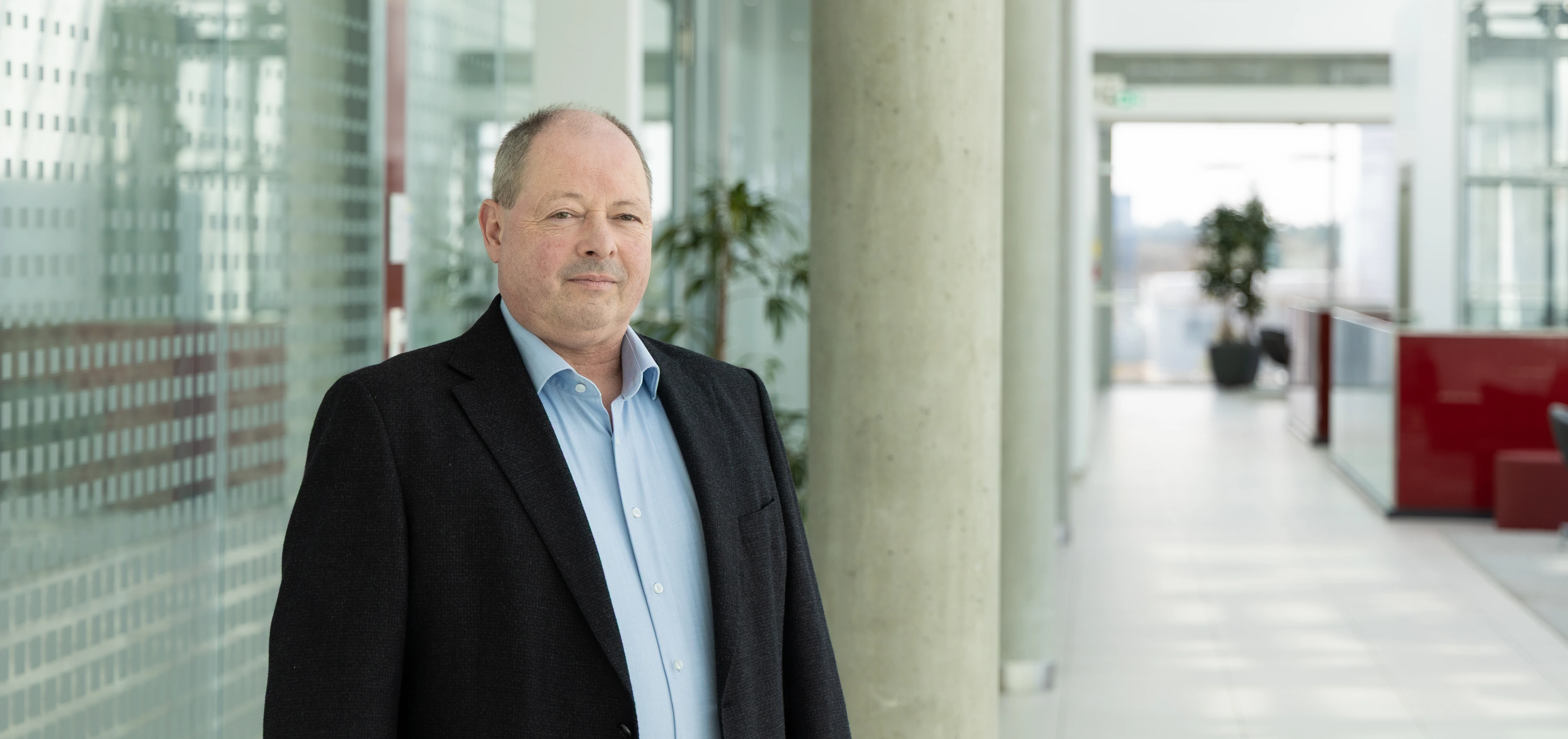
Head of Research Unit Analytical Pathology, AAP
Prof. Dr. med. Axel Karl Walch
“Tissue-based analysis remains central to understanding human disease and translating molecular information into clinical decision-making. By integrating high-resolution spatial profiling with computational interpretation, our work enables more precise disease characterization and supports the development of targeted diagnostic and therapeutic strategies.”
Research Area
Axel Walch is a board-certified pathologist and head of the Research Unit Analytical Pathology at Helmholtz Munich. His work focuses on molecular pathology, mechanisms of disease, and the development of innovative technologies for tissue-based research and diagnostics. He has an extensive publication record and has been at the forefront of integrating advanced analytical methods into both research and clinical pathology.
In 2007, Axel Walch introduced Matrix-Assisted Laser Desorption/Ionization Imaging Mass Spectrometry (MALDI-IMS) at Helmholtz Munich, establishing a platform that bridges pathology, clinical research, bioanalytical chemistry, microscopic imaging, mass spectrometry, and bioinformatics. His research applies spatially resolved metabolomics to a broad spectrum of diseases, both in human patients and in animal models, using high-resolution MALDI-FT-ICR imaging to study tissues under physiological and pathological conditions.
Through extensive collaborations with clinical and research institutions worldwide, Axel Walch has advanced applications of MALDI-IMS in elucidating disease mechanisms, personalizing cancer therapies, and driving methodological innovations in mass spectrometry imaging. His ongoing work seeks to expand the role of spatial metabolomics in understanding molecular disease processes and optimizing therapeutic strategies.
Axel Walch studied medicine at Ruprecht-Karls-Universität Heidelberg and completed his doctorate at the Technische Universität München. Following board certification in pathology and a series of academic appointments, he obtained a Habilitation at Albert-Ludwigs-Universität Freiburg and has led the Analytical Pathology unit at Helmholtz Munich since 2011.
His long-term vision is to integrate high-dimensional molecular data with histopathology to create comprehensive, tissue-based maps of disease, ultimately supporting precision medicine and translational research. In this context, the Research Unit Analytical Pathology is an integral part of the Helmholtz Bioengineering Department and contributes to its strategic framework by advancing spatially resolved molecular phenotyping, multimodal data integration, and innovative analytical methods. By linking high-resolution mass spectrometry imaging with computational analytics and clinically relevant models, his work supports the identification of novel biomarkers, the functional interpretation of complex disease processes, and their translation into clinical applications. This positions Analytical Pathology at the interface of technology development, data-driven biology, and clinical translation, contributing to next-generation approaches for early detection, disease stratification, and personalized intervention.
Fields of Work and Expertise
Spatial Metabolomics
Molecular Phenotyping
Mass Spectrometry Imaging
Spatial Multi-Omics
Spatial Exposomics
AI-driven Tissue Analysis
Disease Stratification
Precision Medicine
Therapy Response Prediction
Professional Background
Head of Research Unit Analytical Pathology, Helmholtz Munich, Germany
Head of the research group “Biomedical Microscopy”, Helmholtz Munich, Institute of Pathology, Germany
Resident and Fellow in Pathology (Institute of Pathology, Technical University of Munich and Institute of Pathology, University Hospital Freiburg, Germany)
Medical School, Ruprecht-Karls-University Heidelberg, Germany
Selected Paper
Statement of Significance:
For the first time, routine diagnostic FFPE bone marrow biopsies are analyzed by spatial metabolomics to map niche-specific plasma cell metabolism. This approach reveals metabolic narrowing in clonal niches and microenvironmental decoupling that could enable future risk-stratification for progression of precursor plasma cell disorders such as MGUS/SMM and highlight tractable metabolic pathways for potential therapeutic targeting.
Walch, A. ; Zhang, G. ; Sun, N. ; Chawla, Y. ; Jevremovic, D. ; Taro, H. ; Kumar, S. ; Gonsalves, W. Metabolic Heterogeneity and Niche Rewiring in Plasma Cells are Associated with Progression from MGUS to Multiple Myeloma. Blood Cancer Journal (2026, accepted).
Honors and Awards
- 2010: "Paula and Richard von Hertwig Prize" for interdisciplinary cooperation of the GSF Research Center, Munich-Neuherberg
- 2004: "The Young Histochemistry Award" of the International Federation of Societies for Histochemistry and Cytochemistry from the 12th International Congress of Histochemistry and Cytochemistry, La Jolla, California, USA
- 2001: "The Four Best Research Presentations 2001" at the 85th Annual Meeting of the German Society of Pathology