Stemm Cell Center
Central Nervous System Regeneration
Loss of functional neuronal circuits is a hallmark of numerous central nervous system (CNS) pathologies, including traumatic brain injuries (TBI), stroke, neurodegenerative disorders, and brain cancers. The limited recovery of neuronal circuit functionality remains a major challenge in treating these conditions, leading to poor outcomes despite the availability of curative therapies.
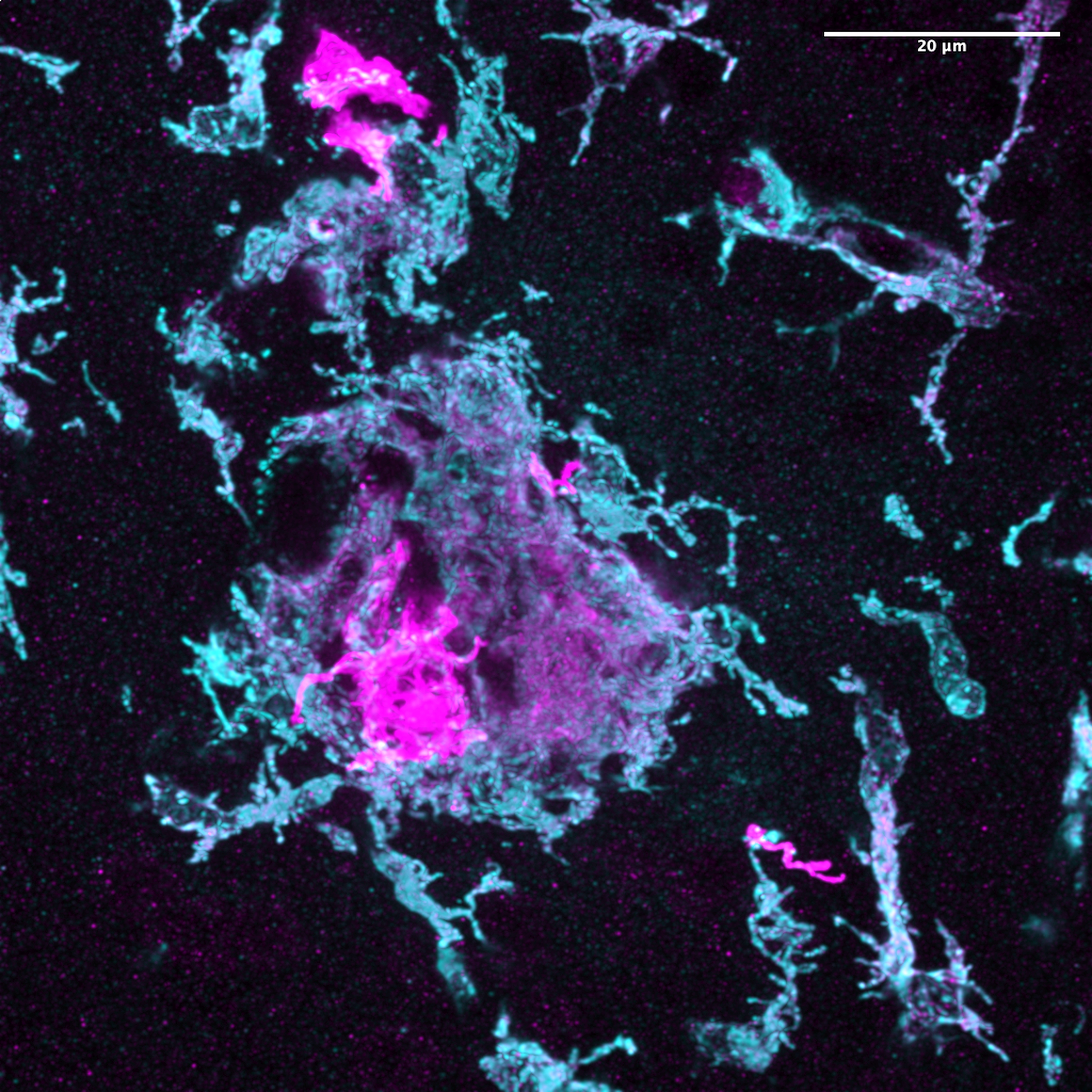
In TBI, a regulated neuroinflammatory response activates glial cells (reactive gliosis) and recruits them to the injury site. This reactive gliosis is critical for wound healing; however, it also triggers permanent changes in the extracellular matrix, impeding the integration of new neurons—whether transplanted or generated in situ through direct reprogramming. Additionally, reactive glial cells contribute to secondary pathologies such as neurodegeneration, epilepsy, and glioblastomas. These adverse effects primarily arise from prolonged neuroinflammation at the injury site.
Interestingly, zebrafish possess efficient mechanisms to overcome these obstacles, enabling them to regenerate lost neurons and fully restore damaged neuronal circuits. Zebrafish initiate a neuroinflammatory response to brain injury similar to mammals, but crucially, they limit glial activity once wound healing is complete. This restriction prevents long-term changes that could interfere with recovery or promote pathologies such as glioblastoma (Baumgart et al., 2012; Sanchez et al., 2022; Zambusi et al., 2022; Di Giaimo et al., 2018).
Our translational, cross-species research aims to uncover the cellular and molecular mechanisms underlying zebrafish’s restorative neurogenesis and controlled glial responses. We seek to adapt these findings for mouse models of cerebral cortex injury and human brain organoids, ultimately laying the groundwork for regenerative therapies applicable to human brain diseases.
Loss of functional neuronal circuits is a hallmark of numerous central nervous system (CNS) pathologies, including traumatic brain injuries (TBI), stroke, neurodegenerative disorders, and brain cancers. The limited recovery of neuronal circuit functionality remains a major challenge in treating these conditions, leading to poor outcomes despite the availability of curative therapies.
In TBI, a regulated neuroinflammatory response activates glial cells (reactive gliosis) and recruits them to the injury site. This reactive gliosis is critical for wound healing; however, it also triggers permanent changes in the extracellular matrix, impeding the integration of new neurons, whether transplanted or generated in situ through direct reprogramming. Additionally, reactive glial cells contribute to secondary pathologies such as neurodegeneration, epilepsy, and glioblastomas. These adverse effects primarily arise from prolonged neuroinflammation at the injury site.
Interestingly, zebrafish possess efficient mechanisms to overcome these obstacles, enabling them to regenerate lost neurons and fully restore damaged neuronal circuits. Zebrafish initiate a neuroinflammatory response to brain injury similar to mammals, but crucially, they limit glial activity once wound healing is complete. This restriction prevents long-term changes that could interfere with recovery or promote pathologies such as glioblastoma (Baumgart et al., 2012; Sanchez et al., 2022; Zambusi et al., 2022; Di Giaimo et al., 2018).
Our translational, cross-species research aims to uncover the cellular and molecular mechanisms underlying zebrafish’s restorative neurogenesis and controlled glial responses. We seek to adapt these findings for mouse models of cerebral cortex injury and human brain organoids, ultimately laying the groundwork for regenerative therapies applicable to human brain diseases.


Our Publications
Wiesbeck, M. ; Alard, E. ; Merino, F.L. ; Chowdhury, N. ; Egert, L. ; Danese, A. ; Imhof, S. ; Borgia, M.I. ; Rajan, A. ; Marx, N.F. ; Kepesidis, E. ; Köferle, A. ; Cerron-Alvan, L.M. ; Vierl, F. ; Truong, T.-T. ; Thorwirth, M. ; Bilalli, L. ; Ninkovic, J. ; Schieweck, R. ; Diefenbacher, M. ; Hauck, S.M. ; Trainor, P.A. ; Mardakheh, F.K. ; Götz, M. ; Stricker, S.H.
Manipulation of protein translation and stem cell self-renewal by CRISPR activation of rRNA transcription.Maddhesiya, P. ; Lepko, T. ; Steiner‑Mezzardi, A. ; Schneider, J. ; Schwarz, V. ; Merl-Pham, J. ; Berger, F. ; Hauck, S.M. ; Ronfani, L. ; Bianchi, M.E. ; Simon, T. ; Krontira, A. ; Masserdotti, G. ; Götz, M. ; Ninkovic, J.
Hmgb2 improves astrocyte to neuron conversion by increasing the chromatin accessibility of genes associated with neuronal maturation in a proneuronal factor-dependent manner.Bocchi, R. ; Thorwirth, M. ; Simon-Ebert, T. ; Koupourtidou, C. ; Clavreul, S. ; Kolf, K. ; Della Vecchia, P. ; Bottes, S. ; Jessberger, S. ; Zhou, J. ; Wani, G. ; Pilz, G.A. ; Ninkovic, J. ; Buffo, A. ; Sirko, S. ; Götz, M. ; Fischer-Sternjak, J.
Astrocyte heterogeneity reveals region-specific astrogenesis in the white matter.Natarajan, P. ; Koupourtidou, C. ; de Resseguier, T. ; Thorwirth, M. ; Bocchi, R. ; Fischer-Sternjak, J. ; Gleiss, S. ; Rodrigues, D. ; Myoga, M.H. ; Ninkovic, J. ; Masserdotti, G. ; Götz, M.
Single cell deletion of the transcription factors Trps1 and Sox9 in astrocytes reveals novel functions in the adult cerebral cortex.Koupourtidou, C. ; Schwarz, V. ; Aliee, H. ; Frerich, S. ; Fischer-Sternjak, J. ; Bocchi, R. ; Simon-Ebert, T. ; Bai, X. ; Sirko, S. ; Kirchhoff, F. ; Dichgans, M. ; Götz, M. ; Theis, F.J. ; Ninkovic, J.
Shared inflammatory glial cell signature after stab wound injury, revealed by spatial, temporal, and cell-type-specific profiling of the murine cerebral cortex.Mitic, N. ; Neuschulz, A. ; Spanjaard, B. ; Schneider, J. ; Fresmann, N. ; Novoselc, K.T. ; Strunk, T. ; Münster, L. ; Olivares-Chauvet, P. ; Ninkovic, J. ; Junker, J.P.
Dissecting the spatiotemporal diversity of adult neural stem cells.Sirko, S. ; Schichor, C. ; Della Vecchia, P. ; Metzger, F. ; Sonsalla, G. ; Simon, T. ; Bürkle, M. ; Kalpazidou, S. ; Ninkovic, J. ; Masserdotti, G. ; Sauniere, J.F. ; Iacobelli, V. ; Iacobelli, S. ; Delbridge, C. ; Hauck, S.M. ; Tonn, J.C. ; Götz, M.
Injury-specific factors in the cerebrospinal fluid regulate astrocyte plasticity in the human brain.Bai, X. ; Zhao, N. ; Koupourtidou, C. ; Fang, L.P. ; Schwarz, V. ; Caudal, L.C. ; Zhao, R. ; Hirrlinger, J. ; Walz, W. ; Bian, S. ; Huang, W. ; Ninkovic, J. ; Kirchhoff, F. ; Scheller, A.
In the mouse cortex, oligodendrocytes regain a plastic capacity, transforming into astrocytes after acute injury.Kiebler, M.A. ; Ninkovic, J.
RNA biology: Alternative splicing hits synaptic function and behavior.Zambusi, A. ; Novoselc, K.T. ; Hutten, S. ; Kalpazidou, S. ; Koupourtidou, C. ; Schieweck, R. ; Aschenbroich, S. ; Silva, L. ; Yazgili, A.S. ; van Bebber, F. ; Schmid, B. ; Möller, G. ; Tritscher, C. ; Stigloher, C. ; Delbridge, C. ; Sirko, S. ; Günes, Z.I. ; Liebscher, S. ; Schlegel, J. ; Aliee, H. ; Theis, F.J. ; Meiners, S. ; Kiebler, M. ; Dormann, D. ; Ninkovic, J.
TDP-43 condensates and lipid droplets regulate the reactivity of microglia and regeneration after traumatic brain injury.Liebich, A. ; Schmid, N. ; Koupourtidou, C. ; Herrmann, C. ; Dietrich, K.G. ; Welter, H.F. ; Ninkovic, J. ; Mayerhofer, A.
The molecular signature of human testicular peritubular cells revealed by single-cell analysis.Sanchez-Gonzalez, R. ; Koupourtidou, C. ; Lepko, T. ; Zambusi, A. ; Novoselc, K.T. ; Durovic, T. ; Aschenbroich, S. ; Schwarz, V. ; Breunig, C. ; Straka, H. ; Huttner, H.B. ; Irmler, M. ; Beckers, J. ; Wurst, W. ; Zwergal, A. ; Schauer, T. ; Straub, T. ; Czopka, T. ; Trümbach, D. ; Götz, M. ; Stricker, S.H. ; Ninkovic, J.
Innate immune pathways promote oligodendrocyte progenitor cell recruitment to the injury site in adult Zebrafish brain.Giehrl-Schwab, J. ; Giesert, F. ; Rauser, B. ; Lao, C.L. ; Hembach, S. ; Lefort, S. ; Ibarra Del Rio, I.A. ; Koupourtidou, C. ; Luecken, M. ; Truong, D.J.J. ; Fischer-Sternjak, J. ; Masserdotti, G. ; Prakash, N. ; Ninkovic, J. ; Hölter, S.M. ; Vogt Weisenhorn, D.M. ; Theis, F.J. ; Götz, M. ; Wurst, W.
Parkinson's disease motor symptoms rescue by CRISPRa-reprogramming astrocytes into GABAergic neurons.Gengatharan, A. ; Malvaut, S. ; Marymonchyk, A. ; Ghareghani, M. ; Snapyan, M. ; Fischer-Sternjak, J. ; Ninkovic, J. ; Götz, M. ; Saghatelyan, A.
Adult neural stem cell activation in mice is regulated by the day/night cycle and intracellular calcium dynamics.Zambusi, A. ; Pelin Burhan, Ö. ; Di Giaimo, R. ; Schmid, B. ; Ninkovic, J.
Granulins regulate aging kinetics in the adult zebrafish telencephalon.Contact