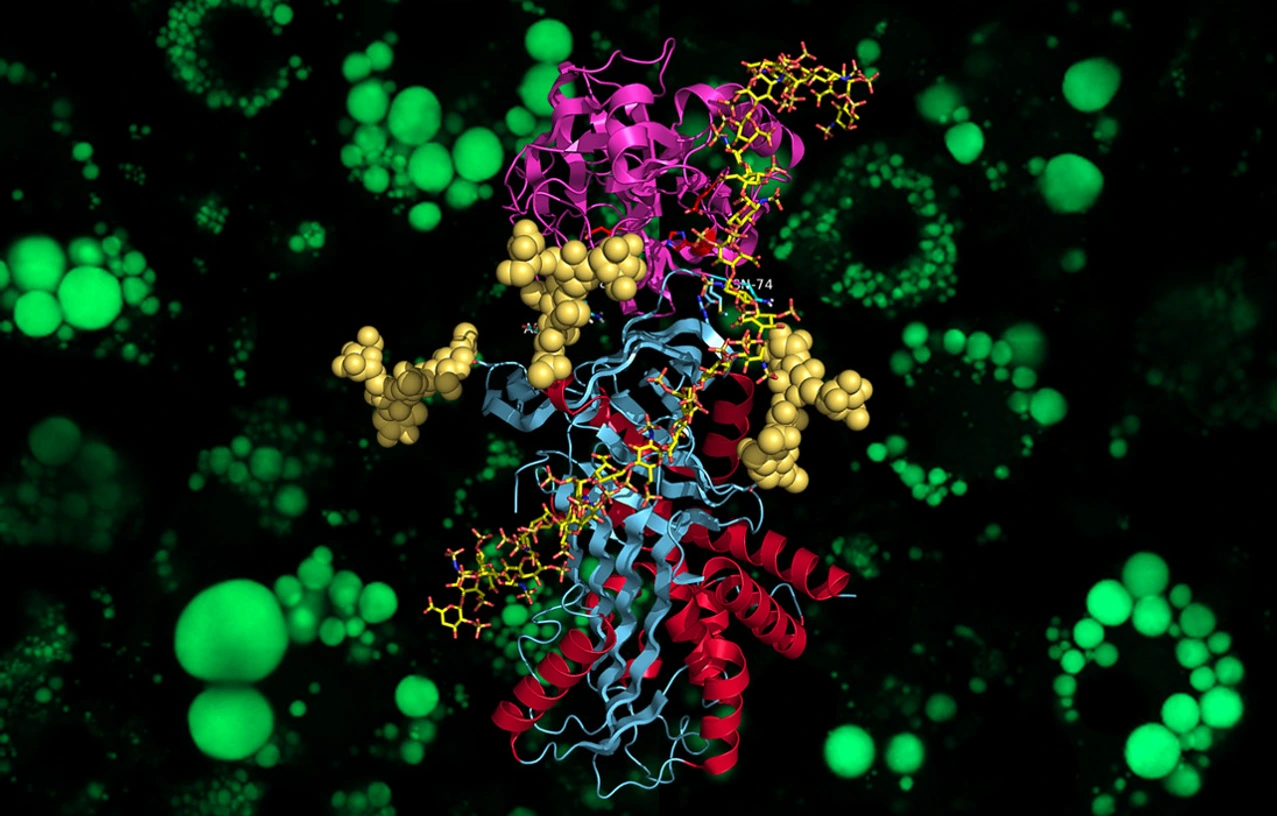
3D rendering of the crystal structure of Vaspin

Heiker Lab

Adipocyte Metabolic Fitness

How do adipocytes maintain metabolic competence and energy expenditure?

Adipose tissue is central to the regulation of whole-body energy homeostasis. Beyond storing excess energy, white, beige and brown adipocytes continuously adapt their metabolic activity to changing nutritional and environmental demands. In obesity, this adaptive capacity progressively deteriorates, leading to impaired mitochondrial function, reduced thermogenic activity, chronic inflammation and metabolic dysfunction. Restoring adipocyte metabolic fitness therefore represents a promising strategy to complement current obesity therapies, which primarily focus on reducing food intake.

Our research investigates the molecular mechanisms that determine metabolic fitness in adipocytes. We study how intracellular proteins regulate mitochondrial function, lipid utilization, thermogenic activation and energy expenditure, and how these processes become impaired during obesity. By integrating human adipocyte models, genetically modified mice and multi-omics technologies, we identify key regulators that preserve or restore metabolically competent adipocytes.

A major focus of our work is the discovery of previously unrecognized protein functions in adipocyte metabolism. Our studies have established myoglobin as a critical regulator of lipid utilization and mitochondrial respiration in thermogenic adipocytes and revealed its essential role in maintaining whole-body energy expenditure and metabolic health. Building on these findings, we investigate additional molecular pathways that control adipocyte metabolic plasticity and explore therapeutic approaches aimed at rejuvenating adipocyte function to increase energy expenditure and improve metabolic health.

Our goal is to identify molecular mechanisms that preserve or restore adipocyte metabolic fitness and to harness these pathways to increase energy expenditure in obesity.

Selected Discoveries

2026 Advance Science, e76191

Strehlau C, Broghammer H, Gebhardt C, Schubert K, Hagemann T, Hoffmann A, Midilli S, Zimmer R, Karagiannakou V, Georgiadi A, Ost M, Krüger M, Roth L, Krause K, Klöting N, Keller M, Wabitsch M, Nuwayhid R, Stimson RH, Stumvoll M, Blüher M, Weiner J, Heiker JT

Adipocyte Myoglobin Is a Determinant of Energy Expenditure and a Potential Target to Limit Obesity We identify myoglobin as a key regulator of mitochondrial metabolism and lipid utilization in thermogenic adipocytes, demonstrating that restoring myoglobin function enhances adipocyte metabolic fitness and represents a promising strategy to limit obesity.
2025 Nature Communications, 16:11075

Rapöhn I, Broghammer H, Hoffmann A, Möhlis K, Moormann A, Kaczmarek I, Thor D, Großkopf H, Krieg L, Karkossa I, Schubert K, von Bergen M, Krause K, Breitfeld J, Kovacs P, Klöting N, Nuwayhid R, Langer S, Ghosh A, Wolfrum C, Stumvoll M, Blüher M, Heiker JT°, Weiner J

Inhibition of adipocyte lipolysis by vaspin impairs thermoregulation in vivo. We demonstrate that the serpin vaspin suppresses adipocyte lipolysis through LRP-family receptor signaling, thereby limiting adaptive thermogenesis and energy expenditure in vivo.
2022 Clinical and Translational Medicine, 12:e1108

Christen L, Broghammer H, Rapöhn I, Möhlis K, Strehlau C, Ribas-Latre A, Gebhardt C, Roth L, Krause K, Landgraf K, Körner A, Rohde-Zimmermann K, Hoffmann A, Klöting N, Ghosh A, Sun W, Dong H, Wolfrum C, Rassaf T, Hendgen-Cotta U, Stumvoll M, Blüher M, Heiker JT

Myoglobin-Mediated Lipid Shuttling Increases Adrenergic Activation of Brown and White Adipocyte Metabolism and is as a Marker of Thermogenic Adipocytes in Humans We uncover an unexpected lipid-binding function of myoglobin that enhances mitochondrial respiration, adrenergic activation and thermogenic capacity in brown and beige adipocytes.
2026 Molecular Metabolism, 104:102315

Hagemann T, Hoffmann A, Rohde-Zimmermann K, Broghammer H, Massier L, Kovacs P, Stumvoll M, Blüher M, Heiker JT°, Weiner J°

Diet and temperature interactively impact brown adipose tissue gene regulation controlled by DNA methylation We reveal how environmental cues, including diet and temperature, interact through DNA methylation to regulate gene expression and functional adaptation of brown adipose tissue.

Collaborative Research

2022 Microbiome, 10(1):96

Münzker J, Haase N, Till A, Sucher R, Haange SB, Nemetschke L, Gand T, Jäger E, Chen J, Riede SJ, Chakaroun R, Massier L, Kovac P, Ost M, Rolle-Kampczyk U, Jehmlich N, Weiner J, Heiker JT, Klöting N, Seeger G, Morawski M, Keitel V, Pfeifer A, von Bergen M, Heeren J, Krügel U, Fenske WK

Functional changes of the gastric bypass microbiota reactivate thermogenic adipose tissue and systemic glucose control via intestinal FXR-TGR5 crosstalk in diet-induced obesity. As part of a multidisciplinary collaboration, we contributed to demonstrating that bariatric surgery-induced alterations of the gut microbiota promote thermogenic adipose tissue activation and improve systemic glucose metabolism through intestinal FXR–TGR5 signaling.
2024 Cell Reports, 43(12):114987

Roth L, Hoffmann A, Wagner L, Strehlau C, Gosh A, Noé F, Wolfrum C, Weiner J, Heiker JT, Klöting N, Stumvoll M, Tönjes A, Blüher M, Mittag J, Krause K

Thyroid hormones are required for thermogenic activation of Zfp423-deficient beige adipocytes. Contributing our expertise in thermogenic adipocyte biology, we helped demonstrate that thyroid hormones are indispensable for the activation of beige adipocytes and adaptive thermogenesis.

Contact Project Leader

MA-Foto John Heiker_freigestellt
PD Dr. Dr. John Heiker

Group Leader of Molecular Obesity Research, HI-MAG

Leipzig

View profile