RNA Quality Control
Apoorva Baluapuri Lab
The RNA Quality Control lab studies what happens when RNA polymerase II fails to reach the end of a gene, and how the double-stranded RNA (dsRNA) released by that failure drives disease.
The RNA Quality Control lab studies what happens when RNA polymerase II fails to reach the end of a gene, and how the double-stranded RNA (dsRNA) released by that failure drives disease.
About our Research
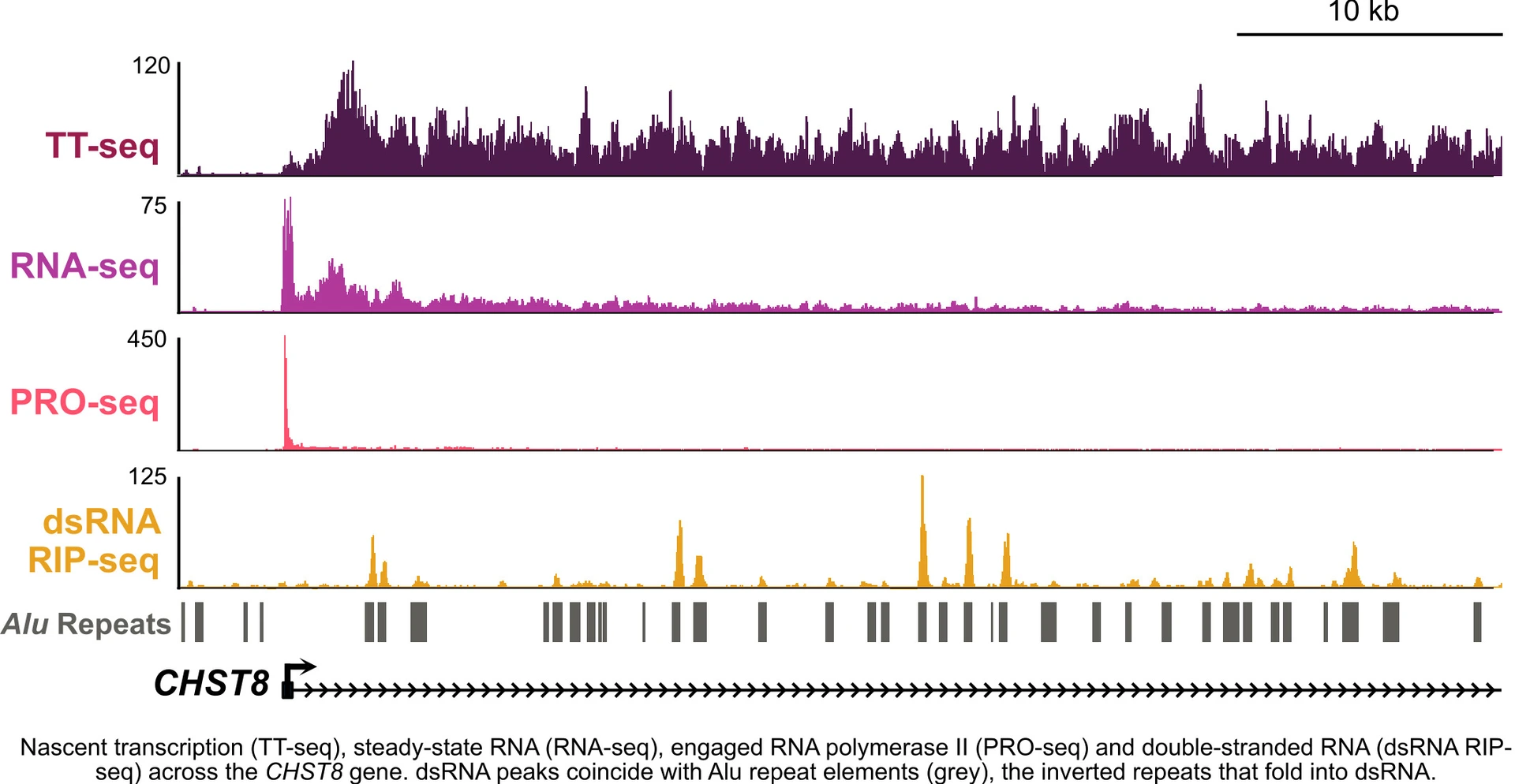
Mammalian genes are long, and most of that length is intronic. We study what happens when RNA polymerase II does not reach the end of a gene: transcription terminates early inside an intron and releases an incomplete RNA. These incomplete RNAs are rich in inverted repeats, fold back on themselves into double-stranded RNA, and the cell recognises them as a virus and responds with innate immune activation and the integrated stress response.
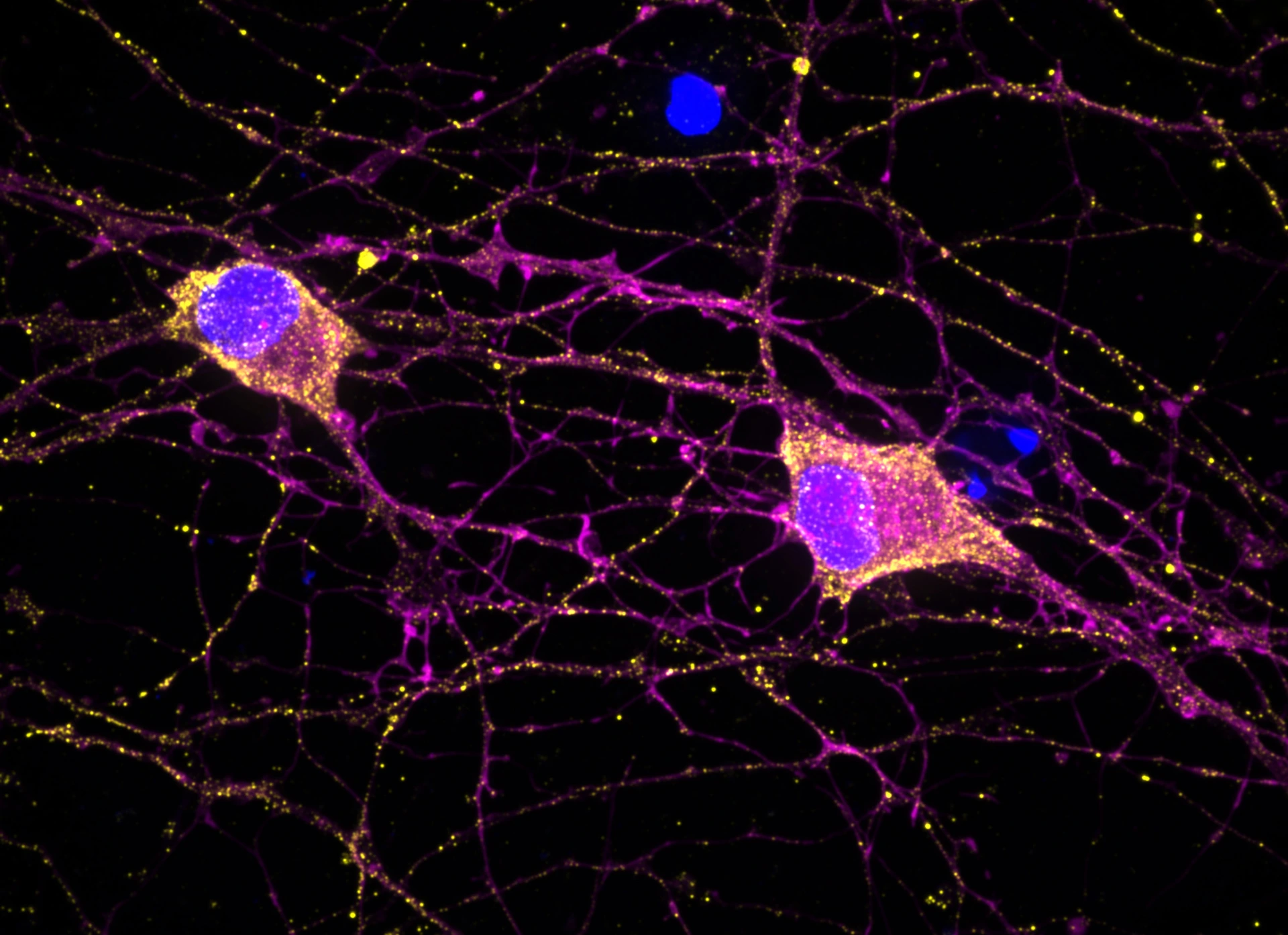
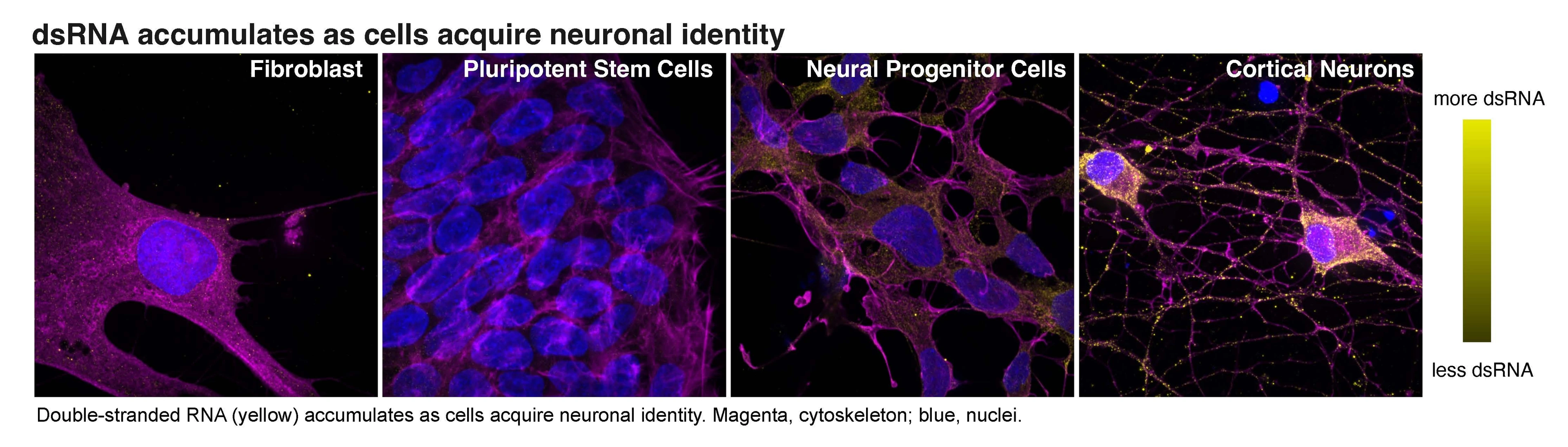
The amount of dsRNA within a cell also depends on the cell type itself: it’s less in fibroblasts, iPSCs and neural progenitors, and more in the neurons derived from them. Interestingly, neurons also transcribe the longest, most intron-rich genes in the genome, and could thus be affected to a higher degree when transcription goes unfinished.
What we work on
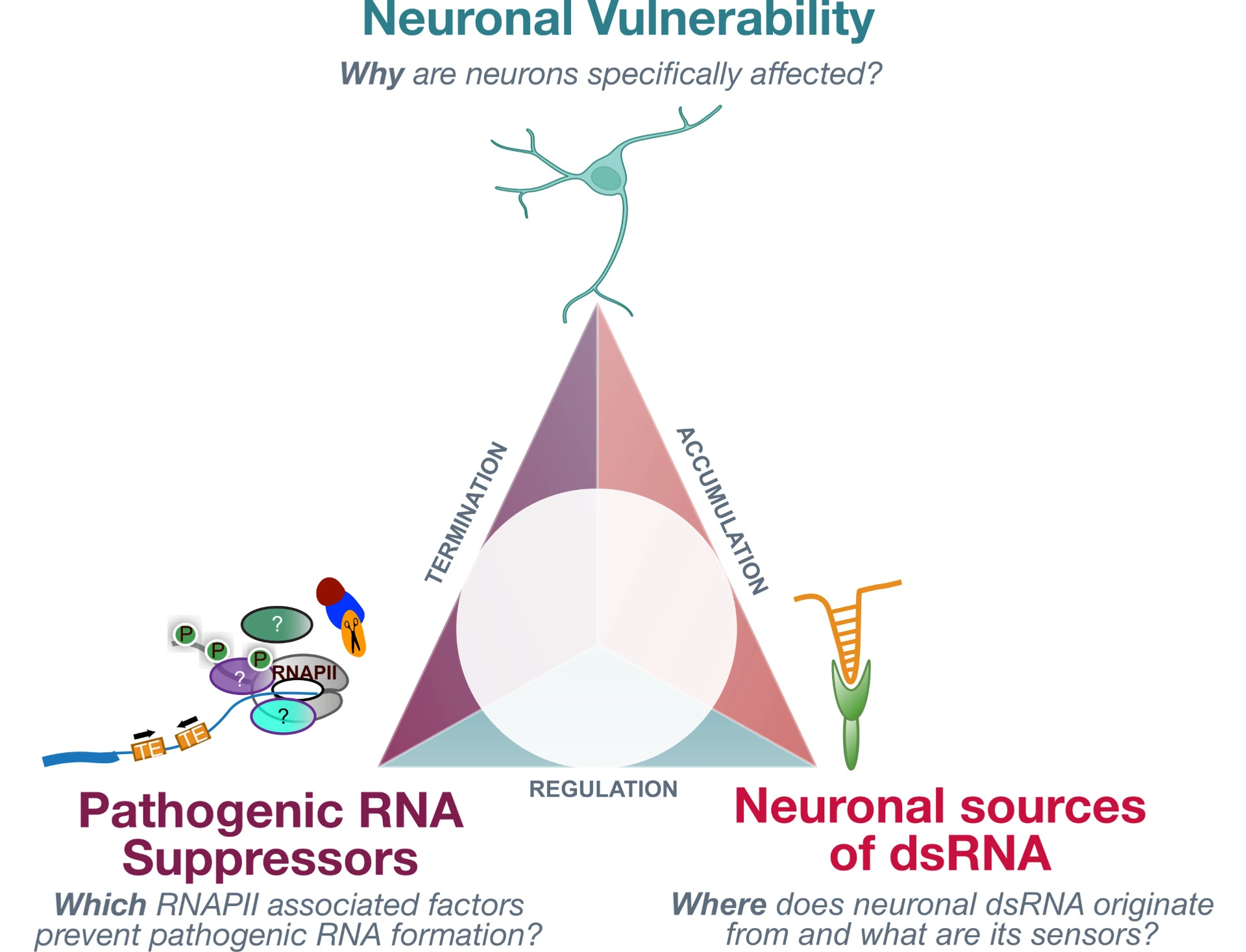
We approach the problem from three sides: how transcription termination is regulated, how its failure lets pathogenic RNA accumulate, and why neurons are the most vulnerable to this failure.
- Neuronal vulnerability
How do neurons meet the challenge of transcribing very long genes?
Neurons depend on the longest genes in the genome, and may be the least able to tolerate incomplete transcription. We ask what lets them transcribe such long genes, and what fails when they cannot. Pathogenic RNA suppressors
Which RNAPII-associated factors prevent pathogenic RNA formation?
A set of factors keeps polymerase from stopping early. We are identifying which of them guard against pathogenic RNA, and what happens when they are lost.Neuronal sources of dsRNA
Where does neuronal dsRNA originate, and what are its sensors?
We trace which incomplete transcripts fold into double-stranded RNA, and which innate-immune sensors detect them to switch on the stress response.
Our technologies
- Nascent transcription genomics.
We measure transcription as it happens, with PRO-seq and TT-seq, rather than inferring it from steady-state RNA. - Patient-derived neurons.
We differentiate iPSC lines carrying mutations in transcription factors into cortical neurons, alongside isogenic controls. - Computational tools.
We build and maintain our own analysis software for nascent-transcription data, and everyone in the lab uses it from their first week.

Contact