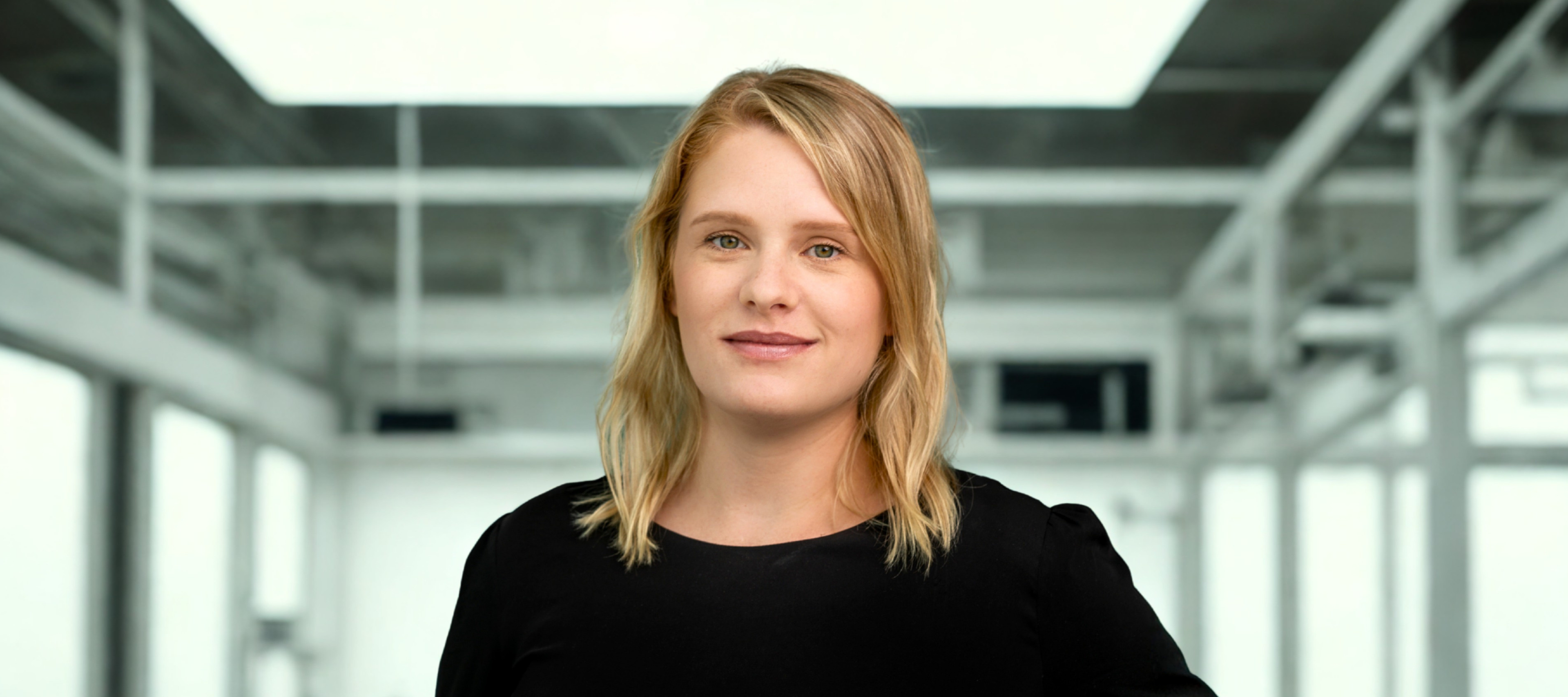
Head of the Junior Group Metabolic Programming across Generations
Dr. Rer. Nat. Merly Vogt
Ingolstädter Landstraße 1, 85764 Neuherberg
"I have always been intrigued by the complexity of factors that shape our behaviors and impact our health. My own research focuses on deciphering the cellular and molecular mechanisms underlying metabolic programming across generations."
Academic Career and Research Areas
After contemplating between a career in the arts or natural sciences during the final years of high school, Merly decided to pursue her interests in Genetics, Molecular Biology and Mathematics and started studying Biology at the University of Cologne in 2005. During those studies, Merly’s love for science grew even more after realizing that successful and impactful research usually combines rigorous scientific practices with innovative and creative approaches.
She first joined the lab of Prof. Dr. Jens Brüning as a Bachelor student in 2008 and continued her early career in his lab as a Fast Track Master’s/PhD student studying “Metabolic Programming of Hypothalamic Neurocircuits by Maternal High-Fat-Feeding”. Merly graduated with a “summa cum laude” as a member of the CECAD Graduate School from the University of Cologne and received the prestigious “Otto Hahn Medal” for outstanding scientific achievements during a PhD from the Max-Planck Society in 2014.
To expand her scientific and technical skillsets, Merly joined the lab of Prof. Dr. Oliver Hobert at Columbia University in New York City as a postdoctoral fellow in 2015. With financial support from the DFG, HFSP and HHMI, Merly employed the model organism C. elegans to dissect the molecular mechanisms underlying inter- and transgenerational physiological changes in response to nutritional stressors during early life.
In June of 2022, Merly joined the Institute for Diabetes and Cancer at the HDC in Munich as a Junior Research Group Leader, where she leads a team at the intersection of molecular metabolism, epigenetics and neuroscience. By employing a bi-directional, two-model research program, they aim to understand how nutritional and metabolic changes impact developmental and epigenetic processes, which in turn contribute to the development of metabolism-related disorders across generations. Ultimately, Merly’s research aims to identify conserved signaling molecules and metabolites that are altered as a result of such metabolic programming, which can serve as a starting point to develop efficient therapeutic or preventative strategies to counteract the ongoing epidemic of metabolic disorder development.
Fields of Work and Expertise
Metabolic Programming Genetics Insulin Signaling Diabetes Epigenetics Behaviour evelopment Intergenerational Effects
Professional Background
Junior Research Group Leader at Helmholtz Munich IDC
Postdoctoral Research Fellow at Howard Hughes Medical Institute for Columbia University in New York City, NY, USA in the lab of Prof. Dr. Oliver Hobert
Graduate Student at the CECAD Graduate School in the lab of Prof. Dr. Jens Brüning, Neuronal Control of Metabolism, University of Cologne and MPI for Metabolism Research, Cologne, Germany
Honors and Awards
- 2015 - HFSP Long-Term Postdoctoral Fellowship
- 2015 - DFG Postdoctoral Fellowship
- 2014 - Otto Hahn Medal from Max-Planck Society for excellent scientific achievements during PhD
- 2010 - CECAD Graduate Student Fellowship