
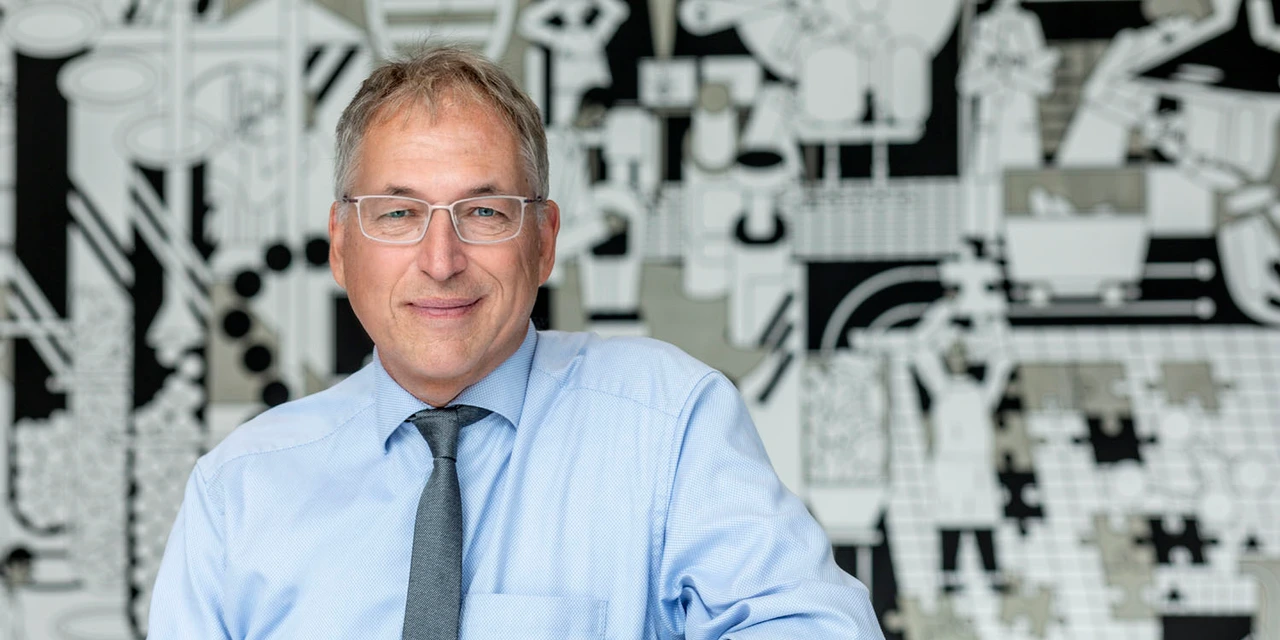
For Helmholtz Munich, this expands its representation in Berlin: In addition to its Berlin office, the center is now also represented at the executive level of the Helmholtz Association.
“I am very much looking forward to working with my colleagues on the Executive Committee of the Helmholtz Association. Together with Diana Stiller and the entire Executive Committee, I would like to help drive the strategic development of the Helmholtz Association and preserve and further strengthen scientific excellence, even in times of limited resources,” says Michael Frieser.
In his new role, Michael Frieser will take on responsibilities at an important interface. This area involves decisions that contribute to shaping framework conditions for research, innovation, and infrastructure across the Helmholtz Association.
The Executive Committee of the Helmholtz Association consists of President Martin Keller, Managing Director Sabine Helling-Mögen, and eight Vice-Presidents.
Six of the Vice-Presidents each coordinate one of the Helmholtz Association’s research fields, while two others represent the administrative area. The Vice-Presidents support, advise, and represent the President in carrying out his duties. These include implementing program-oriented funding, coordinating cross-research-field program development, and advancing the overall strategy.
![[Translate to German:]](https://images.admiralcloud.com/v5/deliverEmbed/dc0b8a92-5fd1-4d84-a967-dd512c633810/image_webp/cropperjsfocus/256/256/1397.9717083786725,0,2110.955386289445,2048,0,1,1/1055,1024?poc=true "Dr. Michael Frieser")
