Abstract human hologram

Genetic and Epigenetic Gene Regulation

Heinig Lab

Overview

The Heinig Lab is located at the Institute of Computational Biology, which is part of the Computational Health Center of Helmholtz Munich. Together with my research group, I develop AI solutions for personalized network-based precision medicine.

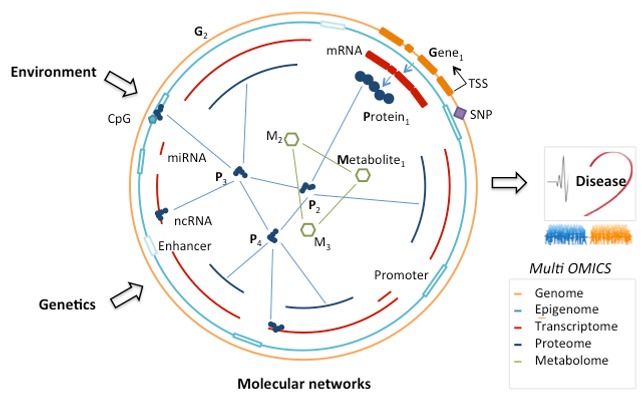
Technological advances allow for an unprecedented in-depth characterization of the molecular basis of complex diseases. In particular, SNP genotyping, DNA methylation assays, and gene expression profiling in large cohorts and in single cells have been used to identify numerous disease-associated loci and genes. However, a deeper mechanistic or systems-level understanding of disease processes still remains elusive in most cases.

The aim of our research is the development and application of computational and statistical tools for the identification of molecular regulatory networks underlying common diseases and the genetic and epigenetic mechanisms controlling these networks from population-level DNA and multi-omics data sets. In a second step, we aim to personalize the networks based on single-cell data. This will enable us to implement new concepts for precision medicine. A special focus is the molecular characterization of cardiovascular and metabolic diseases.

Topics in the Heinig Group

group_scheme_crop

Computational methods to understand the systems genetics of complex traits

Our research group is dedicated to unraveling the intricate relationships between genetic variation, gene regulation, and complex diseases. We aim to bridge the gap between genome-wide association studies (GWAS) and underlying biological mechanisms through innovative approaches in complex trait genetics. We integrate multi-omics data using advanced computational techniques, including network algorithms, Bayesian modeling, and machine learning. Our work focuses on identifying regulatory networks and core genes implicated in complex traits, providing a systems-level view of genetic influences on biological processes. By examining the interplay between genes and their products, we identify key pathways and potential intervention points in disease processes. Our research contributes to the development of more accurate predictive models for disease risk and progression, driving progress towards personalized medicine. Ultimately, we strive to improve risk prediction, enable earlier interventions, and develop more effective treatments tailored to individual genetic profiles, transforming our understanding of complex diseases and individual variability in health outcomes.

medical illustration - transparent human heart

Multi-omics in cardiovascular disease

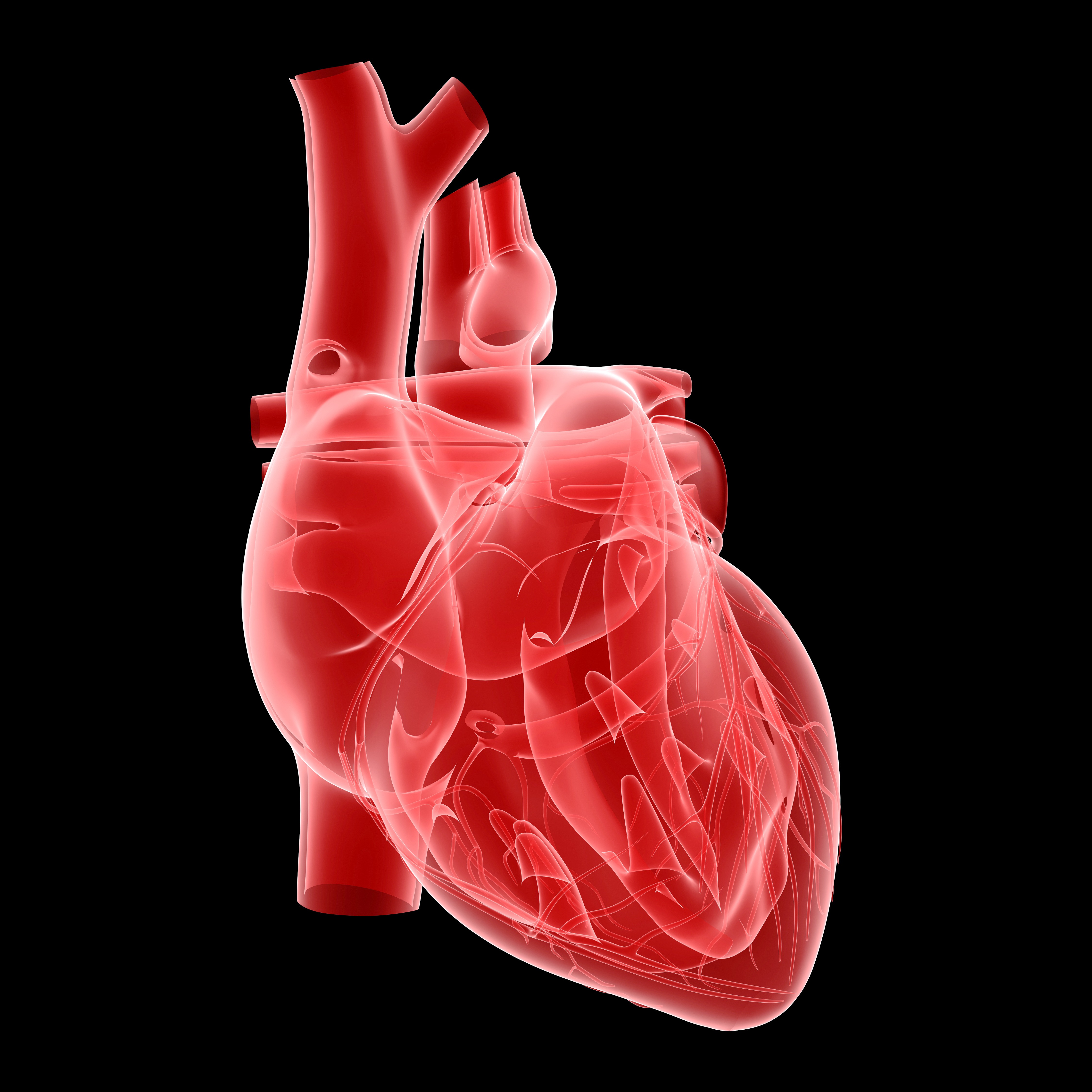
Our research group pioneers the application of multi-omics approaches to revolutionize cardiovascular disease understanding. We integrate diverse molecular data types, from genomics to proteomics, to examine heart biology and pathology at unprecedented resolution. By combining large-scale genomic studies with cutting-edge single-cell analyses, we bridge the gap between genetic variation and disease manifestation at the cellular level. We develop innovative computational methods to analyze these complex datasets, including the identification of expression quantitative trait loci for transcripts (eQTL) and proteins (pQTL) in human heart tissue and the creation of detailed single-cell atlases in health and disease. Our integrative approach unveils novel insights into the molecular mechanisms underlying cardiovascular diseases, contributing to the AI driven identification of new biomarkers and potential therapeutic targets. Through active collaborations with international consortia such as the CZI seed network for the human heart, we aim to transform cardiovascular health understanding and pave the way for precision medicine. Our ultimate goal is to translate molecular insights into improved prediction of disease risk and patient outcomes, bringing us closer to personalized cardiovascular treatments.

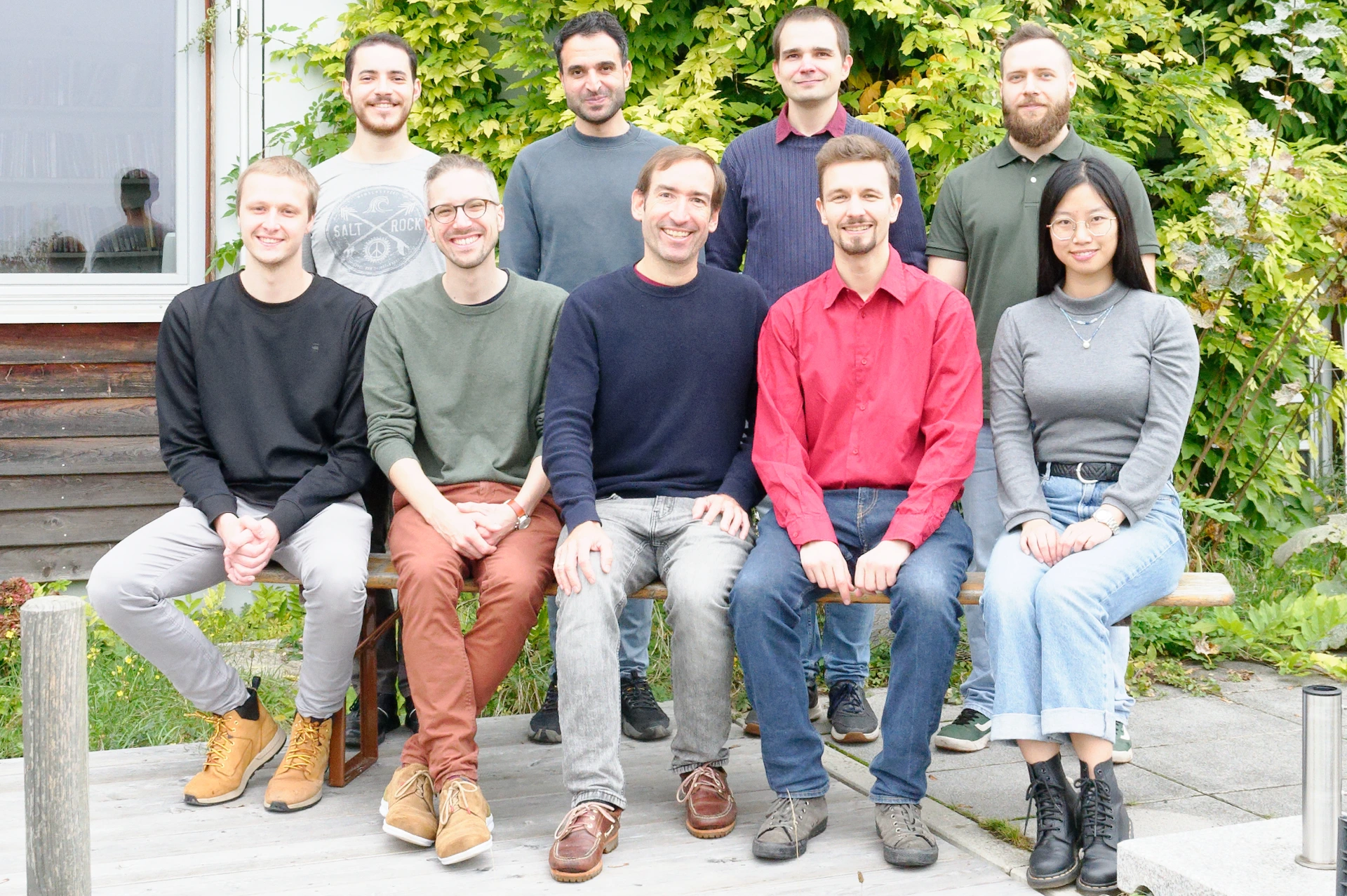
Lab members

Porträt Bhavishya Nelakuditi
Bhavishya Nelakuditi

PhD Student

Visha studied computer engineering with specialisation in bioinformatics and is now working on determining the genetic and clinical factors that influence cardiovascular vascular diseases in collaboration with AG Stark group at LMU Klinikum.

Email  •  Linkedin

Ilaria Looser

PhD Student

Ilaria studied Quantitative Biology and currently works on a data-driven leukaemia classification by integrating multi-modal diagnostic datasets of haematological diseases using machine learning. The project is a collaboration with the Munich Leukemia Laboratory (MLL).

Email  •  Linkedin  •  GitHub

Porträt Jiaqi Lu
Jiaqi Lu

PhD Student

Jiaqi studied mathematics with a focus on statistics. Now her research interest lies in analyzing single-cell CRISPR data and revealing the GRN structure with causal inference.

Email  •  LinkedIn  

Porträt Korbinian Träuble
Korbinian Träuble

PhD Student

Korbinian studied physics and is now working on cardiovascular immunology using single cell RNA sequencing data in a collaboration with an industry partner. He is also working on multi omics analysis in cancer and aging.

Feel free to reach out to me with project ideas for a bachelor or master thesis!

Email  •  LinkedIn  •  X  •  GitHub

Porträt Orhan Bellur
Orhan Bellur

PhD Student

Orhan studied Molecular Biology and Genetics and has a broad interest in investigating metabolic diseases, particularly neurodegenerative diseases, using a systems biology approach. Currently, he is pursuing his PhD, focusing on understanding the molecular mechanisms of Alzheimer's disease and identifying candidate drugs by employing several in silico drug repurposing algorithms.

Email  •  Linkedin

Porträt Raphael Lermer
Raphael Lermer

PhD Student

Raphael studied chemical engineering and is now focusing on survival analyses regarding cardiovascular diseases and investigates aging on the proteomic level by different machine learning approaches.

Feel free to reach out to me with project ideas for a bachelor or master thesis!

Email  •  LinkedIn

Rupshali Dasgupta

PhD Student
Email  •  LinkedIn  

Vladana Đaković

PhD Student

After completing her master’s in Data Science, Vladana began a PhD project on snRNA and scRNA sequencing to study heart aging and cardiovascular diseases. The project is being done in collaboration with LMU Klinikum.

Email  •  Linkedin

Porträt Huang Ziming
Ziming Huang

PhD Student

Ziming studied at Shanghai Institute of Materia Medica and the University of the Chinese Academy of Sciences and is now working on identifying novel targets in heart failure. He aims to develop efficient and reliable computational methods with applications in understanding of immune signatures and inflammatory networks that underlie the development of heart failure. 

Email  •  Linkedin

About Us

Former lab members

​​​​​​

  • Annie Westerlund
  • Toray Akcan
  • Ines Assum
  • Johann Hawe
  • Katharina Schmid
  • Barbara Höllbacher
  • Kartheeswaran Thangathurai
  • Cem Gülec
  • Simon Wengert
  • Andreas Schmidt
  • Sergey Vilov
  • Corinna Losert
  • Florin Ratajczak 

Publications

Kami Pekayvaz*, Corinna Losert*, Viktoria Knottenberg*, Christoph Gold, Irene V. van Blokland, Roy Oelen, Hilde E. Groot, Jan Walter Benjamins, Sophia Brambs, Rainer Kaiser, Adrian Gottschlich, Gordon Victor Hoffmann, Luke Eivers, Alejandro Martinez-Navarro, Nils Bruns, Susanne Stiller, Sezer Akgöl, Keyang Yue, Vivien Polewka, Raphael Escaig, Markus Joppich, Aleksandar Janjic, Oliver Popp, Sebastian Kobold, Tobias Petzold, Ralf Zimmer, Wolfgang Enard, Kathrin Saar, Philipp Mertins, Norbert Huebner, Pim van der Harst, Lude H. Franke, Monique G. P. van der Wijst, Steffen Massberg, Matthias Heinig†, Leo Nicolai†, Konstantin Stark†

Multiomic analyses uncover immunological signatures in acute and chronic coronary syndromes

Florin Ratajczak, Mitchell Joblin, Marcel Hildebrandt, Martin Ringsquandl, Pascal Falter-Braun, Matthias Heinig

Speos: an ensemble graph representation learning framework to predict core gene candidates for complex diseases

Hawe JS*, Wilson R*, Schmid KT*, Zhou L, Lakshmanan LN, Lehne BC, Kühnel B, Scott WR, Wielscher M, Yew YW, Baumbach C, Lee DP, Marouli E, Bernard M, Pfeiffer L, Matías-García PR, Autio MI, Bourgeois S, Herder C, Karhunen V, Meitinger T, Prokisch H, Rathmann W, Roden M, Sebert S, Shin J, Strauch K, Zhang W, Tan WLW, Hauck SM, Merl-Pham J, Grallert H, Barbosa EGV; MuTHER Consortium, Illig T, Peters A, Paus T, Pausova Z, Deloukas P, Foo RSY, Jarvelin MR, Kooner JS, Loh M†, Heinig M†, Gieger C†, Waldenberger M†, Chambers JC†.

Genetic variation influencing DNA methylation provides insights into molecular mechanisms regulating genomic function

Assum I*, Krause J*, Scheinhardt MO, Müller C, Hammer E, Börschel CS, Völker U, Conradi L, Geelhoed B, Zeller T, Schnabel RB†, Heinig M†

Tissue-specific multi-omics analysis of atrial fibrillation

Schmid KT, Höllbacher B, Cruceanu C, Böttcher A, Lickert H, Binder EB, Theis FJ, Heinig M

scPower accelerates and optimizes the design of multi-sample single cell transcriptomic studies

Contact

Herr Heinig, Matthias Dr.
Dr. Matthias Heinig

Junior Group Leader

Gebäude / Raum: 58a, 104