Molecular Metabolism in Adipose & Diabetes Lab (M²A Lab)
Our goal is to uncover new molecular mechanisms underlying adipose tissue dysfunction and insulin resistance, which are central contributors to the development of type 2 diabetes. By dissecting the molecular basis of impaired adipose tissue function, we aim to identify novel therapeutic targets and strategies for preventing and treating type 2 diabetes.
The research in our group focuses on identifying novel regulators of insulin signaling and lipolysis in adipocytes—two interconnected processes that are often impaired in insulin-resistant states. By leveraging advanced molecular biology approaches, such as the development of genetically encoded biosensors, high-content functional screens, and viral-based gene delivery systems, we aim to dissect the signaling networks and metabolic alterations that accompany insulin resistance. Through this mechanistic understanding, we strive to pinpoint new druggable targets and facilitate the discovery of next-generation insulin sensitizers, ultimately advancing therapeutic options for individuals living with type 2 diabetes.
Our goal is to uncover new molecular mechanisms underlying adipose tissue dysfunction and insulin resistance, which are central contributors to the development of type 2 diabetes. By dissecting the molecular basis of impaired adipose tissue function, we aim to identify novel therapeutic targets and strategies for preventing and treating type 2 diabetes.
The research in our group focuses on identifying novel regulators of insulin signaling and lipolysis in adipocytes—two interconnected processes that are often impaired in insulin-resistant states. By leveraging advanced molecular biology approaches, such as the development of genetically encoded biosensors, high-content functional screens, and viral-based gene delivery systems, we aim to dissect the signaling networks and metabolic alterations that accompany insulin resistance. Through this mechanistic understanding, we strive to pinpoint new druggable targets and facilitate the discovery of next-generation insulin sensitizers, ultimately advancing therapeutic options for individuals living with type 2 diabetes.
Scientists at Molecular Metabolism in Adipose & Diabetes Lab (M²A Lab)
The role of adipose tissue dysfunction in hepatic insulin resistance and T2D
High-fat diet and sedentary lifestyle are key environmental factors that drive unhealthy expansion of adipose tissue and chronic inflammation, leading to adipose tissue dysfunction. Dysfunctional adipose tissue promotes cellular stress, inflammation, and lipotoxicity in other organs such as liver, which in turn exacerbates systemic insulin resistance. This whole-body insulin resistance is a central contributor to the development of prediabetes, type 2 diabetes, and other metabolic complications.
FGF1 and insulin control lipolysis by convergent pathways
Previously, we identified a distinct FGF1 signaling pathway that mirrors insulin’s ability to suppress adipose lipolysis and hepatic glucose production (HGP). Specifically, FGF1/FGFR1 signaling in adipocytes activates PDE4D, leading to a reduction in cAMP levels and consequently decreased PKA activity. This results in diminished phosphorylation and translocation of hormone-sensitive lipase (HSL), effectively suppressing lipolysis. Now, we focus on further dissecting the signaling mechanisms by which the FGF1/PDE4D axis inhibits lipolysis, and we aim to define the in vivo contribution of adipose PDE4D to metabolic regulation, particularly its role in controlling lipolysis and HGP.
Identify novel molecular players involved in insulin signaling and regulation of lipolysis in adipocytes.
Dissect the molecular changes underlying insulin resistance to determine new druggable targets.
Development of state-of-the-art molecular tools (i.e. biosensors, screens, viral-based expression) that enable investigation of insulin signaling and lipolysis.
We recently identified a novel signaling cascade that mediates the FGF1/PDE4D anti-lipolytic pathway. Furthermore, we demonstrated that this pathway is essential for adipogenesis and insulin signaling in both mouse and human adipocytes.
Activation of the FGF1/FGFR1 signaling pathway induces phosphorylation of PDE4D depending on RAF and PAKs. Phosphorylation of PDE4D at S44 is required for inhibition of the cAMP/PKA signaling cascade. Consequently, phosphorylation of HSL at S660 is reduced, resulting in the suppression of lipolysis. Chronic inhibition of PAKs impairs adipogenesis and induces insulin resistance indicating a direct involvement of PAKs in adipocyte metabolism.
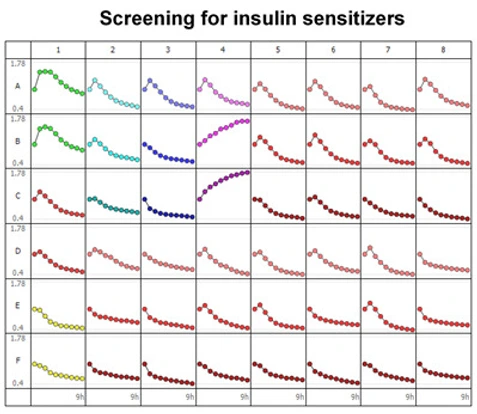
We have recently developed a high-throughput method to measure intracellular lipolysis in live mouse and human adipocytes (Patent filed). This innovative technique allows for real-time monitoring with high sensitivity, eliminating the need for genetic manipulation.
Our method can detect the modulation of lipolysis by beta-adrenergic stimuli, insulin and can detect insulin resistance. Using the suppression of lipolysis by insulin as a surrogate for insulin activity, we test novel compounds to elucidate new insulin sensitizers, specifically targeting adipocytes. The candidates will be investigated using both in vitro and in vivo models of insulin resistance, paving the way for potential novel antidiabetic drugs.
We have recently developed FRET-based biosensors to investigate subcellular cAMP dynamics in adipocytes. In addition to the previously characterized cytosolic and plasma membrane biosensors, we identified a distinct cAMP pool localized around lipid droplets, which displays behavior distinct from the cytoplasmic pool.
Our findings reveal that although both FGF1 and insulin suppress lipolysis, they act on different cAMP compartments: FGF1 selectively inhibits plasma membrane–associated cAMP, whereas insulin primarily targets cytoplasmic cAMP (Krier et.al, accepted). This compartment-specific regulation has high clinical relevance, as it uncovers novel therapeutic targets for modulating lipolysis. Furthermore, selectively manipulating cAMP microdomains or specific PDE isoforms may offer new strategies to improve insulin resistance.
Oops, an error occurred! Request: 9fd55375d2c17 Event:
Come join our team!
We are always looking for curious minds who are interested in science and research. Whether you are an experienced expert in your field or just starting your scientific journey, you will find an inspiring environment with us to bring your ideas to life.