Principal Investigator, Joint between the Institute for Computational Biology, Computational Health Center, and the Institute for Lung Health & Immunity, Environmental Health Center
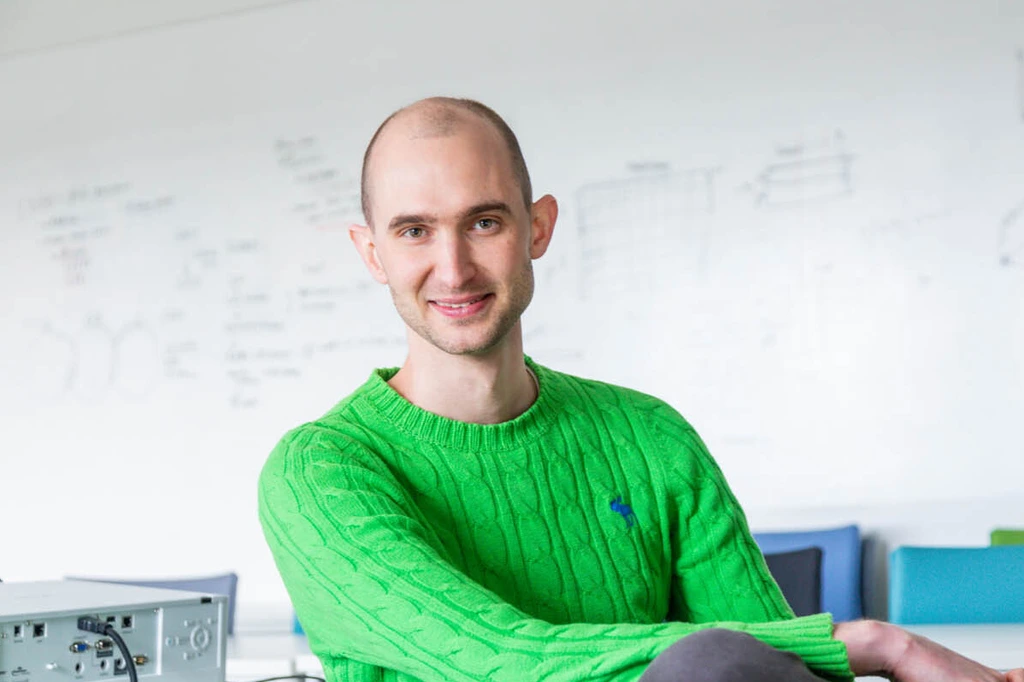
Dr. Malte D. Lücken
“What motivates me is a future where the computational tools we develop are used in hospitals. By combining high-resolution single-cell measurements with powerful predictive AI models, we can improve the lives of patients with lung disease.”
Academic Career and Research Areas
Malte Lücken completed his foundational studies in Physics at the University of Warwick before he transitioned to working in computational biology, completing a PhD in network biology with Prof. Charlotte Deane and Prof. Gesine Reinert at the University of Oxford in the Department of Statistics in 2017. After a stint in industry, working at UCB Pharma in Belgium, he moved to Helmholtz Munich in 2018, where he first glimpsed the transformative potential of single-cell genomics during his postdoctoral research with Prof. Fabian Theis. This keen interest led him to establish his independent research group in 2022. The Luecken lab bridges the Computational Health and Environmental Health Centers, working at the interface of machine learning and single-cell genomics, with a focus on lung health.
Malte Lücken’s research focuses on three related areas of single-cell data science: systematic evaluation of tools, building cellular views of human tissues in single-cell atlases, and modelling inter-individual differences. He started in single-cell genomics by establishing the first best practice workflow for analysing single-cell data, identifying patterns in published tool benchmarks. He has since performed numerous benchmarking studies, and co-founded the Open Problems in Single-cell Analysis project, a living benchmarking framework for single-cell genomics, which he uses to run competitions to engage machine learning scientists to address unsolved challenges in single-cell data science. Leveraging these best practice pipelines, Malte Lücken integrates datasets to build cellular reference atlases of human tissues and organs, generating the first reference atlas of a human tissue in the human lung cell atlas. In this capacity, he leads the integration team of the Human Cell Atlas since 2022, a global organization of over 4000 researchers aiming to characterize the cellular landscape of healthy human tissues and organs. He combines benchmarking and atlasing expertise in developing tools to model differences between individuals. He applies these tools to identify biomarkers and build prognostic models in consortia on lung cancer, asthma, COPD, and lung transplantation.
Fields of Work and Expertise
Computational Biology
Single-cell Genomics
Data Analysis
Benchmarking
Machine Learning
Data Integration
Batch Correction
Multi-omics
Professional Background
Chair of the Steering Board, DZL DataLung school
Coordinator, Artificial Intelligence and Digital Tools working group, German Center for Lung Research (DZL)
Principal investigator, Institute for Computational Biology and Institute for Lung Health & Immunity, Helmholtz Munich, Munich, Germany
Scientific coordinator, Human Cell Atlas Integration Team
Postdoctoral researcher, Machine Learning group, Institute for Computational Biology, Helmholtz Munich, Munich, Germany
Honors and Awards
- 2023 - Outstanding Reproducibility in Science Award for “Benchmarking atlas-level data integration in single-cell genomics”, Massive Analysis and Quality Control Society
- 2022 - 2025 - Chan Zuckerberg Initiative Data Ecosystems Grant Setting Up the HCA Integration Team
- 2019 - 2020 - Helmholtz Advance Career Fellow