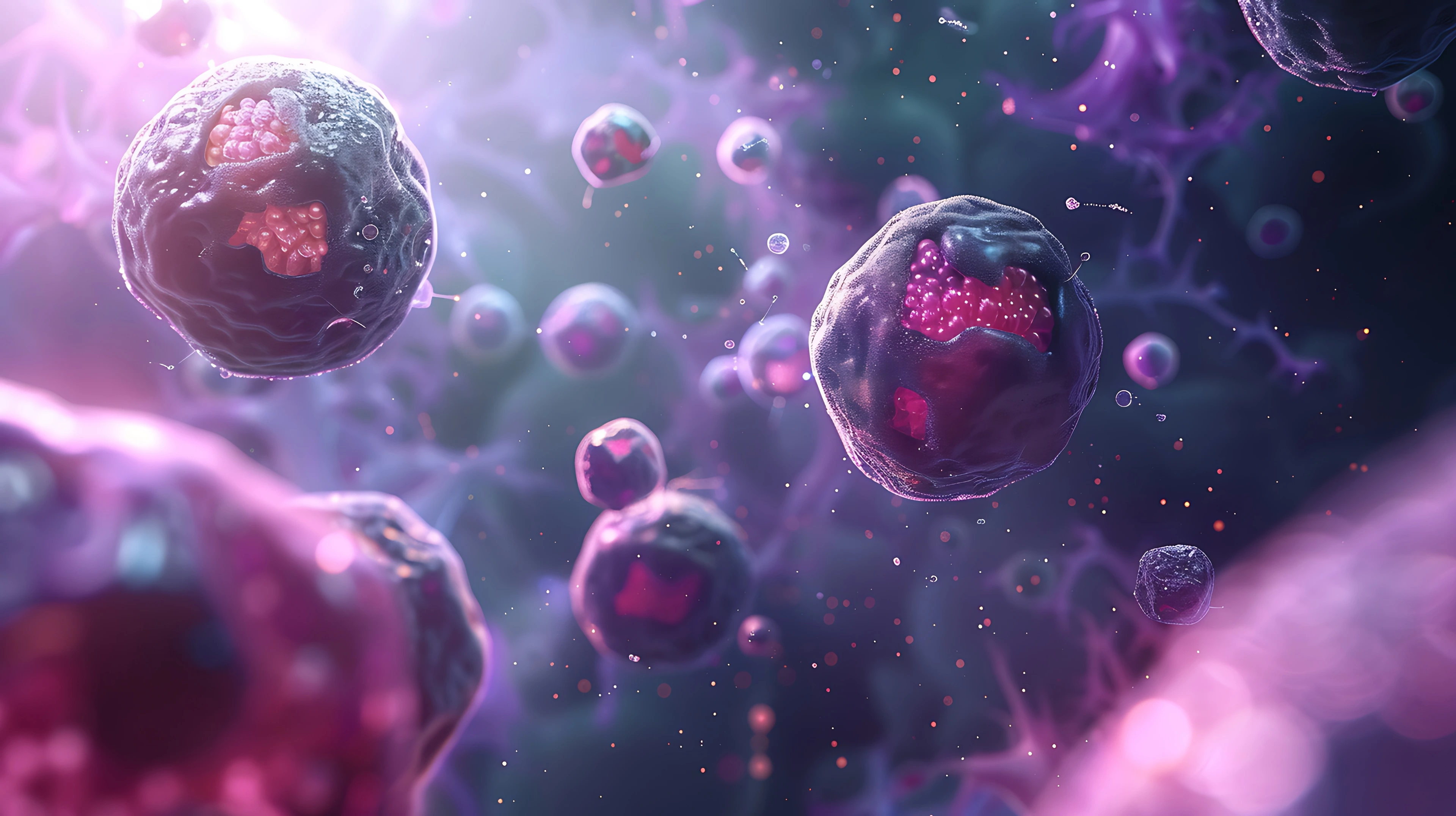
Apoptosis process in a cell

Hadian Group

Research Group Cell Signaling and Chemical Biology

In the Hadian Lab, we study the mechanisms of Cell Death Signaling and translate these findings into future drugs using Chemical Biology and Drug Discovery approaches. We are particularly interested in deciphering the cellular mechanisms controlling Ferroptosis and characterizing regulators of Ubiquitin Signaling in Cell Death processes. In addition, we operate the Compound Screening Platform, giving us strong expertise in high-throughput biochemical screening and high-content phenotypic screening to identify disease-relevant small molecule modulators and highly selective probes.

Back to Main Page

Our Topics

 Research topics:

  1. Ferroptosis Research: Unraveling mechanisms and cellular regulators that induce or block ferroptosis, a regulated non-apoptotic cell-death pathway.
  2. Ubiquitin Signaling: Identification and characterization of protein interactions and regulators of ubiquitin signaling pathways mainly implicated in immune response, cancer development and DNA repair.
  3. Chemical Biology and Drug Discovery: Interrogate biological systems with small molecules to understand underlying mechanistic details and use this information to develop novel therapeutics.

Our Research

Ferroptosis Research

We are interested in deciphering novel mechanisms and cellular regulators of ferroptotic cell death as well as developing tools to precisely detect ferroptosis:

  • We use small molecules with known mode of action (Chemical Biology approach) and CRISPR/RNAi technologies (Genetic approach) to identify cellular regulators controlling ferroptosis.
  • We develop high-content-imaging tools together with Artificial Intelligence techniques to visualize and classify ferroptosis.

Ubiquitin Research

Our Research concentrates on the identification and characterization of new regulators of ubiquitin signaling pathways implicated in cell death pathways:  

  • We investigate the functional contribution of E3 Ligases and deubiquitinases (DUBs) to cell death pathways, in particular ferroptosis.
  • We utilize proteomics and yeast-2-hybrid screening to identify novel protein-protein interactions and networks in ubiquitin signaling pathways.
  • We use target-based as well as high-content phenotypic screening approaches to identify small molecule modulators of ubiquitin signaling.

Drug Development

The Hadian lab interrogates biological systems with small molecules to develop novel therapies. In the past decade, we have initiated and collaborated on a number of drug development studies within the fields of autoimmunity, infectious disease, rare disease, cancer, and more. Several of these studies have yielded patents and are currently at different stages of the drug development pipeline.

In the following are few examples of the current drug development activities:

  • The TRAF6-Ubc13 protein-protein-interaction inhibitors developed for the treatment of autoimmune diseases (Rheumatoid Arthritis, Psoriasis, and more) are currently in preclinical lead optimization—patents: WO/2018/050286 and WO/2019/180207
  • The SARS-CoV-2 PLpro inhibitor acriflavine is being optimized for clinical application against beta-coronaviruses—patent: WO/2022/129210
  • Repurposing of cyclosporin-A as a molecular corrector of mutant ABCA3 may be used to treat genetically caused interstitial lung disease in children

Our Scientists

Porträt_Kamyar_Hadian-freigestellt
Dr. rer. nat. Kamyar Hadian

Deputy Director of the Research Unit Signaling and Translation / Group Leader Cell Signaling and Chemical Biology / Head Compound Screening Platform

Juliane_Tschuck_P1099779-freigestellt
Dr. Juliane Tschuck

Postdoc Hadian Lab

Stefanie Brandner

Technical Assistant Hadian Lab

Ina_Rothenaigner-freigestellt
Dr. rer. nat. Ina Rothenaigner

Postdoc Hadian Lab

christian.puetz P1022509_freigestellt
Christian Pütz

Technical Assistant, IT Administrator Hadian Lab

HelmholtzFoto_Kolak_Andrea-freigestellt
Andrea Kolak

Doctoral Researcher Hadian Lab

Dr. Elisabeth Weber

Postdoc Hadian Lab

Dr. Kenji Schorpp

Postdoc Hadian Lab

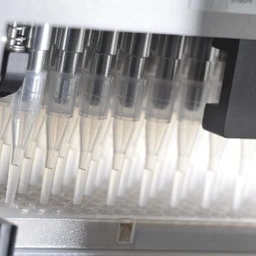
automatic pipetting
Mr. Roboto

The Mysterious Machine

We Are CSCB - News and Highlights

Alle ansehen

Unsere Publikations-Highlights

Juliane Tschuck, Vera Skafar, José Pedro Friedmann Angeli*, Kamyar Hadian*

The metabolic code of ferroptosis: nutritional regulators of cell death

Anand Ramani, Giovanni Pasquini, Niklas J. Gerkau, Vaibhav Jadhav, Omkar Suhas Vinchure, Nazlican Altinisik, Hannes Windoffer, Sarah Muller, Ina Rothenaigner, Sean Lin, Aruljothi Mariappan, Dhanasekaran Rathinam, Ali Mirsaidi, Olivier Goureau, Lucia Ricci-Vitiani, Quintino Giorgio D’Alessandris, Bernd Wollnik, Alysson Muotri, Limor Freifeld, Nathalie Jurisch-Yaksi, Roberto Pallini, Christine R. Rose, Volker Busskamp, Elke Gabriel, Kamyar Hadian* & Jay Gopalakrishnan*

Reliability of high-quantity human brain organoids for modeling microcephaly, glioma invasion and drug screening

Tschuck, J. ; Tonnus, W. ; Gavali, S. ; Kolak, A. ; Mallais, M. ; Maremonti, F. ; Sato, M. ; Rothenaigner, I. ; Friedmann Angeli, J.P. ; Pratt, D.A. ; Linkermann, A. ; Hadian, K.*

Seratrodast inhibits ferroptosis by suppressing lipid peroxidation.

Tschuck, J. ; Padmanabhan Nair, V. ; Galhoz, A. ; Zaratiegui, C. ; Tai, H.-M. ; Ciceri, G. ; Rothenaigner, I. ; Tchieu, J. ; Stockwell, B.R. ; Studer, L. ; Cabianca, D.S. ; Menden, M.P. ; Vincendeau, M.* ; Hadian, K.*

Suppression of ferroptosis by vitamin A or radical-trapping antioxidants is essential for neuronal development.

Kenji Schorpp, Alaa Bessadok, Aidin Biibosunov, Ina Rothenaigner, Stefanie Strasser, Tingying Peng* & Kamyar Hadian*

CellDeathPred: a deep learning framework for ferroptosis and apoptosis prediction based on cell painting

Jenny Jin, Kenji Schorpp, Daniel Samaga, Kristian Unger, Kamyar Hadian* & Brent R. Stockwell*

Machine Learning Classifies Ferroptosis and Apoptosis Cell Death Modalities with TfR1 Immunostaining

Napolitano V, Dabrowska A, Schorpp K, Mourão A, Barreto-Duran E, Benedyk M, Botwina P, Brandner S, Bostock M, Chykunova Y, Czarna A, Dubin G, Fröhlich T, Hölscher M, Jedrysik M, Matsuda A, Owczarek K, Pachota M, Plettenburg O, Potempa J, Rothenaigner I, Schlauderer F, Slysz K, Szczepanski A, Mohn K G-I, Blomberg B, Sattler S*, Hadian K*, Popowicz G* and Pyrc K*

Acriflavine, a clinically approved drug, inhibits SARS-CoV-2 and other betacoronaviruses

Maria Forstner, Sean Lin, Xiaohua Yang, Susanna Kinting, Ina Rothenaigner, Kenji Schorpp, Yang Li, Kamyar Hadian*, & Matthias Griese*

High-Content Screening Identifies Cyclosporin A as a Novel ABCA3-Specific Molecular Corrector

Sean Lin, Kenji Schorpp, Ina Rothenaigner & Kamyar Hadian*

Image-based high-content screening in drug discovery
2020 Cell

Kamyar Hadian* & Brent R. Stockwell*

SnapShot: Ferroptosis

Huizhong Feng, Kenji Schorpp, Jenny Jin, Carrie E. Yozwiak, Benjamin G. Hoffstrom,
Aubrianna M. Decker, Presha Rajbhandari, Michael E. Stokes, Hannah G. Bender,
Joleen M. Csuka, Pavan S. Upadhyayula, Peter Canoll, Koji Uchida, Rajesh K. Soni,
Kamyar Hadian & Brent R. Stockwell

Transferrin Receptor Is a Specific Ferroptosis Marker

Vanessa A. N. Kraft, Carla T. Bezjian, Susanne Pfeiffer, Larissa Ringelstetter, Constanze Müller, Fereshteh Zandkarimi, Juliane Merl-Pham, Xuanwen Bao, Natasa Anastasov, Johanna Kössl, Stefanie Brandner, Jacob D. Daniels, Philippe Schmitt-Kopplin, Stefanie M. Hauck, Brent R. Stockwell*, Kamyar Hadian* & Joel A. Schick*

GTP Cyclohydrolase 1/Tetrahydrobiopterin Counteract Ferroptosis through Lipid Remodeling

Jara K. Brenke, Grzegorz M. Popowicz, Kenji Schorpp, Ina Rothenaigner, Manfred Roesner,
Isabel Meininger, Cédric Kalinski, Larissa Ringelstetter, Omar R'kyek, Gerrit Jürjens, Michelle Vincendeau, Oliver Plettenburg, Michael Sattler, Daniel Krappmann & Kamyar Hadian*

Targeting TRAF6 E3 ligase activity with a small-molecule inhibitor combats autoimmunity

Contact

Porträt_Kamyar_Hadian-freigestellt
Dr. rer. nat. Kamyar Hadian

Deputy Director of the Research Unit Signaling and Translation / Group Leader Cell Signaling and Chemical Biology / Head Compound Screening Platform

Ingolstädter Landstraße 1, 85764 Neuherberg

Gebäude / Raum: 57, 206