Brack-Werner Lab
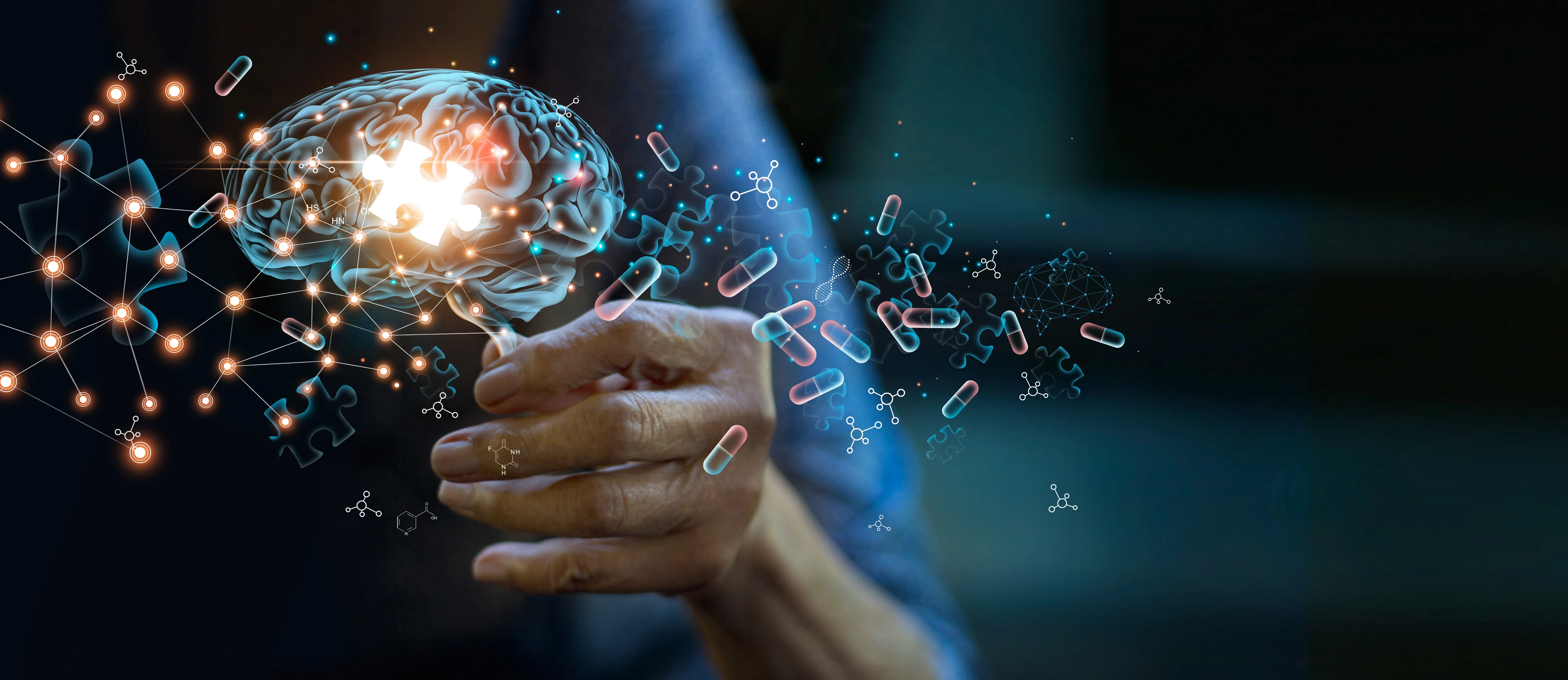
Our research is focused on the development of in vitro models for the discovery of novel antiviral drugs active against viruses that infect the brain.
About our research
Many viruses can invade the brain and cause life-threatening infections. Our main objective is to establish in vitro models of the blood-brain barrier (BBB) capable of predicting whether antiviral compounds can stop viruses from crossing the BBB and select for compounds that can cross the barrier to stop ongoing viral CNS infections. We will initially utilize these models to discover antivirals against tick-borne encephalitis virus (TBEV), a neurotropic flavivirus that can cause life threatening encephalitis in patients. Our research involves techniques in cell biology, immunology, and molecular virology in both BSL2/S2 and BSL3/S3 facilities.
Our research is a collaboration with PD Dr. Joachim J. Bugert, Chief of Virology and Deputy Director Bundeswehr Institute of Microbiology (IMB).
E-mail: joachim1bugert@bundeswehr.org
Bugert Lab: www.instmikrobiobw.de/en/research-development/dpt-viruses-intracellular-pathogens/
Further collaborations with the following research groups at the Institute of Virology:
Vincendeau Lab: www.helmholtz-munich.de/en/viro/research-groups/human-endogenous-retroviruses
Ebert Lab: www.helmholtz-munich.de/en/viro/research-groups/cell-signaling-and-cell-death


Publications
Zuniga, M. ; Herrmann, A. ; Rizzato, M. ; Himl, M. ; Fontes, A. ; Zischka, H. ; Silvestri, R. ; Brancale, A. ; Bugert, J.J. ; Brack-Werner, R.
Establishment of an in vitro human blood-brain barrier model for antiviral screening against neurotropic viruses.Lettl, C. ; Schindele, F. ; Mehdipour, A.R. ; Steiner, T. ; Ring, D. ; Brack-Werner, R. ; Stecher, B. ; Eisenreich, W. ; Bilitewski, U. ; Hummer, G. ; Witschel, M. ; Fischer, W. ; Haas, R.
Selective killing of the human gastric pathogen Helicobacter pylori by mitochondrial respiratory complex I inhibitors.Bauer A. ; Brack-Werner, R.
Modeling HIV latency in astrocytes with the human neural progenitor cell line HNSC.100.Contact