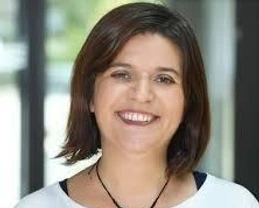
Principle Investigator, ICB
Dr. rer. nat. Annalisa Marsico
“My mission is to decode the language of RNA and its networks across space and time to unlock a new generation of RNA therapies, using explainable AI to transform how we treat currently untreatable diseases.”
Academic Career and Research Areas
Annalisa Marsico's scientific journey began at the intersection of physics, biology and AI. Trained as a theoretical physicist at the University of Bari, Italy, she pivoted to bioinformatics with a Master's in Siena and a doctorate at TU Dresden within the Max Planck IMPRS program — an interdisciplinary path that gave her a necessary quantitative rigour applied to biological questions. Postdoctoral work at the Max Planck Institute for Molecular Genetics in Berlin cemented her focus on RNA and computational genomics.
In 2014, she started her first independent group at the Max Planck Institute for Molecular Genetics while simultaneously holding a Junior Professorship for High-Throughput Genomics at Freie Universität Berlin — a dual role she sustained for four years, building expertise in RNA bioinformatics, machine learning for biological sequences, and teaching.
Since 2019, she has led the Computational RNA Biology group at Helmholtz Munich's Computational Health Center. Her research sits at the frontier of AI, RNA biology, and graph modeling. Her work advances the integration of experimentally grounded RNA foundation models with network-based approaches to decode RNA–protein regulation and RNA function in health and disease, enabling applications from non-coding mutation interpretation to RNA therapeutic design. She continuously develops sequence-to-function models for molecular interactions in, e.g. viral infections, and pioneered graph convolutional networks for disease gene prioritization across cancer, with current applicaitons to neurological disorders. More recently, she developed AI frameworks leveraging biomedical knowledge graphs for tasks ranging from disease understanding to drug repurposing and non-coding RNA regulation. She envisions the future in combining sequence and network modalities through agentic AI to accelerate therapeutic discovery. In collaboration with industry partners such as Boehringer Ingelheim, Roche, and Ethris, she contributes to RNA biomarker discovery and therapeutic design, with the goal of developing RNA drugs for orphan diseases.
Fields of Work and Expertise
RNA Biology
RNA Therapeutics
Language Models
Interpretable AI
Biomedical Knowledge Graphs
Professional Background
Group leader of the Computational RNA Biology group, Helmholtz Munich, Germany
Successful evaluation of Junior Professorship, equivalent to the German Habilitation in Bioinformatics at Freie Universität Berlin
Joint appointment as junior professor for High-throughput Genomics Free University of Berlin and group leader at the Max Planck Institute for Molecular Genetics Berlin, Germany
Postdoc, Max Planck Institute for Molecular Genetics Berlin, Germany
Doctorate, Technical University of Dresden, Joint PhD in bioinformatics inside the IMPRS Max Planck graduate school
Honors and Awards
- 2024 - Received a call for a W3 professorship in "Computational Life Sciences" at RWTH Aachen University, declined.
- 2012 - Award from the Max Planck Society, Berlin, from the workshop series "Career building for excellent female postdocs" (€15,000 personal award).
- 2005 - PhD fellowship from the Max Planck IMPRS graduate school, Dresden.
- 2004 - Master's fellowship from the Italian Ministry of Education, Universities and Research, Siena.