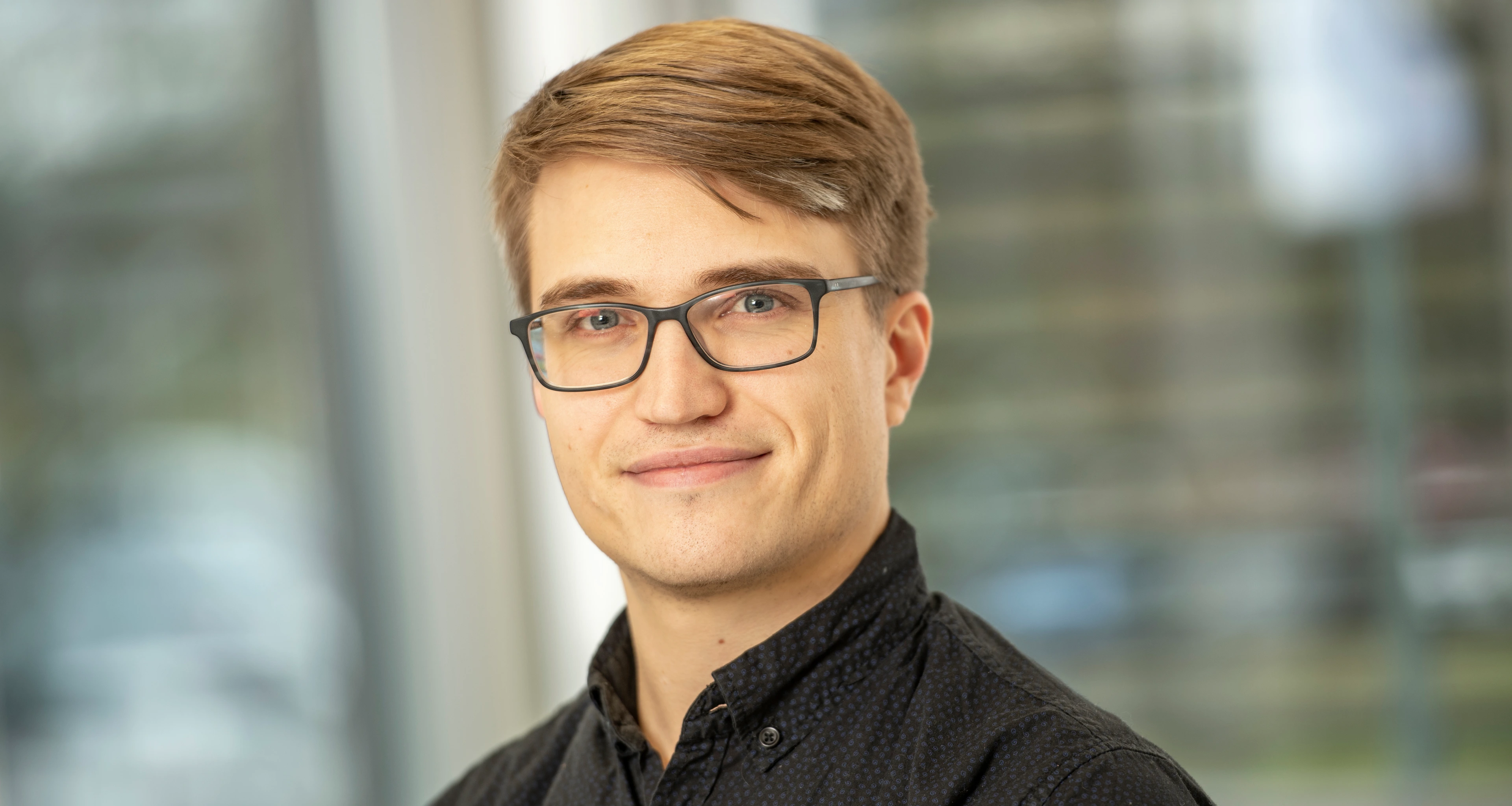
Research Group Leader
Dr. Benjamin Schubert
“Adaptive immunity is central to many disease processes. Our lab uses bioinformatics, machine learning, and combinatorial optimization to study the immune system and help design new immunotherapies.”
Academic Career and Research Areas
My academic path is rooted in bioinformatics and driven by a strong interest in understanding the immune system through computational methods. I completed both my Bachelor’s and Master’s degrees in Bioinformatics at the University of Tübingen, where I focused early on immunoinformatics and vaccine design. This experience sparked a lasting interest in translating computational insights into real biomedical applications. I further developed this focus during my doctoral research at the University of Tübingen under the supervision of Prof. Oliver Kohlbacher, developing advanced immunoinformatics approaches for personalized cancer vaccine design. Through this work, I established a strong foundation in combining machine learning, optimization, and immunology to study complex biological systems.
Following my PhD, I moved to the United States for postdoctoral training at Harvard Medical School and Dana-Farber Cancer Institute. There, I worked on computational protein engineering problems, pioneering the use of co-evolutionary sequence models for protein design.
Today, I lead research at the interface of AI and immunology, heading the Translational Immunoinformatics Lab at Helmholtz Munich and serving as a Principal Investigator at both the German Center for Lung Research and MILA in Canada. My work centers on developing machine learning and optimization methods to analyze immune system dynamics and drive immunotherapy development. By integrating multi-omics data, I aim to uncover the mechanisms underlying disease and immune regulation.
A central goal of my research is translation, enabling the rational design of mRNA- and protein-based therapeutics and vaccines. In parallel, I support scientific infrastructure by coordinating biomedical data platforms and AI initiatives. My work has been recognized with competitive grants, fellowships, and awards, including the Helmholtz High-Potentials Fellowship and the KI-Newcomer Award.
Fields of Work and Expertise
Computational Immunology T cell Biology Vaccine and Immunotherapy Development
Machine Learning
Bayesian Statistics
Continuous Optimization
Mathematical Programming
Professional Background
Principal Investigator at the German Center for Lung Research (DZL), with research focuses on machine learning methods development for neonatal health.
Principal Investigator, Helmholtz International Lab on Causal Cell Dynamics (MILA Canada), with a research focus on multimodal representation learning.
Group Leader, Institute of Computational Biology, Helmholtz Center Munich, Germany, with a research focus on T-cell biology and immunotherapy development.
Postdoctoral Fellow, Department of Systems Biology, Harvard Medical School & cBio Center, Dana-Farber Cancer Research Center, Boston, USA, working on co-evolutionary sequence models for protein design and genomic analysis.
Doctoral studies in Bioinformatics at the Institute of Informatics, University of Tübingen, thesis: ‘Advanced Immunoinformatics Approaches for Precision Medicine’, (supervisor: Prof. Dr. Oliver Kohlbacher)
Honors and Awards
- 2021 - KI-Newcomer 2021 by Gesellschaft für Informatik e.V.
- 2019 - High-Potentials Fellowship Award, awarded by Helmholtz Center Munich, Germany
- 2012 - Full-time Graduate Scholarship, awarded by German Academic Exchange Service (DAAD), Germany