Prof. Dr. Cristina García Cáceres

Deputy Director (acting), Group Leader

Prof. Dr. Cristina García Cáceres

“Astrocytes were until recently considered less relevant than neurons, but we provide evidence supporting that the functioning of those glial cells is required for the brain to govern systemic metabolism, including blood pressure in obesity.”


Visit the Research Website

Career

Prof. Dr. García-Cáceres was originally recruited to the Helmholtz Munich in 2012 from the Universidad Autónoma de Madrid as a Postdoctoral Scientist, and in 2015 was promoted to lead the Astrocyte-Neuron Network Unit at the Institute for Diabetes and Obesity. Since then, she has established and consolidated her own research group focused on studying the properties and physiological consequences of the communication between neurons and astrocytes, aiming to understand the role of those glial cells in physiological and pathological aspects of brain function in the neuroendocrine control of metabolism. Her work was awarded by the prestigious ERC Starting Grant and has already resulted in a paradigm shift in how glucose gets into the brain and how hypothalamic astrocytes tune sympathetic outflow towards cardiovascular target organs for controlling blood pressure.

Fields of Work and Expertise

Obesity  Neuroendocrinology Hypothalamus Glia Astrocytes

Our Goal

Professional Background

2021

Associate Professor (W2)

Associate Professor (W2) of Neuroendocrinology of Systems Metabolism at the Faculty of Medicine of Ludwig-Maximilians-Universität München (LMU) and Helmholtz Munich.

2018

Deputy Director at the Institute

Deputy Director at the Institute for Diabetes and Obesity at Helmholtz Munich, Munich, Germany.

2018

Co-leadership and coordinator

Co-leadership and coordinator of the Brain Academy at the German Center for Diabetes Research (DZD) and Associate Investigator of Munich Cluster For Systems Neurology (Synergy).

2015

Head of the Astrocyte-Neuron Networks

Head of the Astrocyte-Neuron Networks Unit at the Institute for Diabetes and Obesity, Helmholtz Diabetes Center at Helmholtz Munich, Munich, Germany.


Honors and Awards

2023
Young Investigator Award Basic Research -
European Society for Clinical Investigation (ESCI)
2022
DAG Research Award
2021
Awarded by Helmholtz Association of German Research Centres for the establishment of W2 professorship
2018
ERC Starting Grant (ERC-ST2017) by European Research Council. Project: Astrocyte-Neuronal Crosstalk in Obesity and Diabetes (Project number: 757393)
2017
Awarded by ERA-NET NEURON for Excellent Paper in Neuroscience (EPNA) 2017. Astrocytic Insulin Signaling Couples Brain Glucose Uptake with Nutrient Availability. Cell. 2016 Aug 11;166(4):867-80

Highlight Publications

Tim Gruber, Franziska Lechner, Jean-Philippe Krieger, Cristina García-Cáceres

Neuroendocrine gut–brain signaling in obesity The past decades have witnessed the rise and fall of several, largely unsuccessful, therapeutic attempts to bring the escalating obesity pandemic to a halt. Looking back to look ahead, the field has now put its highest hopes in translating insights from how the gastrointestinal (GI) tract communicates with the brain to calibrate behavior, physiology, and metabolism. A major focus of this review is to summarize the latest advances in comprehending the neuroendocrine aspects of this so-called 'gut-brain axis' and to explore novel concepts, cutting-edge technologies, and recent paradigm-shifting experiments. These exciting insights continue to refine our understanding of gut-brain crosstalk and are poised to promote the development of additional therapeutic avenues at the dawn of a new era of antiobesity therapeutics.

Cristina Garcia-Caceres

Advances in appetite regulation by the arcuate nucleus In 2024, new insights identified a cluster of leptin-targeted neurons and integrative networks that link sensory inputs (heat and food perception) with feeding centres and peripheral systems. Key findings revealed hypothalamic site-specific adaptive mechanisms, in which nutritional state-dependent remodelling of extracellular compounds and neuropeptide transmission calibrate appetite via the arcuate nucleus.

Ophélia Le Thuc, Cristina García-Cáceres

Obesity-induced inflammation: connecting the periphery to the brain Obesity is often associated with a chronic, low-grade inflammatory state affecting the entire body. This sustained inflammatory state disrupts the coordinated communication between the periphery and the brain, which has a crucial role in maintaining homeostasis through humoural, nutrient-mediated, immune and nervous signalling pathways. The inflammatory changes induced by obesity specifically affect communication interfaces, including the blood–brain barrier, glymphatic system and meninges. Consequently, brain areas near the third ventricle, including the hypothalamus and other cognition-relevant regions, become susceptible to impairments, resulting in energy homeostasis dysregulation and an elevated risk of cognitive impairments such as Alzheimer’s disease and dementia. This Review explores the intricate communication between the brain and the periphery, highlighting the effect of obesity-induced inflammation on brain function.

Zani F, Blagih J, Gruber T, Buck MD, Jones N, Hennequart M, Newell CL, Pilley SE, Soro-Barrio P, Kelly G, Legrave NM, Cheung EC, Gilmore IS, Gould AP, Garcia-Caceres C, Vousden KH.

The dietary sweetener sucralose is a negative modulator of T cell-mediated responses

1. González-García I, García-Clavé E, Cebrian-Serrano A, Contreras R, Le Thuc O, Xu Y, Gruber G, Legutko B, Lintelmann J, Adamski J, Wurst W, Müller TD, Woods SC, Pfluger P, Tschöp MH, Fisette A, García-Cáceres C.

Estradiol regulates leptin sensitivity to control feeding via hypothalamic Cited1
2022 Glia

Lutomska LM, Miok V, Krahmer N, González García I, Gruber T, Le Thuc O, Murat CD, Legutko B, Sterr M, Saher G, Lickert H, Müller TD, Ussar S, Tschöp MH, Lutter D, García-Cáceres C.

Diet triggers specific responses of hypothalamic astrocytes in time and region dependent manner

Gruber T, Pan C, Contreras-Cardone R., Le Thuc O., Legutko B., Ruiz-Ojeda FJ, Fuente-Fernández M., García-Villalón AL., González-Hedström D., Houben AJHM., Müller TD., Ussar S., Pfluger PT., Woods SC., Joris PJ., Ertürk A., Granado M., Horvath TL., Tschöp MH., García-Cáceres C

Obesity-associated hyperleptinemia alters the gliovascular interface of the hypothalamus to promote hypertension

García-Cáceres C., Balland E., Prevot V., Luquet S., Woods S.C., Koch M., Horvath T.L., Yi CX., Chowen J.A., Verkhratsky A., Araque A., Bechmann I., Tschöp M.H.

Role of astrocytes, microglia, and tanycytes in brain control of systemic metabolism
2016 Cell.

García-Cáceres C, Quarta C, Varela L, Gao Y, Gruber T, Legutko B, Jastroch M, Johansson P, Ninkovic J, Yi CX, Le Thuc O, Szigeti-Buck K, Cai W, Meyer CW, Pfluger PT, Fernandez AM, Luquet S, Woods SC, Torres-Alemán I, Kahn CR, Götz M, Horvath TL, Tschöp MH.

Astrocytic Insulin Signaling Couples Brain Glucose Uptake with Nutrient Availability

Networks and Affiliations

Logo LMU Ludwig-Maximilians-Universität München

Ludwig-Maximilians-Universität München

Read more
European Research Council

European Research Council

Read more
SyNerg - Munich Cluster for Systems Neurology

SyNergy

Logo Deutsches Zentrum für Diabetesforschung

German Center for Diabetes Research

Read more
Logo Helmholtz Gemeinschaft

Helmholtz Association

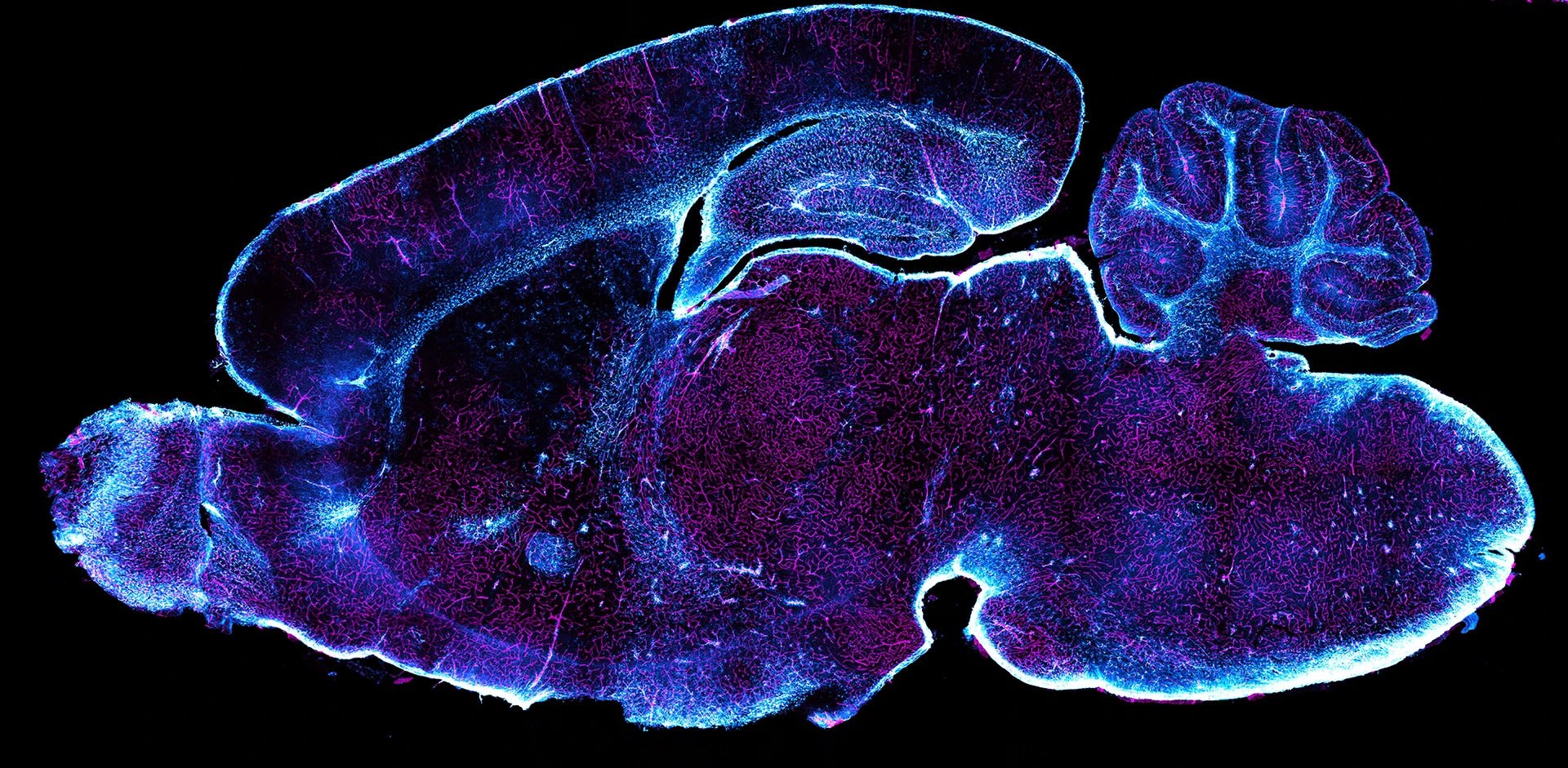
Glia Vascular System of Mouse Brain

Just like us, keep on exploring!