

Group Leader, LHI
Dr. Isis E. Fernandez
“My vision is to stop the progression of pulmonary fibrosis.”
Academic Career and Research Areas
Isis Fernandez completed her medical training at Rafael Núñez University in Cartagena, Colombia. She transitioned into research, joining Harvard Medical School in Boston in 2009 for a voluntary research stay despite having no formal prior research training. There, she was introduced to translational studies in idiopathic pulmonary fibrosis (IPF), an experience that defined her scientific direction. In 2011, she moved to Helmholtz Munich as a research fellow and went on to complete structured doctoral training in medical research and experimental pulmonology in 2018. Her dissertation, based on mechanistic studies in human and animal models of lung fibrosis, was recognized with dissertation awards from both the LMU Medical Faculty and the German Respiratory Society. In parallel, she transitioned back into clinical medicine in Germany, obtained recognition of her medical degree, and joined LMU Klinikum for specialist training in pulmonary medicine. She now holds dual appointments at LMU Klinikum and Helmholtz Munich, where she combines pulmonary medicine with independent translational research. Since 2025, this work has been further advanced through her ERC Starting Grant OMEGA.
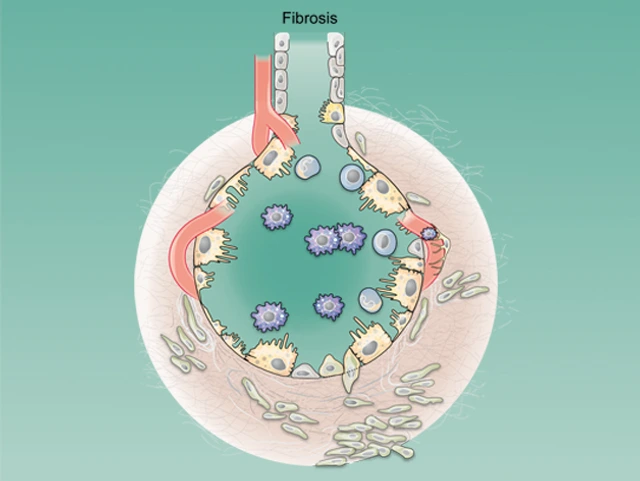
Isis Fernandez’s research focuses on three connected areas of translational fibrosis research: early detection of pulmonary fibrosis, molecular mechanisms of tissue remodeling, and innate immune drivers of disease progression. She contributed to the discovery and characterization of interstitial lung abnormalities (ILA) as the earliest detectable stage of pulmonary fibrosis, helping establish a new framework for studying preclinical disease. Building on her previous work, she combined animal models, matrix biology, and spatial metabolomics to identify biomarkers and therapeutic targets across the initiation, peak, and resolution of lung fibrosis. More recently, her work has centered on mononuclear myeloid cells and the mechanisms of migration, priming, and plasticity that shape fibrotic progression. By integrating patient cohorts, mechanistic models, and clinical insight, Isis Fernandez’s research aims to enable earlier diagnosis, secondary prevention, and more precise therapies for patients with fibrotic lung disease.
Fields of Work and Expertise
Pulmonary medicine idiopathic pulmonary fibrosis progressive pulmonary fibrosis personalized prevention lung immunity physican-scientist research
Professional Background
ERC Starting grant, OMEGA
Pulmonary fellow, University Hospital Munich, Ludwig Maximilian University, Germany
Principal Investigator, Institute for Lung Health & Immunity, Helmholtz Munich, Germany
PhD in Medical Research/Experimental Pulmonology, Ludwig Maximilian University, Germany
Research fellow, Department of pulmonary, Brigham and Women’s Hospital, Harvard Medical School, Boston, MA
Honors and Awards
- 2024 - Gilead Foundation Award. Frankfurt, Germany.
- 2023 - LMU Excellence Award. Junior Research Funds. Excellent cluster LMU, Munich, Germany.
- 2020 - Dr. Hildegard und Heinrich Fuchs Prize for the promotion of young medical professionals. Best Dissertation of the year 2020. Medical Faculty, LMU, Munich, Germany.
- 2020 - Deutscher Dissertationspreis Pneumologie - DGP der Deutschen Lungenstiftung e. V. Best Dissertation in Experimental Pneumology, Leipzig, Germany.

Media Coverage

Transcript: Dr. Isis Fernandez about the ERC Starting Grant for OMEGA
Dr. Isis Fernandez about the ERC Starting Grant for OMEGA
Interview for Helmholtz Association Newsroom ERC Grants 2024
OMEGA: Discovering Early Drivers of Progressive Pulmonary Fibrosis is Key to Identifying a Cure
Progressive pulmonary fibrosis (PF) is a life-threatening disease with a high mortality rate and low quality of life. Our current understanding of the mechanisms underlying PF is limited to advanced stages, when interventions are less effective because of the irreversible lung scarring.
With the project OMEGA, Dr. Isis Fernandez will explore the early mechanisms driving PF to better understand its etiology and develop timely therapies that could stop the disease in its tracks. OMEGA focuses on circulating monocytes, which are linked to PF progression from the insipient state to end-stage disease, and by using interstitial lung abnormalities (ILA), the earliest detectable signs, to discover targets for early treatment of PF.
