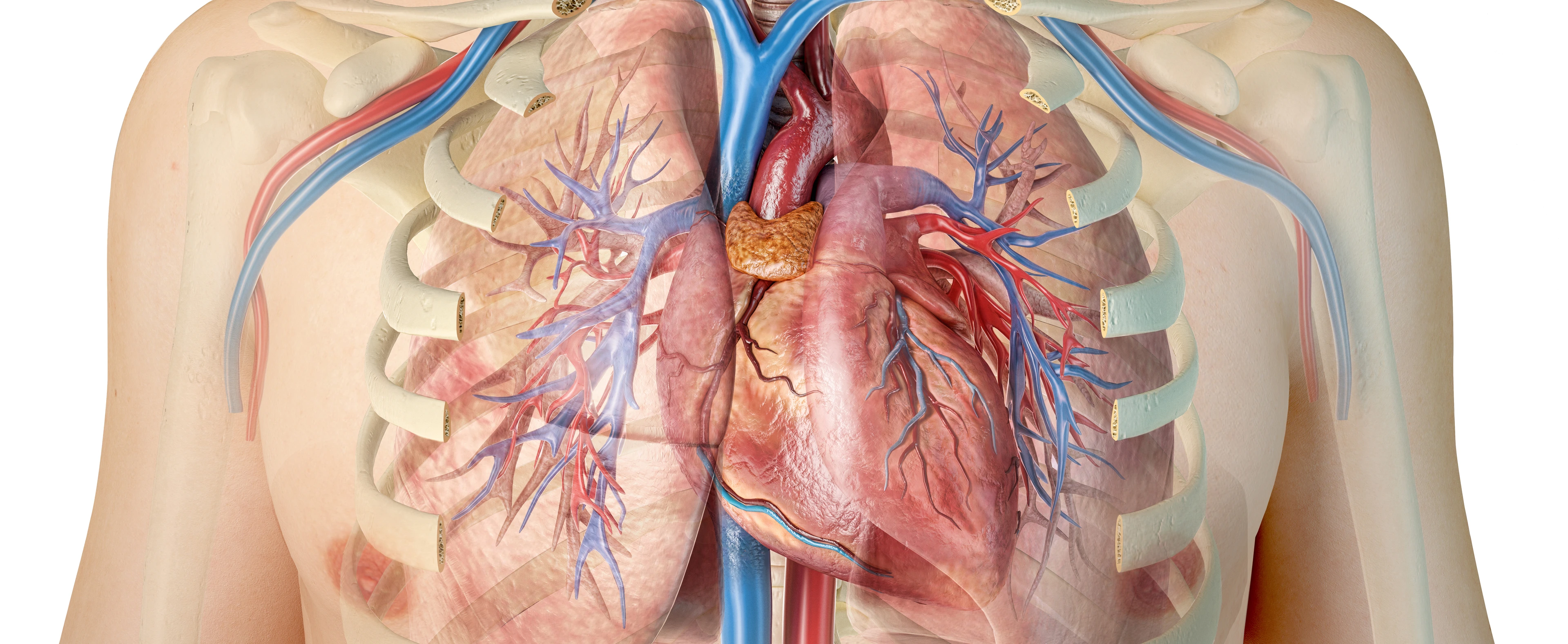
Immunopathology of COPD
Yildirim/Conlon Lab
We want to understand which subtypes of T-cell play a role in the development of COPD - a major public health problem with prevalence as well as mortality still rising.
We want to understand which subtypes of T-cell play a role in the development of COPD - a major public health problem with prevalence as well as mortality still rising.
COPD - third leading cause of death worldwide
The stimulus of long-term exposure to toxic gases and most often cigarette smoke causes parenchymal lung tissue damage, remodeling of small airways, airway obstruction, and a subsequent decline in lung function. Innate inflammatory immune cells, i.e. neutrophils and macrophages, and CD8+ T cells have been described to be considerably involved in lung tissue damage in COPD. However, increasing evidence suggests that the inflammatory response of other specific immune cells, in particular CD4+ T and B cells present in the lungs of COPD patients, contributes to the pathogenesis of COPD. More studies are needed to understand the exact role and involvement of these immune cells in the chronic inflammatory response in COPD.
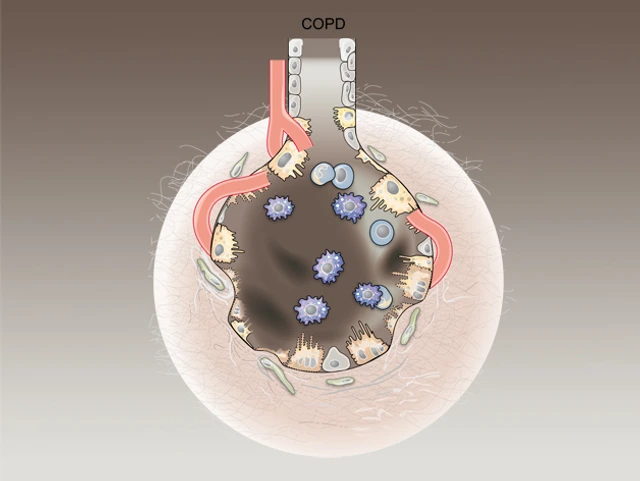
Promising therapeutic approach against COPD
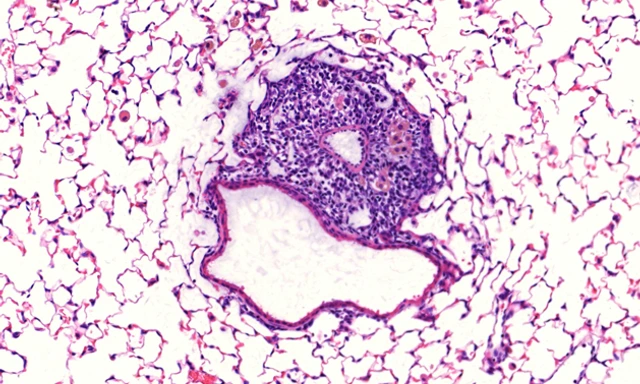
In COPD, immune cells (B-cells and T-cells) form newly organized structures in the lung, follicles, which are known to play an important role in the disease progression. The formation of these structures requires the activation of a specific cellular receptor: the lymphotoxin beta receptor which is also a regulator of cell death. The death of epithelial lung cells is another feature of COPD observed in patients, preventing them from breathing effectively. We found that the blocking of lymphotoxin beta receptor signaling leads to the activation of so-called Wnt signaling. Wnt signaling is an essential pathway for lung development. In COPD patients this pathway gets switched off preventing the lung from being able to repair and regenerate.
Our work published in Nature journal offers great potential for implementing lung regenerative medicine approaches in the clinic.

PhD Student, LHI

Scientist, LHI

PhD Student

Scientist, LHI

Technical Assistant, LHI

Technical Assistant, LHI

PhD Student, LHI

Scientist, LHI
MD Student, LHI

PhD Student, LHI

PhD Student, LHI

PhD Student, LHI
Contact

Contact