Helmholtz Munich pursues a clear goal: diseases should be detected before they even arise. To achieve this, researchers decode genetic predispositions, analyze the influences of lifestyle and environment, and use artificial intelligence to predict disease progression – for a healthier society. But how can this vision be translated into practice?
Leading scientists and policymakers discussed this question at the Expert Hour in the Bundestag. After opening remarks by Stephan Albani, Member of the Bundestag and patron of the event, and Prof. Stephan Herzig, Research Director at Helmholtz Munich, two short keynotes offered concrete insights into current research approaches:
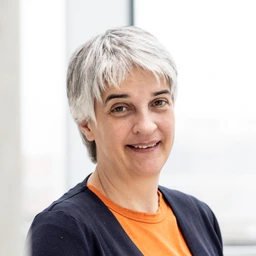
Prof. Anette-Gabriele Ziegler, Director of the Institute of Diabetes Research, emphasized that despite significant progress in research, there remains a high need for early diagnosis and effective prevention of type 1 diabetes. Using the Fr1da health screening as an example, Ziegler demonstrated how early detection works: for the past ten years, children have been identified at an early, asymptomatic stage of the disease and closely monitored. The goal is to significantly improve care and prognosis. Early detection also provides access to therapies that can slow disease progression. The international platform GPPAD, led by Ziegler, goes even further: through newborn screening, researchers identify children with a genetic risk for type 1 diabetes, enabling the development of innovative preventive strategies.
Prof. Julia Schnabel, Director of the Institute of Machine Learning in Biomedical Imaging, presented the potential of artificial intelligence for personalized prevention. By using specialized algorithms, characteristic features of healthy tissues can be detected automatically, allowing for faster and more precise analyses. This leads, for example, to shorter scan times while improving the quality of MRI imaging. This precision radiology opens new possibilities for early diagnosis, even before clinical symptoms appear, and enables a more efficient use of medical resources.
The joint discussion between researchers and members of the German Bundestag focused on how modern preventive medicine can relieve the healthcare system and strengthen Germany as a hub of innovation.
![[Translate to German:]](https://images.admiralcloud.com/v5/deliverEmbed/a4d7386e-8c04-41d8-aa70-d9757f2596b2/image_png/cropperjsfocus/256/256/246.0260247564937,180.77925882711043,1536.0000000000002,1536.0000000000002,0,1,1/768,768?poc=true "Univ.-Prof. Dr. med. Anette-Gabriele Ziegler")