A Hidden Glow Inside the Brain
The PhotonSignaling project explores a provocative hypothesis: that certain neurons in the mammalian brain might be capable of generating their own light – and sensing it internally. While mammals use light-sensitive photoreceptor proteins in the eye for vision, they also carry so-called “non-visual” photoreceptors in deep tissues like the brain. Environmental light cannot easily reach these areas because of hair, skin, bone, and tissue – so why are light-sensing proteins there at all?
Cui proposes that these opsins could be activated by an internal mechanism: light-generating chemical reactions that occur in cells during certain metabolic processes. Early studies by his team show how these reactions can produce light and suggest that they can indeed activate non-visual opsins in mouse neurons.
New Insights for Biology and Medicine
With support from the ERC, PhotonSignaling aims to dig deep into how this proposed “photonic signaling” works at the molecular and cellular level, including whether and how neurons can use internal light for signaling, and what consequences such a mechanism could have on cellular processes. If validated, this concept could reshape our understanding of how cells sense and respond to changes in their metabolic states or disease – with potential ramifications for neurobiology, neurodegenerative diseases, and even novel therapeutic strategies.
More About Jian Cui’s Work
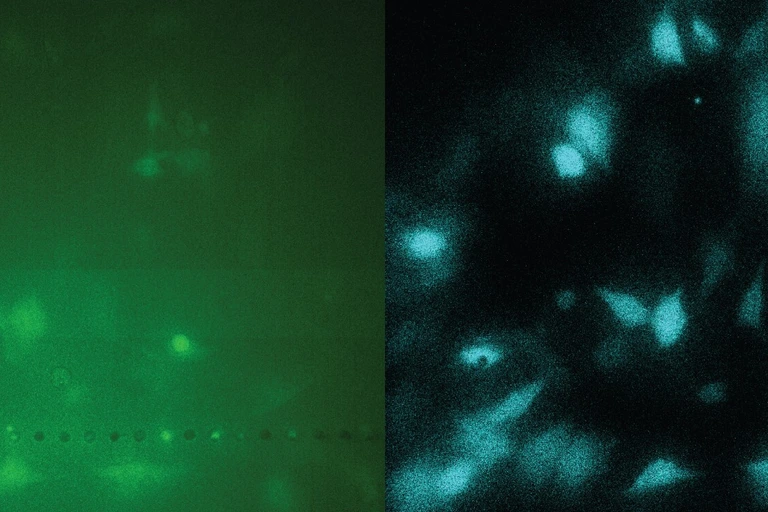
The ERC grant comes at a time when Cui’s team has also pushed the limits of light detection for cellular imaging. In June 2025, they presented a new microscope called QIScope, leveraging newly developed quanta image sensor (QIS) technology, to detect extremely weak optical signals generated by luciferase enzymes in living cells. Compared with previous state-of-the-art microscopes, QIScope delivers higher sensitivity, better resolution, and a larger field of view – enabling detection of low-abundance proteins and tracking of tiny cellular structures such as vesicles over long durations.
About the ERC Consolidator Grants
ERC Consolidator Grants support researchers with 7-12 years of post-PhD experience in establishing or strengthening their own independent research groups, providing up to €2 million over five years.