Spike Protein Accumulates in the Brain
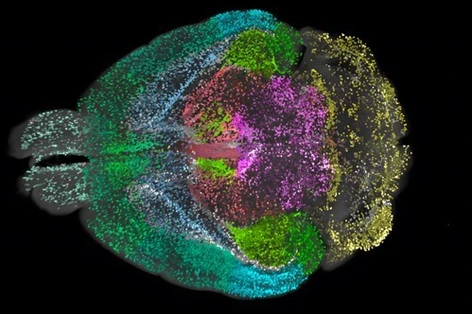
A novel AI-powered imaging technique developed by Prof. Ali Ertürk’s team provides new insights into how the SARS-CoV-2 spike protein affects the brain. The method renders organs and tissue samples transparent, enabling the three-dimensional visualization of cellular structures, metabolites, and, in this case, viral proteins. Using this technology, the researchers uncovered previously undetectable distributions of spike protein in tissue samples from COVID-19 patients and mice.
The study, published in the journal Cell Host & Microbe, revealed significantly elevated concentrations of spike protein in the skull’s bone marrow and meninges, even years after infection. The spike protein binds to so-called ACE2 receptors, which are particularly abundant in these regions. “This may make these tissues especially vulnerable to the long-term accumulation of spike protein,” explains Dr. Zhouyi Rong, the study’s first author. Ertürk adds, “Our data also suggest that persistent spike protein at the brain’s borders may contribute to the long-term neurological effects of COVID-19 and Long COVID. This includes accelerated brain aging, potentially leading to a loss of five to ten years of healthy brain function in affected individuals.”
Vaccines Reduce Spike Protein Accumulation and Brain Inflammation
The Ertürk team discovered that the BioNTech/Pfizer mRNA COVID-19 vaccine significantly reduces the accumulation of spike protein in the brain. Other mRNA vaccines or vaccine types, such as vector- or protein-based vaccines, were not investigated. Mice vaccinated with the mRNA vaccine showed lower levels of spike protein in both brain tissue and the skull’s bone marrow compared to unvaccinated mice. However, the reduction was only around 50%, leaving residual spike protein that continues to pose a toxic risk to the brain. “This reduction is an important step,” says Prof. Ertürk. “Our results, while derived from mouse models and only partially transferable to humans, point to the need for additional therapies and interventions to fully address the long-term burdens caused by SARS-CoV-2 infections.” Furthermore, additional studies are needed to evaluate the relevance of these findings for Long COVID patients.
Long COVID: A Societal and Medical Challenge
Globally, 50 to 60 percent of the population has been infected with COVID-19, with five to ten percent experiencing Long COVID. This sums up to approximately 400 million individuals who may carry significant amounts of spike protein. “This is not just an individual health issue – it is a societal challenge,” says Prof. Ertürk. “Our study shows that mRNA vaccines significantly reduce the risk of long-term neurological consequences and offer crucial protection. However, infections can still occur post-vaccination, leading to persistent spike proteins in the body. These can result in chronic brain inflammation and an increased risk of strokes and other brain injuries, which could have substantial implications for global public health and healthcare systems worldwide."
Advances in Diagnosis and Treatment
“Our findings open new possibilities for diagnosing and treating the long-term neurological effects of COVID-19,” says Ertürk. Unlike brain tissue, the skull’s bone marrow and meninges – areas prone to spike protein accumulation – are more accessible for medical examinations. Combined with protein panels – tests designed to detect specific proteins in tissue samples – this could allow for the identification of spike proteins or inflammatory markers in blood plasma or cerebrospinal fluid. “Such markers are critical for the early diagnosis of COVID-19-related neurological complications,” Ertürk explains. “Additionally, characterizing these proteins may support the development of targeted therapies and biomarkers to better treat or even prevent neurological impairments caused by COVID-19.”
Highlighting the broader impact of the study, leading Helmholtz Munich and Technical University of Munich virologist Prof. Ulrike Protzer adds: “Given the ongoing global impact of COVID-19 and the increasing focus on long-term effects, this study, which sheds light on brain invasion pathways and unexpected long-term host involvement, is timely. These critical insights are not only scientifically significant but also of great interest to society.”
Original Publication
Rong, Mai, Ebert, Kapoor et al., 2024: Persistence of spike protein at the skull-meninges-brain axis may contribute to the neurological sequelae of COVID-19. Cell Host & Microbe. DOI: 10.1016/j.chom.2024.11.007.