Ali Ertürk_KI-Erweiterung für Website

Ali Ertürk Wins 2024 Falling Walls Award

Awards & Grants ITERM

Prof. Ali Ertürk from Helmholtz Munich and the Ludwig-Maximilians-University Munich (LMU) has won the 2024 Falling Walls Award in Life Sciences for his pioneering research that integrates advanced tissue clearing techniques with AI. This breakthrough approach promises to redefine biological research by reducing the need for animal testing and accelerating disease understanding and drug development.

The Falling Walls Foundation Award is an international recognition given to groundbreaking scientific innovations. It honors individuals or teams whose work has the potential to significantly impact and advance their fields, celebrating research that "breaks walls" and drives transformative change. As part of the Falling Walls Science Summit 2024, Prof. Ali Ertürk, Director of the Institute for Tissue Engineering and Regenerative Medicine (ITERM) at Helmholtz Munich and Full Professor at the LMU, will receive the esteemed Falling Walls Award in the Life Sciences category.

Breaking the Wall of Animal Research With AI

Ertürk’s innovative research tackles the limitations of traditional animal experimentation, which, despite being a cornerstone of biological studies, presents significant ethical, logistical, and scientific challenges. By integrating advanced tissue clearing techniques with AI-driven analysis, Ertürk’s team has developed a method to visualize and analyze entire organs and bodies at the cellular level. This approach not only enhances the quality and quantity of data extracted from fewer experiments but also significantly reduces the reliance on animal testing. The societal impact of this research is profound, as it aims to create detailed digital simulations of biological systems, potentially replacing many animal studies altogether, and offering unexpected insights, such as how brain diseases affect the entire nervous system.

“I am deeply honored to receive the 2024 Falling Walls Award in Life Sciences,” states Prof. Ertürk. “This recognition highlights the potential of our work to not only advance scientific understanding but also to address longstanding ethical concerns in biological research. By integrating AI with advanced imaging, we are paving the way for more ethical, efficient, and comprehensive approaches to studying life.”


About the scientist

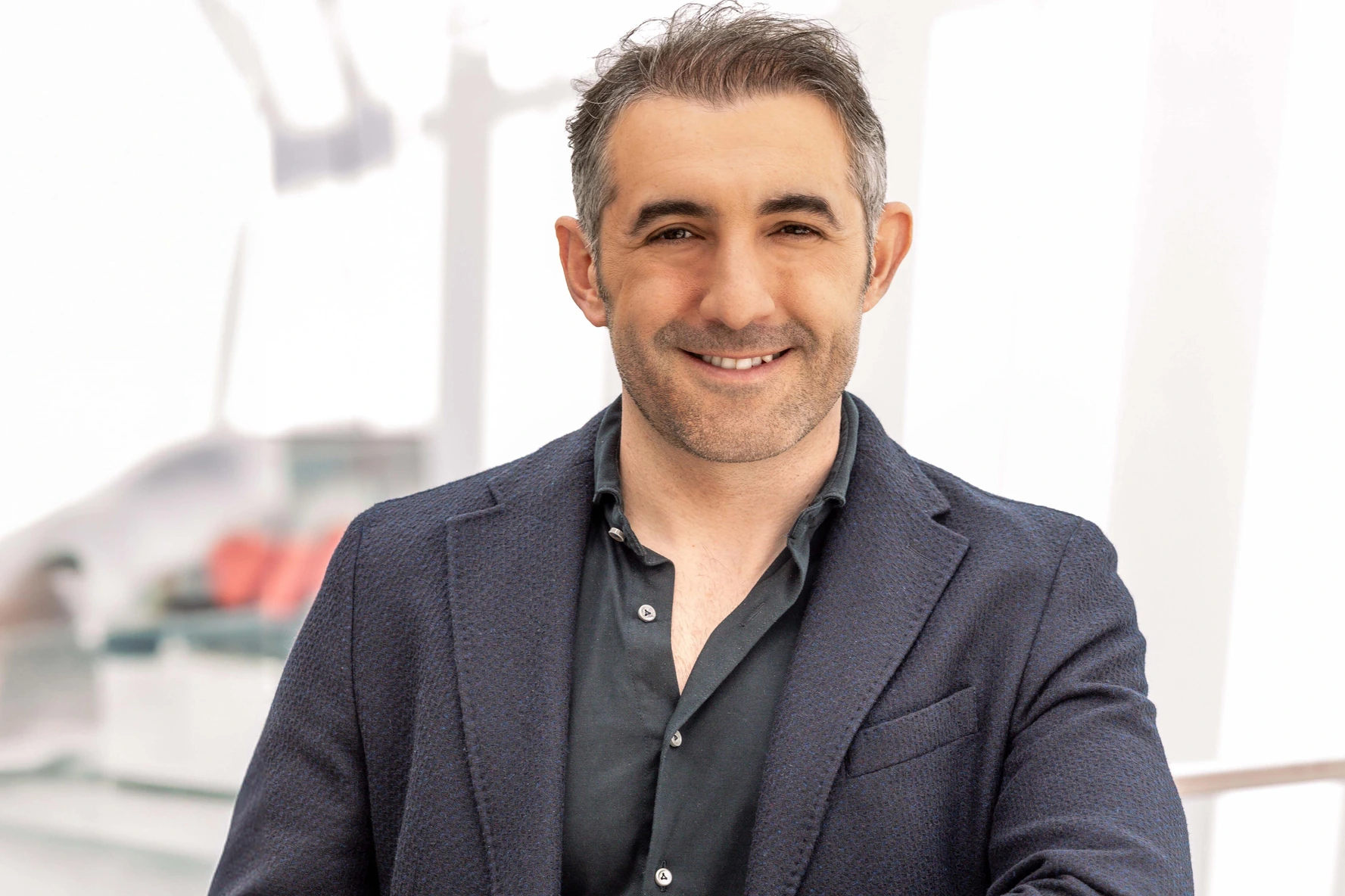
Prof. Ali Ertürk, Director of the Institute for Tissue Engineering and Regenerative Medicine (ITERM) at Helmholtz Munich and Full Professor at the LMU

Related news

Lipid nanoparticles

AI, New Research Findings, Bioengineering, iBIO,

SCP-Nano: A New Technology to Visualize Nanocarriers in Cells and Tissues

How can we ensure that life-saving drugs or genetic therapies reach their intended target cells without causing harmful side effects? Researchers at Helmholtz Munich, Ludwig-Maximilians-Universität (LMU) and Technical University Munich (TUM) have…

Microscopic View of Coronavirus

New Research Findings, Bioengineering, iBIO,

Long COVID: SARS-CoV-2 Spike Protein Accumulation Linked to Long-Lasting Brain Effects

Researchers from Helmholtz Munich and Ludwig-Maximilians-Universität (LMU) have identified a mechanism that may explain the neurological symptoms of Long COVID. The study shows that the SARS-CoV-2 spike protein remains in the brain’s protective…

SMCs in human

New Research Findings, Bioengineering, ITERM,

A New Ally in Fighting Brain Diseases: Our Very Own Skull

Alzheimer's, stroke, multiple sclerosis and other neurological diseases cause severe damage due to neuroinflammation mediated by immune cells. Managing this inflammation poses a significant medical challenge because the brain is protected by the…

Whole-body map of the mouse nervous system

AI, New Research Findings, Bioengineering, ITERM,

WildDISCO: Visualizing Whole Bodies in Unprecedented Detail

Researchers developed a new method called wildDISCO that uses standard antibodies to map the entire body of an animal using fluorescent markers. This revolutionary technique provides detailed 3D maps of structures, shedding new light on complex…

DISCO-MS image

New Research Findings, ITERM,

Novel spatial-omics technology enables investigation of diseases at their early stages

How can you trace a single diseased cell in an intact brain or a human heart? The search resembles looking for a needle in a haystack. The teams of Ali Ertürk at Helmholtz Munich and LMU Munich and Matthias Mann at the Max Planck Institute of…

The brain of a mouse - fluorescence microscopy using "tissue clearing"

New Research Findings, ITERM,

Automated analysis of whole brain vasculature - Combination of biochemical methods and artificial intelligence allows visualisation of tiny blood vessels

Diseases of the brain are often associated with typical vascular changes. Now, scientists at Helmholtz Zentrum München, LMU University Hospital Munich and the Technical University of Munich have come up with a technique for visualising the structures…

Transparent human kidney

New Research Findings, ITERM,

Transparent human organs allow 3D maps at the cellular level

For the first time, researchers managed to make intact human organs transparent. Using microscopic imaging they could revealed underlying complex structures of the see-through organs at the cellular level. Resulting organ maps can serve as templates…