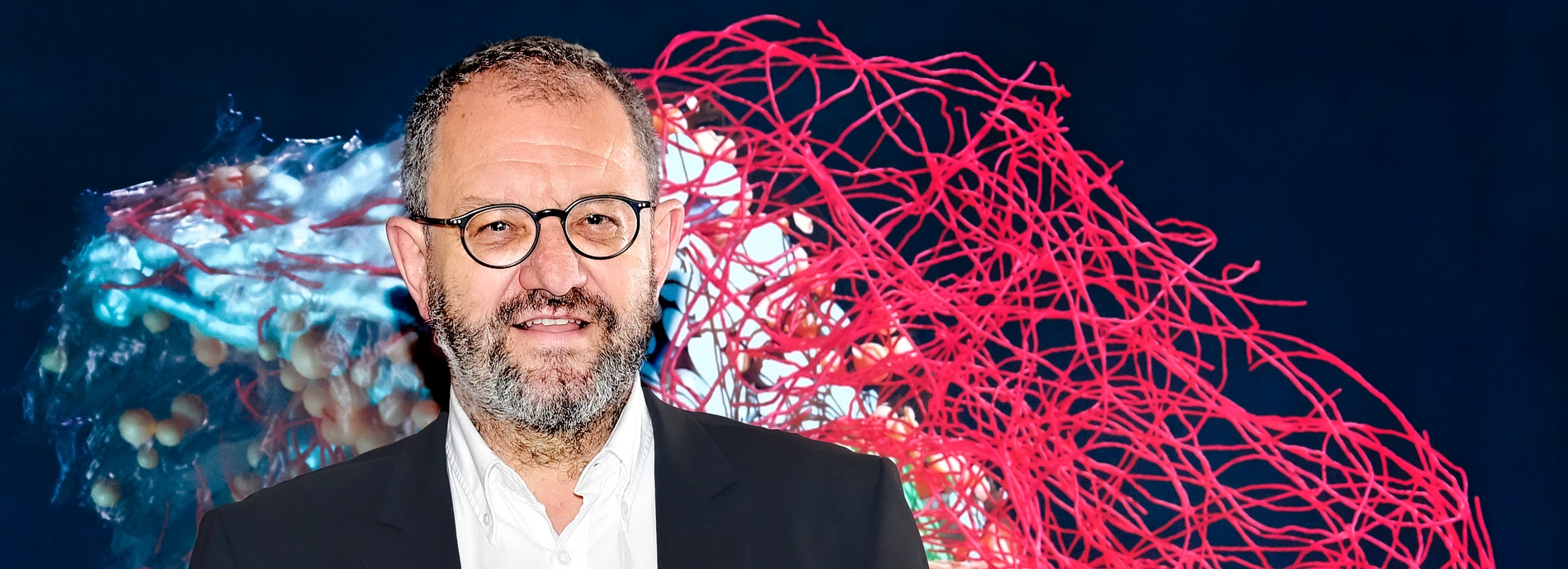
Director of the Institute for Pancreatic Islet Research (IPI), Speaker Paul Langerhans Institute Dresden of the German Center for Diabetes Research (PLID-DZD) and Professor of Molecular Diabetology at TU Dresden
Prof. Michele Solimena, MD PhD
“I am a cell biologist interested in the causal mechanisms of beta cell failure, which is responsible for all forms of diabetes. The foundation of my work rests on an understanding of how beta cells operate, which is why we investigate the cell biology of beta cells in relation to the molecular alterations of human islet cells in situ.”
Academic Career
Michele studied medicine at the University of Milano, where he obtained a MD and a PhD in pharmacology and toxicology. After an assistant and associate professorship in the Department of Internal Medicine at Yale University School of Medicine, he became group leader at the Max Planck Institute for Molecular Biology and Genetics in Dresden in 2001. In 2003, he was first appointed Professor of Experimental Diabetology at the Medical Faculty of the TU Dresden. In 2009, he was then appointed Professor of Molecular Diabetology, also at the Medical Faculty of the TU Dresden, and in parallel was made spokesman of the Paul Langerhans Institute Dresden of the German Center for Diabetes Research (DZD). Since 2015, he has also been director of the Institute for Pancreatic Islet Cell Research (IPI) at Helmholtz Munich.
Research Areas
As a postdoc Michele discovered the autoimmune pathogenesis of stiff-man/person syndrome, and GAD65 as major autoantigen in this disease and type 1 diabetes (Solimena et al., NEJM 1988; NEJM 1990, Baekkesokov et al., Nature 1990). Turning his attention to the biology of insulin-secretory granules, he discovered how retrograde signaling of ICA512/PTPRN through STAT5 enables pancreatic islet beta cells to adjust their granule production to consumption to replenish insulin stores and maintain glucose homeostasis (Ort et al., EMBO J, 2001; Trajkovski et al., JCB 2004; Mziaut et al., Nature Cell Biol 2006; Mziaut et al., PNAS 2008; Trajkovski et al., JBC 2008). He identified PTBP1 as a key mRNA binding-protein for promoting in a concerted fashion the glucose-stimulated stability and translation of mRNAs for granule cargoes, including insulin and ICA512 (Knoch at al., Nature Cell Biol 2004; Knoch et al., Cell Metabolism 2006). He showed that aging of granules correlates with their loss of competence for microtubule-mediated transport, conceivably accounting for the preferential exocytosis of younger granules (Ivanova et al., Diabetes 2013; Hoboth et al., PNAS 2015; Müller et al., Sci. Rep. 2017, Kemter et al., PNAS 2021). Using FIB-SEM his lab resolved the whole beta cell microtubule network, the first time this was achieved in a mammalian cell (Müller et al., JCB 2021; Xu et al., Nature 2021). He further pioneered the study of laser captured microdissected islets/beta cells from metabolically phenotyped living donors, hence unraveling for the first time transcriptomic and proteomic changes of islets in situ along the progression from normoglycemia to type 2 diabetes (Solimena et al., Diabetologia 2018; Wigger et al., Nature Metabolism 2021; Gloyn et al., Nature Metabolism 2022). A similar approach gave insights into the regulation of insulin translation in beta cells via a mechanism involving the storage and release of mRNA in condensates (Quesada et al., The EMBO Journal 2025). More recently, analysis of tissue from living donors with explainable AI enabled the identification of T2D with 95% efficiency, outperforming the diagnostic accuracy of pathologists (Klein et al., Nature Communications 2026).
Fields of Work and Expertise
Cell Biology Insulin Membrane Trafficking Microscopy Beta Cells Diabetes

Professional Background
Director, Institute for Pancreatic Islets Research
Helmholtz Munich and University Hospital and Faculty of Medicine Carl Gustav Carus at TU Dresden, Germany
Founding Director and Speaker Paul Langerhans Institute Dresden
Helmholtz Munich and University Hospital and Faculty of Medicine Carl Gustav Carus at TU Dresden, Germany
German Center for Diabetes Reserach (DZD e.V.)
Professor of Molecular Diabetology
Faculty of Medicine Carl Gustav Carus at TU Dresden, Germany
Group Leader
Max Planck Institute of Molecular Cell Biology and Genetics (MPI-CBG) Dresden, Germany
Assistant and Associate Professor
Department of Internal Medicine and Cell Biology, Yale University School of Medicine, USA
Postdoctoral Fellow
Department of Cell Biology, Yale University School of Medicine, USA
PhD in Pharmacology and Toxicology
University of Milano, Italy
Medical Doctor
University of Milano, Italy
- Executive Board Member German Center for Diabetes Research (DZD e.V). 2020 - 2022
- Co-founder and Chair Gordon Research Conference “Pancreatic Diseases” 2015
- Fellow Max Planck Institute of Molecular Cell Biology and Genetics, Dresden, Germany 2007 - 2020
- Wolfgang Paul Award Alexander von Humboldt Foundation 2001 - 2005


Imaging
Turnover of Insulin Secretory Granules in Beta Cells
LIDOPACO
Natural History of Type-2 Diabetes in Beta Cells - Novel Insights from Pancreatic Living Donors
Type 1 Diabetes