
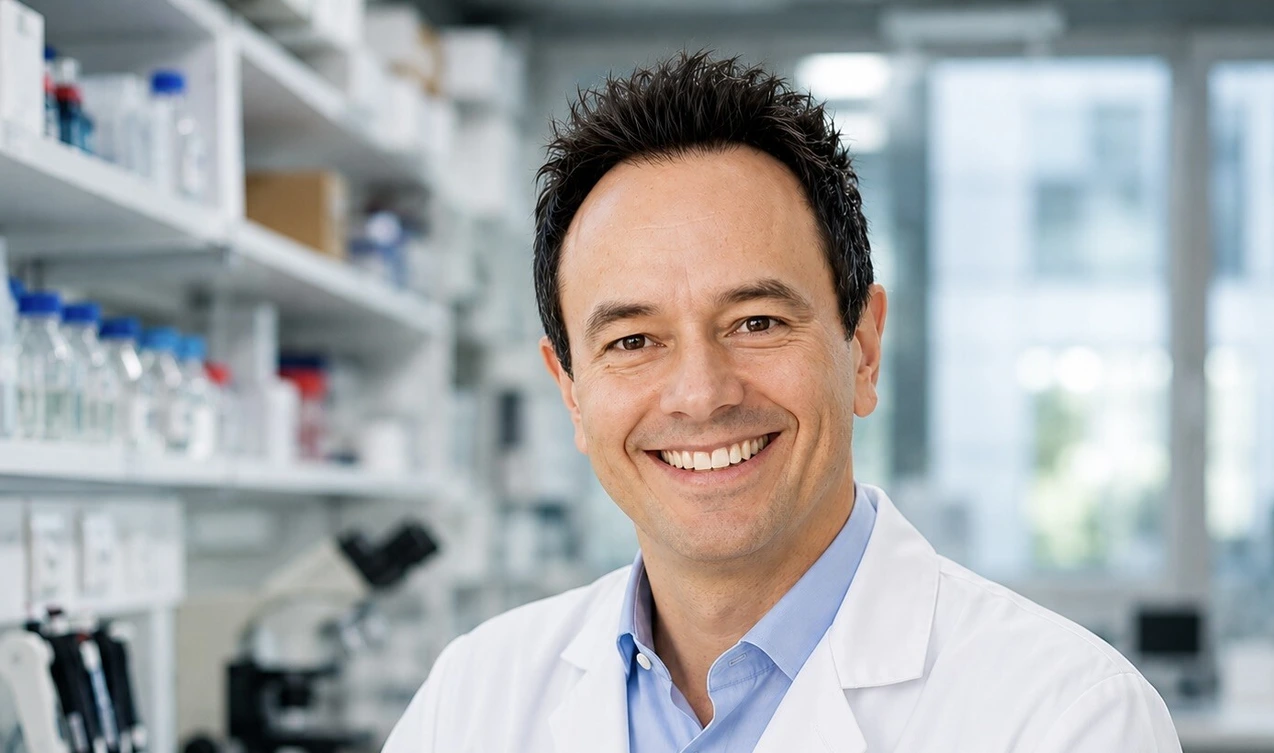
Over the next three years, the foundation will support the research project led by Daniel Kotlarz. The project entitled “Unraveling dysregulated cell death pathways in intestinal inflammation – Monogenic inflammatory bowel disease as a precision model for target discovery” aims to decipher the molecular mechanisms underlying severe very early onset inflammatory bowel disease (VEO-IBD) and to identify novel targets for precision therapies.
Rare Diseases as a Gateway to Precision Medicine
VEO-IBD develops during infancy or early childhood and is often characterized by a particularly severe clinical course. In a subset of affected children, rare inherited genetic defects disrupt key pathways regulating programmed cell death, leading to uncontrolled intestinal inflammation.
The funded project uses these rare monogenic disorders as precision models to uncover fundamental molecular mechanisms driving chronic intestinal inflammation. The research focuses on understanding how dysregulated cell death pathways in immune and intestinal epithelial cells initiate and sustain chronic inflammation, and on identifying molecular signaling pathways that may serve as targets for innovative therapeutic interventions.
“Our goal is to translate these discoveries into novel diagnostic and therapeutic strategies, initially for affected children, but ultimately also for patients with more common forms of inflammatory bowel disease,” says Daniel Kotlarz.
From Fundamental Discovery to Clinical Translation
Clinical observations from affected children provide the starting point for experimental investigations, while insights gained in the laboratory are translated into improved diagnostic and therapeutic approaches. The research team combines state-of-the-art multi-omics technologies and computational analyses with innovative human disease models based on induced pluripotent stem cells, including intestinal organoids and immune cells. The long-term objective is to identify and functionally validate novel therapeutic targets in preclinical models for children with severe IBD.
Impact Beyond Rare Diseases
The expected findings extend beyond rare monogenic disorders. Many of the inflammatory pathways investigated in this project are also implicated in more common forms of IBD. Consequently, the project is expected to provide important new insights into the mechanisms of chronic inflammation while opening new avenues for the development of precision therapies with broad clinical relevance. “This award highlights the scientific excellence of pediatric research at Dr. von Hauner Children’s Hospital at the LMU University Hospital Munich. The project combines innovative basic science with a strong translational perspective and has the potential to significantly improve the treatment of children with rare inflammatory diseases,” says Professor Christoph Klein, Director of the Department of Pediatrics at Dr. von Hauner Children’s Hospital, LMU University Hospital Munich.
Strengthening Precision Medicine
This award further strengthens Professor Daniel Kotlarz’s internationally recognized research on rare immunological and inflammatory disorders. Recently, he was awarded a prestigious Heisenberg Professorship by the German Research Foundation (DFG) and appointed Professor of Precision Medicine for Pediatric Inflammatory Bowel Disease in the Department of Pediatric Gastroenterology, Hepatology and Nutrition at the LMU University Hospital Munich. In his dual role as Professor at LMU University Hospital and Group Leader at Helmholtz Munich, Daniel Kotlarz bridges clinical medicine with cutting-edge genomics, computational biology, and translational systems medicine. The Rise up! award further reinforces the close scientific partnership between LMU University Hospital and Helmholtz Munich and provides an outstanding platform to accelerate the translation of fundamental biological discoveries into innovative diagnostic and therapeutic strategies for children with IBD.
