
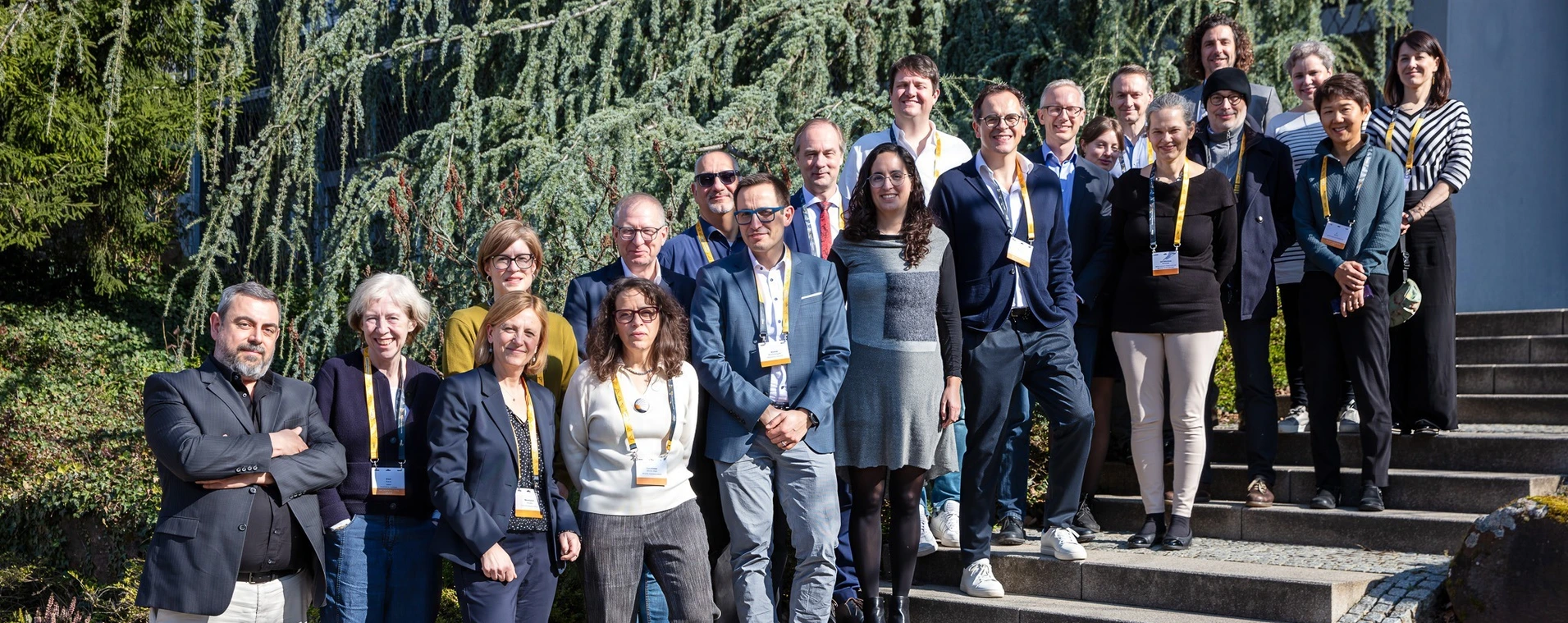
Organized by Prof. Vasilis Ntziachristos, Director of the Bioengineering Department at Helmholtz Munich and EMBO Director Prof. Fiona Watt, the workshop convened participants from Europe, the USA and Asia, representing basic research, funders and venture capital, industry, the EU and the German government.
“The huge practical potential really requires that we recognize it as a distinct field. When it comes to review and funding, there is a real risk that it falls through the cracks,” Fiona Watt commented.
According to Ntziachristos, there are only a handful of dedicated bioengineering faculties in the EU compared to more than 100 in the USA or Asia each, which creates a chicken and egg situation when it comes to supporting the field in terms of identity, critical mass and review panels.
“If you don’t generate bioengineers, there is nobody to speak up for bioengineering,” he noted.
The workshop highlighted that successful bioengineering ecosystems require dedicated identity and training pathways, mission driven funding schemes, strong academia-industry interaction, and vibrant innovation hubs that bridge discovery and application.
As a national and international platform, the Helmholtz Bioengineering Initiative is actively shaping this agenda - connecting disciplines, enabling translation, and fostering entrepreneurial pathways to engineer future health in Europe.
The detailed results of the workshop and its discussions will be published as a White Paper to inform funders, policy makers, and academia.
Read the original news item on the EMBO website: Biomedical engineering as a driver for innovation and economic growth – Features – EMBO
![[Translate to German:]](https://images.admiralcloud.com/v5/deliverEmbed/bd2e6385-de9d-4d19-a6e3-983ef5ca0cd6/image_webp/cropperjsfocus/256/256/244.86483357452954,186.9212735166425,714.6408459278334,714.6408459278334,0,1,1/300.5137902355056,326.0014156446443?poc=true "Prof. Dr. Vasilis Ntziachristos")


