Google Headquarter

Google Opens AI Center in Berlin and Supports AI Projects by Fabian Theis

AI Awards & Grants Computational Health ICB

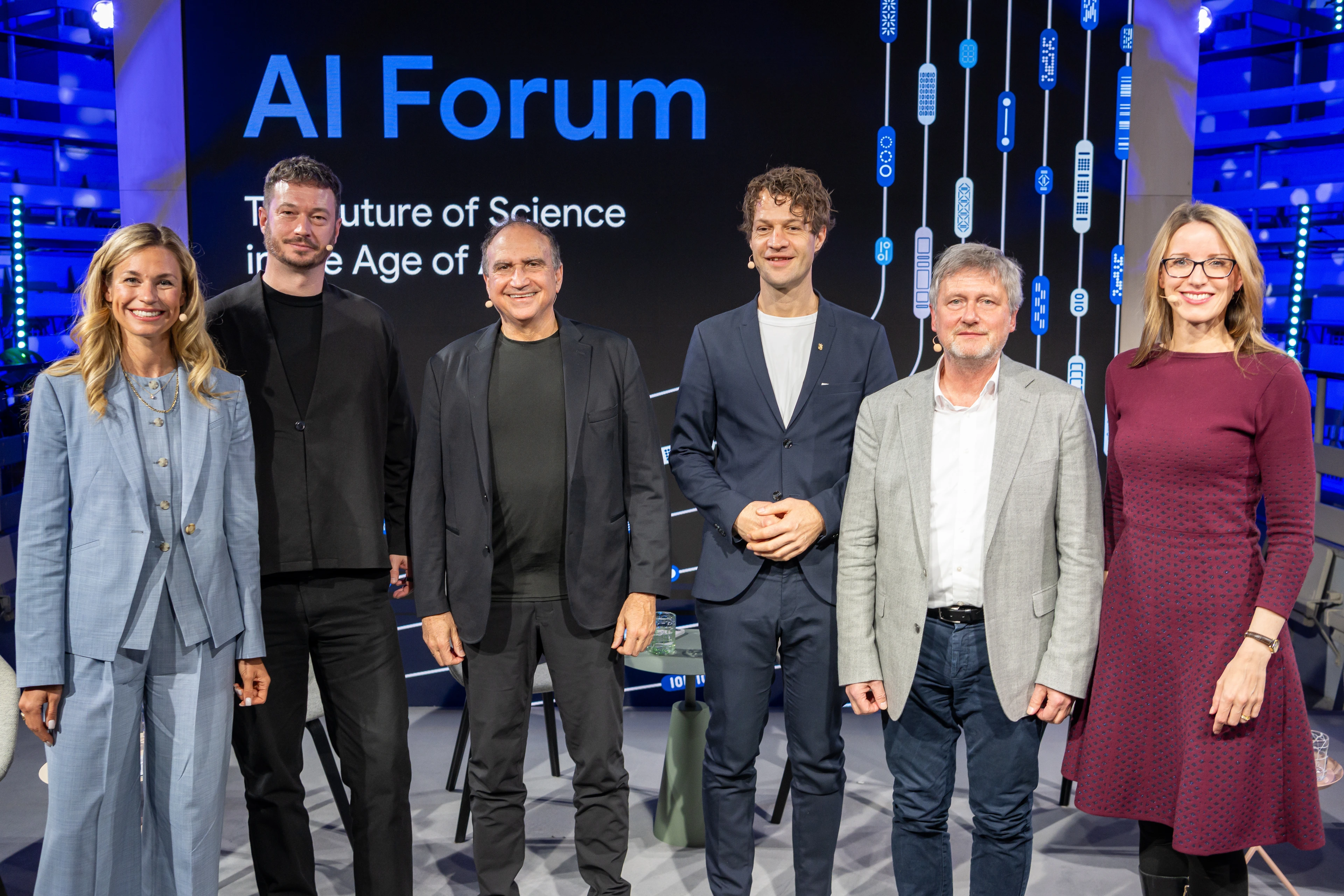
On March 5, Google opened its first German AI Center in Berlin. The event was attended by representatives from politics, business, and science, including Federal Research Minister Dorothee Bär, Federal Digital Minister Karsten Wildberger, Berlin's Governing Mayor Kai Wegner, and Prof. Fabian Theis from Helmholtz Munich and the Technical University of Munich (TUM). As part of the initiative, two AI research projects involving Fabian Theis and Prof. Daniel Rückert (TUM) were selected for funding from Google.org's “AI for Science Fund.” These projects are among twelve initiatives funded worldwide and receive a total of two million US dollars.

With its new AI Center, Google is establishing a platform in Berlin for collaboration in the field of artificial intelligence (AI) between science, business, politics, and society. The aim is to strengthen AI research and its application in Germany and to expand international cooperation.

Representatives from politics, science, and business gathered for the opening. Philipp Justus, Head of Google Germany, presented the AI Center and outlined Google's commitment to AI innovation in Germany. Federal Research Minister Dorothee Bär, Federal Digital Minister Karsten Wildberger, and Berlin's Governing Mayor Kai Wegner emphasized the strategic importance of artificial intelligence for Germany and Berlin as a center of innovation.

Fabian Theis, Head of the Computational Health Center at Helmholtz Munich and Professor at TUM, contributed scientific perspectives. He presented joint research initiatives between Google and the scientific community, including AI models for medical research. Such approaches could help simulate disease progression or improve cancer diagnostics with the help of AI.

Two Funded AI Research Projects in the Healthcare Sector

Google.org supports several research projects in the healthcare sector that develop new AI methods and promote their safe use in medicine. This includes research conducted by scientists at Helmholtz Munich and TUM as part of the relAI initiative for reliable artificial intelligence.  

In the “NextGen Health GenAI Benchmarks” project, Daniel Rückert from TUM will develop strict evaluation standards for generative AI in healthcare. These benchmarks are intended to help ensure that AI-based systems work reliably and can be used safely in clinical applications.

Fabian Theis leads the “Single Cell Foundation Models” project. Researchers are using AI methods to better understand the diversity of individual cells. The aim is to investigate disease mechanisms more precisely and thus enable new approaches to diagnosis and therapy.
Prof. Dr. Dr. Fabian Theis, Director of the Computational Health Center, Director of the Institute for Computational Biology
Prof. Dr. Dr. Fabian Theis

Director of Computational Health Center, Director of Institute for Computational Biology

View profile

Related news

An AI powered system automating remote patient monitoring by analyzing real time health data and vital signs, futuristic AI-driven healthcare platform

AI, Computational Health, HCA, ICB, IML,

How Foundation Models Are Shaping Biomedical Research

AI-powered foundation models like GPT have evolved from everyday tools for simple tasks to powerful systems capable of revolutionizing industries. Researchers at Helmholtz Munich are harnessing the potential of these models to drive advancements in…

AI menschlicher Körper

Environmental Health, LHI, Computational Health, ICB,

A Journey into the Secrets of Human Cells

The Human Cell Atlas (HCA) promises insights into ourselves, unraveling our cellular landscape.

Fabian Theis receives Leibnizpreis 2023

Awards & Grants, Computational Health, ICB,

Fabian Theis wins Leibniz Prize 2023

The German Research Foundation (DFG, Deutsche Forschungsgemeinschaft) awarded Fabian Theis the Gottfried Wilhelm Leibniz Prize – the most prestigious research award in Germany. Fabian Theis is Head of the Computational Health Center at Helmholtz…