Organoids and AI: Automating the Analysis of Lab-Grown Mini-Organs
Organoids are three-dimensional miniature models of human and animal organs grown in the lab. They allow researchers to study diseases and test drug candidates, and they can help reduce the need for animal experiments.
Analyzing the resulting microscopy images is still largely done by hand, a process that is laborious, slow, and error-prone. Artificial intelligence could automate this analysis, but large, diverse, and carefully annotated datasets for training powerful models have so far been lacking.
This is precisely the gap SCOPE-AI aims to close. Since 2026, the project has been funded under the DFG’s “Research Data and Software” program.
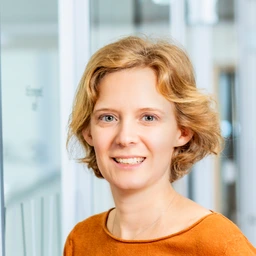
“Organoids are a highly promising tool for biomedical research, yet their images are still mostly analyzed by hand. AI can do this faster and more objectively, but it needs high-quality training data, which is exactly what has been missing. With SCOPE-AI, we are making such data openly available across different organs and laboratory conditions. Open, well-documented resources move the entire research community forward,” says Dr. Marie Piraud, Head of the AI Consultant Team for Health at Helmholtz AI, based at Helmholtz Munich, and co-lead of the Clinical AI Consultant Team at AI for Health.
Expertise from Marburg and Heidelberg
At Philipps-Universität Marburg, Prof. Dr. Mareike Lehmann and Prof. Dr. Thomas Worzfeld contribute their expertise in studying human and mouse lung and kidney organoids. By combining different microscopy techniques with AI-based image analysis, they aim to reveal how cells in the mini-organs develop, which properties they acquire, and how they change their state.
“We want to use artificial intelligence to detect and measure how epithelial cells behave, develop, and organize themselves. This allows us to reveal changes that are difficult to capture with conventional methods,” explains Prof. Dr. Mareike Lehmann from the Institute for Lung Research at Philipps-Universität Marburg.
At the German Cancer Research Center (DKFZ) in Heidelberg, Dr. Jens Puschhof, head of the Junior Research Group Epithelium-Microbiome Interactions, contributes his expertise in organoids derived from patients’ colorectal and liver tumors. His group investigates how bacteria influence the development and treatment of colorectal and liver cancer.
Open to the Entire Research Community
The project will generate three openly accessible datasets, each tailored to a specific application. All datasets will be released under an open license and hosted on platforms including the NFDI4BIOIMAGE infrastructure and Zenodo. To help researchers use the data right away, the team will also provide baseline AI models, annotation tools, and example workflows. In this way, the project reflects Helmholtz AI’s approach of making AI methods and resources openly and broadly available to the life sciences.
An Interdisciplinary Consortium from Munich, Marburg, and Heidelberg
SCOPE-AI was jointly secured by four principal investigators:
• Dr. Marie Piraud, Helmholtz AI, Helmholtz Munich
• Prof. Dr. Mareike Lehmann, Institute for Lung Research, Philipps-Universität Marburg and Institute of Lung Health and Immunity (LHI), Helmholtz Munich
• Prof. Dr. Thomas Worzfeld, Institute of Pharmacology, Philipps-Universität Marburg
• Dr. Jens Puschhof, Junior Research Group Epithelium-Microbiome Interactions, German Cancer Research Center (DKFZ), Heidelberg
The consortium combines AI expertise with long-standing experience in organoid, lung, kidney, and intestinal research.
More information: DFG GEPRIS: SCOPE-AI