Bioengineering and Microfluidics
Matthias Meier Lab
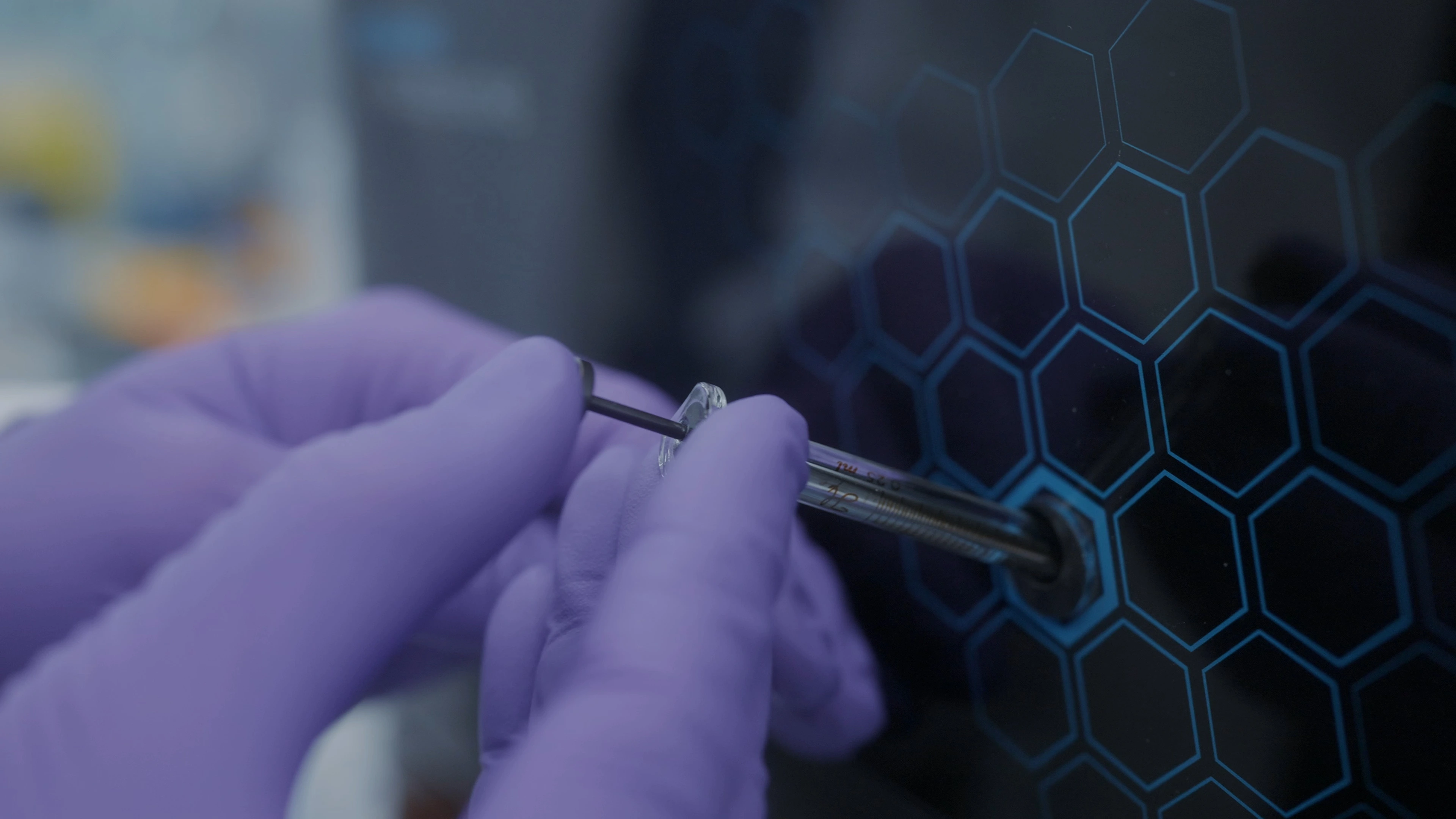
Matthias' team advances the microfluidic organ-on-chip technology to characterize biomolecules and their functional interactions on the single cell level and in the context of whole organs.
Matthias' team advances the microfluidic organ-on-chip technology to characterize biomolecules and their functional interactions on the single cell level and in the context of whole organs.
About our Research
Human fat tissue has evolved to serve as a major energy reserve. An imbalance between energy intake and expenditure leads to an expansion of adipose tissue and degeneration of the endocrine function of the pancreas. Maintenance of this energy imbalance over longer times leads to obesity and metabolic disorders such as type 2 diabetes, for which clinical cures are not yet available.
Our research project aims to develop and use pancreatic and adipose tissue models outside organisms in sizes of micrometers for studying the differentiation of human inducible pluripotent stem cells (hiPSCs) into functional tissue. For assembly of so called organoids, we combine microfluidic chip technologies with quantitative bioanalytics. In particular, the integration of organoids on microfluidic chip platforms is exploited in our lab to dynamically control their chemical, cell architectural, and mechanical microenvironment of hiPSCs. With novel single cell resolution in situ detection systems, we aim to reveal, which microenvironmental stem cell niche factors are required to differentiate hiPSCs into metabolic responsive cells, communication pathways between organs, and the importance of cell heterogeneity in organs for their proper function.

Upon combining engineering and biology approaches, we want to understand mechanistically the role of natural stem cell niches, determine how to simulate them under laboratory conditions and finally provide patient-specific, clinically relevant information for developing new cell-based treatments for obesity and diabetes.
- Does a dynamic chemical microenvironment changes cell lineage decisions during the development of the human adipose and pancreatic tissue? (Keyword: Chemical Programming by Microfluidics)
- Can we induce and resolve cell heterogeneity in pancreatic organoids? (Keyword: Single Cell Protein Interaction Profiling)
- Can we resolve cell heterogeneity with high spatial analysis in organoids on chip? (Keyword: Spatial Protein Interaction Profiling)
- How to assemble functional adipocytes and/or pancreas organoids on chip? (Keyword: Organ-on-Chip)
Publications
Zitzmann, F.D. ; Remmert, C. ; Rogers, N.K. ; Schmidt, S. ; Lickert, H. ; Jahnke, H.G. ; Meier, M.
Real-time, label-free impedimetric monitoring of insulin secretion from three-dimensional stem cell–derived islets.Allgöwer, C. ; Mulaw, M.A. ; Nagai, J. ; Wiedenmann, S. ; Ringel, E.A. ; Ferrara, B. ; Piemonti, L. ; Maulana, T.I. ; Ferreira, L.T. ; Flinders, A. ; Teufel, C. ; Reichardt, L. ; Lopatta, P.B. ; Srinivasan, D. ; Lahusen, A. ; Seufferlein, T. ; Gaisa, N.T. ; Beck, A. ; Lindenmayer, J. ; Melzer, M.K. ; Zimmer, E. ; Roger, E. ; Heller, S. ; Löhr, J.M. ; Liebau, S. ; Loskill, P. ; Lin, Y.N. ; Camisa, P.R. ; Jorgensen, C. ; Crippa, S. ; Meier, M. ; Hohwieler, M. ; Costa, I.G. ; Breunig, M. ; Kleger, A.
An oncogenic KRAS-driven secretome involving TNFα promotes niche preparation prior to pancreatic cancer onset.Papa, C. ; Rose, A. ; Martin, H.N.G. ; Useini, A. ; Geier, F. ; Liao, L. ; Rodriguez Aguilera, J.R. ; Valina-Allo, P. ; Hoffmann, A. ; Tvardovskiy, A. ; Zulfqar, F. ; Zimmerman, A. ; Schicht, G. ; Ott, F. ; Körner, C. ; Engelmann, B. ; Rolle-Kampczyk, U. ; von Bergen, M. ; Meier, M. ; Bartke, T. ; Seehofer, D. ; Klöting-Blüher, N. ; Matz-Soja, M. ; Damm, G. ; Boeckel, J.N. ; Buescher, J.M. ; Blüher, M. ; Laufs, U. ; Bondareva, O. ; Sträter, N. ; Künze, G. ; Heiker, J.T. ; Sheikh, B.N.
Bempedoic acid directly binds and activates PPARα.Schneider, M.R. ; Meier, M.
Bringing high-resolution spatial order to sebaceous glands.Sens, D. ; Shilova, L. ; Gräf, L. ; Grebenshchikova, M. ; Eskofier, B.M. ; Casale, F.P.
Genetics-driven risk predictions leveraging the Mendelian randomization framework.Remmert, C. ; Otgonbayar, M. ; Perschel, J.A. ; Marder, M. ; Meier, M.
Protocol to generate a microfluidic vessels-on-chip platform using human pluripotent stem cell-derived endothelial cells.Esteban, M.E. ; Pino Garcia, D. ; Romero-Lorca, A. ; Novillo, A. ; Gaibar, M. ; Riancho, J.A. ; Rojas-Martinez, A. ; Flores, C. ; Lapunzina, P. ; Carracedo, A. ; Athanasiadis, G.I. ; Fernández-Santander, A.
Worldwide distribution of genetic factors related to severity of COVID-19 infection.Marder, M. ; Remmert, C. ; Perschel, J.A. ; Otgonbayar, M. ; von Toerne, C. ; Hauck, S.M. ; Bushe, J. ; Feuchtinger, A. ; Sheikh, B.N. ; Moussus, M. ; Meier, M.
Stem cell-derived vessels-on-chip for cardiovascular disease modeling.Schmidt, S. ; Li, W. ; Schubert, M. ; Binnewerg, B. ; Prönnecke, C. ; Zitzmann, F.D. ; Bulst, M. ; Wegner, S. ; Meier, M. ; Guan, K. ; Jahnke, H.G.
Novel high-dense microelectrode array based multimodal bioelectronic monitoring system for cardiac arrhythmia re-entry analysis.Zitzmann, F.D. ; Schmidt, S. ; Frank, R. ; Weigel, W. ; Meier, M. ; Jahnke, H.G.
Microcavity well-plate for automated parallel bioelectronic analysis of 3D cell cultures.Contact PioneerCampus