
Metabolic Health
Understanding Metabolism from Beginning to End
Our metabolism is not a static system. It is shaped even before birth, adapts throughout life to nutrition and the environment, and can also fall out of balance. Researchers at Helmholtz Munich are investigating how metabolic risks can be identified early, diseases prevented and existing damage reversed – including the question of whether lost metabolic functions might one day be restored.
Our metabolism is not a static system. It is shaped even before birth, adapts throughout life to nutrition and the environment, and can also fall out of balance. Researchers at Helmholtz Munich are investigating how metabolic risks can be identified early, diseases prevented and existing damage reversed – including the question of whether lost metabolic functions might one day be restored.

"We need to understand metabolism as the interplay of many organs and processes across the entire course of life.”
Prof. Stephan Herzig, Research Director at Helmholtz Munich, Director and Department Head of the Helmholtz Diabetes Center and Director of the Institute for Diabetes and Cancer

Some of the first factors shaping a person’s metabolism are already at work before conception: a high-fat diet in the father alters the composition of certain RNA molecules in his sperm, as researchers at Helmholtz Munich have shown. During fertilisation, these molecules enter the egg cell and influence gene activity in the early embryo.
“The later risk of obesity and metabolic disease depends not only on our genes – and not exclusively on our lifestyle later in life,” says Prof. Stephan Herzig, Research Director at Helmholtz Munich and Director of the Institute for Diabetes and Cancer. “Even the father’s nutritional status before conception can already have an influence.”
For Herzig, this means taking a broader view of metabolism: “We must not look only at individual diseases such as diabetes or obesity. We need to understand metabolism as the interplay of many organs and processes across the entire course of life,” he says.
Metabolic health, in this sense, means that the body remains in balance and the organs involved continue to function normally.
This balance can, however, be disrupted in very different ways – by genetic and epigenetic influences, nutrition, autoimmune reactions or other diseases. Research on metabolism at Helmholtz Munich therefore focuses on three questions: Which factors shape metabolic health – and how do they act? Why do metabolic diseases progress so differently from one person to another? And how can diseases or existing damage be reversed?
Risks Arise Long Before Diagnosis

Researchers already understand some risk factors for metabolic disease very well. In type 1 diabetes, for example, certain genetic variants can substantially increase the risk of developing the disease. The Freder1k study therefore screens newborns for such characteristics. If a child has a corresponding genetic predisposition, prevention studies can begin before the immune system starts attacking the insulin-producing beta cells of the pancreas.

In early childhood, the Fr1da study goes one step further. A few drops of blood are sufficient to detect islet autoantibodies as early biomarkers of type 1 diabetes. These show that the autoimmune process has begun – often years before symptoms appear. “In type 1 diabetes, we can now identify very early who is at increased risk and in whom the disease has already begun in an asymptomatic early stage,” says Prof. Anette-Gabriele Ziegler, Director of the Institute of Diabetes Research at Helmholtz Munich. This allows for close medical monitoring, can prevent severe metabolic decompensation and opens up the possibility of delaying the onset of the disease or, in future, preventing it altogether.
Infobox: Early Influences Can Also Be Protective
Children of women with type 1 diabetes develop type 1 diabetes less often than children with an affected father or sibling – even though their genetic predisposition is comparable. Researchers led by Prof. Sandra Hummel at at Helmholtz Munich have found a possible explanation: in the blood of these children, they identified characteristic epigenetic changes, meaning chemical marks on DNA that do not alter the genetic information itself but can influence how active individual genes are. Some of these changes were associated with a lower risk of the autoimmune reaction that causes type 1 diabetes. The findings therefore suggest that early-life influences can, under certain circumstances, also have a protective effect.
Not All Prediabetes Is the Same
While risks for type 1 diabetes can therefore be identified very early, a different question arises for type 2 diabetes later in life: Why does a preliminary stage develop into disease in some people, but not in others?
People with prediabetes are usually advised to lose weight. But this does not have the same effect in everyone. In some people, blood-glucose regulation returns to normal as they lose weight and their prediabetes goes into remission. Others lose a similar amount of weight but remain at increased risk and later still develop type 2 diabetes.
The reason is that prediabetes is not a uniform condition. Researchers at the Institute for Diabetes Research and Metabolic Diseases of Helmholtz Munich in Tübingen, Tübingen University Hospital and the German Center for Diabetes Research (DZD) have identified six subtypes. They differ, among other things, in how effectively insulin works and is secreted, where fat is stored in the body and how high the genetic risk is.
Some subtypes are associated with only a low risk of diabetes, while others carry a markedly higher risk of diabetes or complications.
“When we look at type 2 diabetes, we need to distinguish more clearly between body weight and metabolic health,” says Prof. Andreas Birkenfeld, Director of the Institute for Diabetes Research and Metabolic Diseases. “The better we understand the differences between the subtypes, the more precisely we can identify who benefits from which intervention – and who needs a different strategy.”
Resetting Metabolism in a Targeted Way
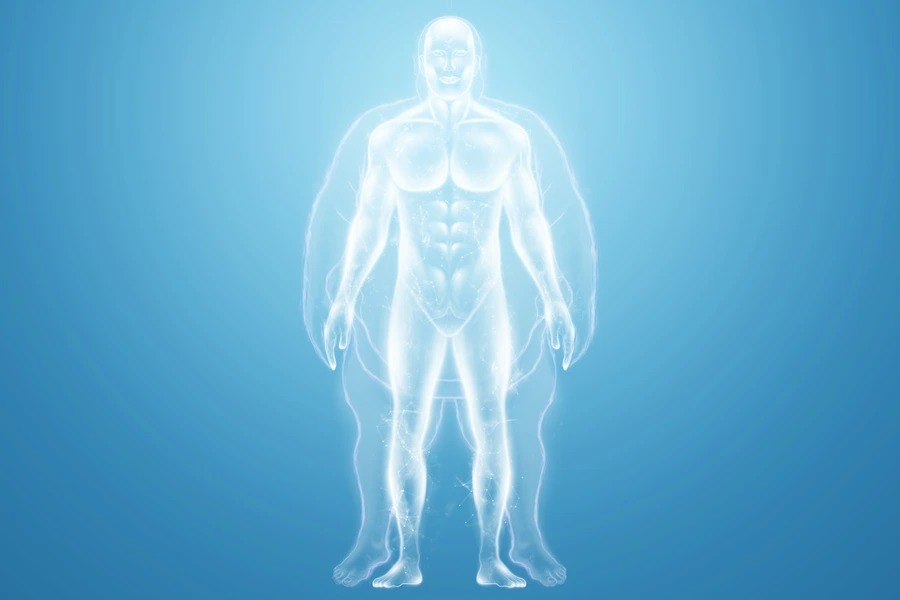
Where prevention is not enough, the question is how a disrupted metabolism can be influenced in such a way that not only blood glucose or body weight falls, but central regulatory circuits also function better again. Many new therapeutic approaches at Helmholtz Munich are aimed at precisely this.
One example is so-called polyagonists: drugs that simultaneously mimic the effects of several hormones released by the gut after food intake. They act on appetite, insulin secretion and energy balance at the same time and can therefore lower body weight and blood glucose more strongly than earlier medicines.
“We want to develop this principle further so that these drugs not only become more effective, but also limit side effects, preserve muscle mass and stabilise the achieved metabolic state for as long as possible,” says Prof. Timo Müller, Director of the Institute for Diabetes and Obesity at Helmholtz Munich.
Research on insulin-producing beta cells addresses an even more central disease mechanism. The team led by Prof. Heiko Lickert, Director of the Institute of Diabetes and Regeneration Research, has discovered a receptor called Inceptor that inhibits insulin signalling and directs insulin inside the cells towards degradation. In preclinical models, blocking Inceptor allowed the beta cells’ insulin stores to be replenished and their function to stabilise. The approach illustrates the direction of travel: not merely controlling metabolic diseases, but restoring disrupted functions as specifically as possible in order to cure diabetes. This approach is currently being advanced towards clinical application by Viacure GmbH, a spin-off from Helmholtz Munich.
Infobox: Fasting as a Research Model
Fasting shows how flexible metabolism can be. During periods without food, the body changes the way it processes sugars and fats, activates cellular degradation processes and aligns its energy metabolism more closely with the body’s internal clock. Clinical studies suggest beneficial effects of fasting on blood glucose, liver metabolism and kidney function; however, long-term effects remain insufficiently understood. Because of the risk of hypoglycaemia, people with diabetes should fast only under medical supervision.
Prof. Stephan Herzig, Director of the Institute for Diabetes and Cancer at Helmholtz Munich, and his team are investigating the molecular signalling pathways through which fasting produces these effects. The aim is to reproduce selected beneficial effects with drugs in the future and thereby develop so-called fasting-mimicking therapies.
When Metabolic Disease Looks Like the Opposite of Obesity
Metabolic disorders do not always manifest as weight gain. In cancer cachexia, people involuntarily lose muscle and fat tissue – often to such an extent that they become substantially weaker and respond less well to cancer treatment. This tissue loss can be particularly pronounced in people who also have diabetes.
For Stephan Herzig, cancer cachexia therefore belongs within a broader research perspective on metabolic health.
“From the outside, cachexia looks like the opposite of obesity,” he says. “At the molecular level, however, some of the metabolic defects are surprisingly similar.” Tumours can reprogramme the metabolism of other organs and tissues and trigger degradation processes there.

A recent example from Herzig’s institute is the protein ADAMTSL4. The research team has shown that tumours release ADAMTSL4 and thereby activate the TGF-β signalling pathway in muscle and adipose tissue. This, in turn, triggers degradation processes. ADAMTSL4 could therefore become a target for therapies designed to slow or reverse involuntary weight loss.
From Remission to Cure
Even with better prevention, not every metabolic disease will be preventable. The question then is whether a disease can merely be controlled or actually reversed. In prediabetes, such remission can occur when blood-glucose regulation returns to normal. Once organ damage has developed, this is much more difficult: scarred liver tissue or deposits in blood vessels generally cannot yet be fully removed.
The idea of a cure goes one step further. In type 1 diabetes, this would mean permanently restoring the lost ability to produce insulin. Researchers led by Prof. Heiko Lickert, Director of the Institute of Diabetes and Regeneration Research at Helmholtz Munich, are therefore working to produce insulin-secreting beta cells from stem cells and optimise them for transplantation. Initial clinical studies by other research groups show that the principle can work.
The key challenge now is to keep the transplanted cells functional over the long term and protect them from attack by the immune system.
“If we succeed in doing this, we will come a decisive step closer to a functional cure for type 1 diabetes,” says Lickert.
From Data to Effective Therapies

For approaches like these to become actual therapies, biological findings, clinical data and technological methods need to work closely together. Personalised metabolic medicine therefore requires large, carefully characterised groups of patients. Artificial intelligence can identify patterns in the resulting data: Who is likely to develop a complication? Who will respond to a particular therapy? Which molecular targets are suitable for new drugs?
AI can also help directly in therapy development. Together with researchers led by Prof. Fabian Theis, Lickert’s team is using it, for example, to identify stress signals that damage transplanted beta cells at an early stage. Potential protective mechanisms can therefore first be investigated computationally and then tested in the laboratory.
To enable this, Helmholtz Munich combines metabolic research with AI, structural biology, bioengineering and clinical partners. Large patient cohorts are available through the German Center for Diabetes Research, while the M1 Munich Medicine Alliance links Helmholtz Munich with Ludwig-Maximilians-Universität München (LMU), the Technical University of Munich (TUM) and their university hospitals. The aim is to move new findings more quickly into clinical trials and ultimately into treatment.
“Progress in metabolic medicine happens when basic research, clinical data and technological innovation come together. This requires close collaboration across disciplines and institutions, as well as the consistent translation of new findings into prevention and treatment."
Prof. Martin Hrabě de Angelis, Scientific Managing Director and Spokesperson of the Helmholtz Munich Management Board (acting), as well as Member of the Executive Board and Spokesperson of the German Center for Diabetes Research.

Bringing Prevention, Therapy and Cure Together
“The earlier we can prevent or halt a metabolic disease, the greater the benefit for those affected – and, in most cases, the lower the long-term costs for the healthcare system,” says Herzig.
Where this is not possible, targeted therapies should limit or reverse damage or restore lost functions. The goal at Helmholtz Munich is therefore clear: to preserve metabolic health for as long as possible.





Latest update: September 2026