Marcus Conrad Galenus-Preis

Marcus Conrad Wins Galenus Award for Ferroptosis Research

Awards & Grants Molecular Targets and Therapeutics MCD

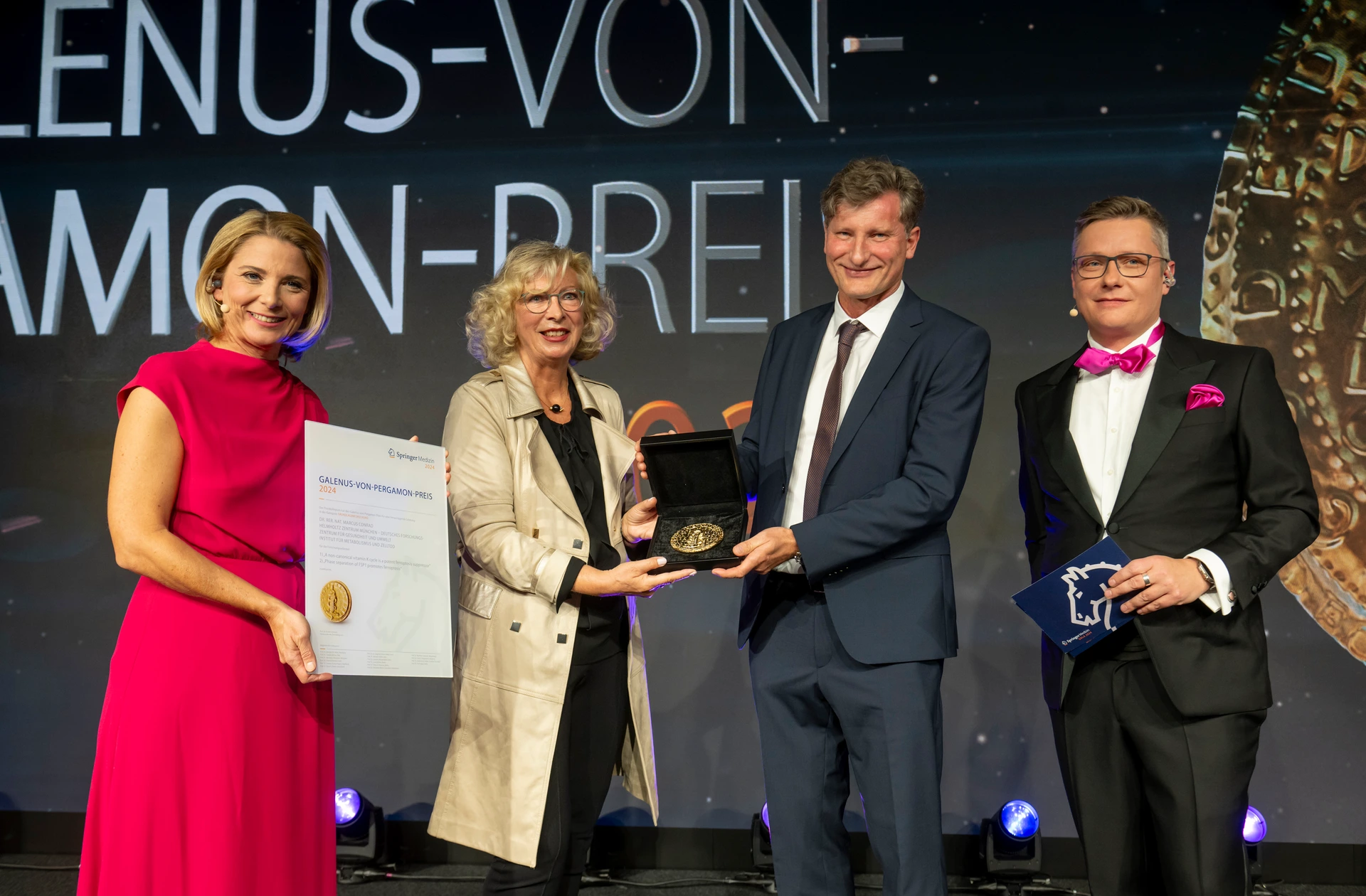
Prof. Marcus Conrad, Director at the Institute of Metabolism and Cell Death at Helmholtz Munich, has been awarded the Galenus-von-Pergamon Award in the category of Basic Research. The honor recognizes his pioneering contributions to the field of ferroptosis, a unique form of regulated cell death that has significant implications for various diseases, including cancer and neurodegenerative disorders.

Ferroptosis is an iron-dependent cell death process characterized by the destruction of cell membranes due to oxidative stress. Marcus Conrad and his team have been at the forefront of ferroptosis research for over two decades, playing a key role in uncovering the molecular mechanisms underlying this form of cell death and its role in disease progression. Their work has not only advanced the basic understanding of ferroptosis but has also paved the way for new therapeutic strategies aimed at targeting the process to treat complex diseases.

"This award is not just a recognition of my work, but also of the incredible efforts of my research team and collaborators over the years. It motivates us to continue our quest to explore new therapeutic avenues for ferroptosis-related diseases."

Prof. Marcus Conrad

The Galenus Award, regarded as one of the highest honors in the field of pharmacology and medical research, recognizes outstanding achievements in basic research, drug development, and medical technology. Marcus Conrad’s work exemplifies the profound impact of fundamental research on therapeutic innovation, setting the stage for more effective and personalized medical interventions.

No persons found

Related news

Neural Cells Interaction

New Research Findings, Molecular Targets and Therapeutics, MCD,

Single Enzyme Failure Found to Drive Neuron Loss in Dementia

Researchers at Helmholtz Munich, the Technical University of Munich and the LMU University Hospital Munich uncovered a mechanism that protects nerve cells from premature cell death, known as ferroptosis. The study provides the first molecular…

HMGU_Icon_Molecular_Targets

Featured Publication, Molecular Targets and Therapeutics, MCD,

Triggering Cell Death in Metastatic Melanoma and Lung Adenocarcinoma May Pave the Way for New Cancer Treatments

Two new studies published in Nature show that metastatic melanoma and lung adenocarcinoma rely on the protein ferroptosis suppressor protein 1 (FSP1) for survival – identifying a metabolic dependency that may inform the development of new cancer…

Marcus Conrad

Awards & Grants, Molecular Targets and Therapeutics, MCD,

Award-Winning Ferroptosis Expert Marcus Conrad

Prof. Marcus Conrad, Director of the Institute of Metabolism and Cell Death at Helmholtz Munich, was awarded the ECDO Honorary Award 2024 for his pioneering research on ferroptosis. He has been a Professor at the Technical University of Munich (TUM)…

HMGU_Icon_Molecular_Targets

Featured Publication, Molecular Targets and Therapeutics, MCD,

Novel Selenium Carrier Protein Regulates Ferroptosis in Cancer and Brain

Researchers at Helmholtz Munich have identified a specific redox protein as a critical regulator of ferroptosis - a form of regulated oxidative cell death. Research into ferroptosis mechanisms has attracted considerable interest due to its potential…

HMGU_Icon_Molecular_Targets

Featured Publication, MCD,

Vorstufe des Cholesterins schützt Zellen vor Ferroptose

Eine Vorstufe des Cholesterins, die bislang als schädlich eingestuft wurde, kann Krebszellen vor dem Zelltod schützen. Diese in Nature veröffentlichte Erkenntnis öffnet der Krebsforschung neue Türen.

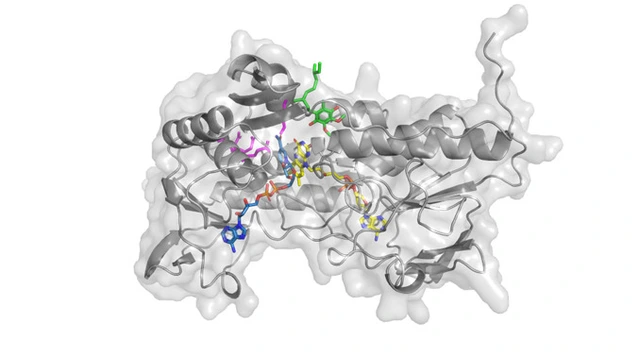
Superimposed human FSP1 structure with its cofactors, FAD, NADH, and CoQ5

New Research Findings, Molecular Targets and Therapeutics, MCD,

Revolutionäre Ansätze in der Krebstherapie: neuer Wirkstoff zur Ferroptoseauslösung

Forschende um Dr. Marcus Conrad von Helmholtz Munich haben einen neuen Wirkstoff für die Krebstherapie namens viFSP1 entdeckt, der sowohl in menschlichen Krebszellen als auch in denen von Mäusen den Zelltod durch Ferroptose induziert. Ferroptose ist…

DHODH inhibitor brequinar

New Research Findings, MCD,

Verstärkte Ferroptose in Krebszellen: Wirkmechanismus von DHODH-Blockern aufgedeckt

Ein Team an Forschenden von Helmholtz Munich hat einen spezifischen Mechanismus aufgedeckt, der in der Lage ist, den Zelltod in Krebszellen durch die pharmakologische Beeinflussung von Ferroptose zu fördern. Ferroptose ist eine Form des regulierten…

FSP1 condensates in green induced by icFSP1 surrounding a blue nucleus

New Research Findings, MCD,

Neuer Ansatz in der Krebstherapie - mit innovativem Mechanismus zur Induktion von Ferroptose

Ein Team von Forschenden unter der Leitung von Dr. Marcus Conrad von Helmholtz Munich hat einen neuartigen Wirkstoff zur Krebsbehandlung namens icFSP1 entdeckt, der die Empfindlichkeit von Krebszellen für Ferroptose erhöht. Ferroptose ist ein…

Marcus Conrad Porträt

Awards & Grants, MCD,

Marcus Conrad wird neues Mitglied des Hinterzartener Kreises der DFG für Krebsforschung

Das Fachkollegium Medizin der Deutschen Forschungsgemeinschaft (DFG) hat den Helmholtz Munich Wissenschaftler Dr. Marcus Conrad als neues Mitglied in den Hinterzartener Kreis der DFG für Krebsforschung berufen. Er tritt damit die Nachfolge von Prof.…

Vitamin K prevents cell death

New Research Findings, MCD,

Vitamin K verhindert Zelltod: Forscher entdecken neue Funktion eines lange bekannten Moleküls

Ein Forscherteam von Helmholtz Munich entdeckte eine neue Funktion von Vitamin K, das allgemein für seine Bedeutung bei der Blutgerinnung bekannt ist. Die Wissenschaftler:innen fanden heraus, dass die vollständig reduzierte Form von Vitamin K als…

[Translate to German:]

Awards & Grants, Environmental Health, LHI, Molecular Targets and Therapeutics, MCD,

FERROPath-Konsortium: Helmholtz Munich Forscher erhalten BMBF-Forschungsförderung

Das Bundesministerium für Bildung und Forschung (BMBF) fördert die Erforschung von Therapieansätzen zur Vermeidung von Ischämie-Reperfusionsschäden (IRI) im Rahmen des FERROPath-Konsortiums. Ab Juli 2022 erhält das Konsortium eine BMBF-Förderung von…